
Should Africa's media be "nation builders"?
President Jacob Zuma has stepped into a debate raging over ANC proposals to change the way the media is regulated in South Africa.
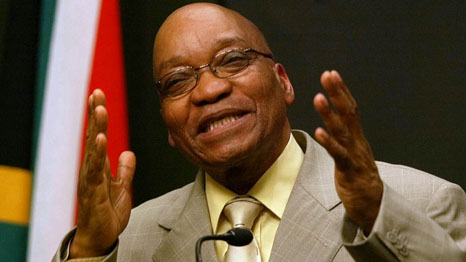 Journalists argue media freedom and democracy will be threatened by the introduction of a parliamentary Media Appeals Tribunal and a law allowing the government to classify material currently not secret.
But the ANC says new legislation is needed to make journalists legally accountable for inaccurate reporting.
And, in a letter to the ANC published online, President Zuma has said "Does it [the media] have a role in promoting nation building? Is it a spectator, or does it have vested interests and an agenda, political and commercial, that it cherishes and promotes?"
Does President Zuma have a point? Should Africa's media play a role in promoting nation building? If so, how? Do you think the press in your country gets away with too much? How should the media be held to account?
If you would like to debate this topic LIVE on air on Wednesday 18 August at 1600 GMT, please include a telephone number. It will not be published.


Comment number 1.
At 19:55 17th Aug 2010, giki wrote:press freedom in what ever form is paramount to the development of any society especially those crippling to advance the course of their citizens.Therefore allowing the masses to speak of their mind goes a long way in making both governments and organisations accountable to those they serve, while at the time keep them informed, and aware of isues surrounding them.Despite this it isalso the professional responsibilty for we the journalist to forward correct and and reliable information to our audience.for if fail to do this, we shall be accounted for it by the audience that we once misled. thanks
Complain about this comment (Comment number 1)
Comment number 2.
At 21:05 17th Aug 2010, wandah wrote:Indeed journalists have the right to feel threatened due to the fact that introduction of the of a parliamentary media appeals tribunal and a law!
Being human that is liable to mistake in term of inaccurate reporting especially for journalist is worrisome and I am of the opinion that this is mean to get at journalists that are too critical of issues!
The ANC new legislation that is been needed is not good for South Africa now!
Joe Noutoua Wandah
[Personal details removed by Moderator]
Complain about this comment (Comment number 2)
Comment number 3.
At 06:35 18th Aug 2010, The_Revolutionary_Humanist wrote:I am a South African and must agree that at times the press can get themselves carried away, for that there are retractions, apologies and out-of-court civil settlements. I think certain members of the ruling ANC are feeling the heat that investigative journalism brings about. The few instances where innocent people were maligned far outweigh the good that the press does through exposing corruption and ineffective government. The press must remain completely independent.
I wouldn't put much stock into the proposed law to censor information and the establishment of a media tribunal that reports to (from) parliament. It would be completely unconstitutional and undemocratic. These proposals will face stiff opposition from the judiciary, opposition parties, the press and the public at large. It is already facing opposition within the ranks of the ANC itself. To have the law passed it must be ratified by parliament, which is unlikely, and if by any change it is to be passed, then I am confident it will be brought to the Constitutional Court in Johannesburg. It will be declared illegal.
Funny though, the more things change the more they remain the same. I am far too young to remember from memory, but these 'proposals' have a whiff of the same tactics employed by the late apartheid National Party Regime.
[Personal details removed by Moderator]
Complain about this comment (Comment number 3)
Comment number 4.
At 10:16 18th Aug 2010, Howard Ayo wrote:First of all we should appreciate that the press in any state is the third state after the judiciary and plays vital roles in nations building. The problem with the press fraternity is lack of clear and precise regulatory framework for their activities and this makes it difficult to hold the press/media houses accountable for actions committed and contrary to their work ethics. Because of the weakness in policies governments always finds themselves locked in circumstances that makes it difficult to easily work with the media houses. The problem though with such developments like the ANC's proposal is that the objective to introduce such propsals should not be to infringe on the freedom of the media but make it part of the development of the state and also to find a synergy for cooperation and harmonious co-existance in work relationship.It is though difficult to understand at this point in time why the ANC is coming up with the propsal but i strongly think the challenge of managing the press association is the underlying reason including bringing them on the same page with the ANC government.
Complain about this comment (Comment number 4)
Comment number 5.
At 11:21 18th Aug 2010, Afrikaner wrote:This comment was removed because the moderators found it broke the house rules. Explain.
Complain about this comment (Comment number 5)
Comment number 6.
At 11:21 18th Aug 2010, johnsky2010 wrote:African press has remain the only nation builder on the continent, the only watch dog and defender of the African people. Without the press, Africa would have been worst off than what is tenable, African leaders and politicians would have been excessively ruthless and brutish. The recourse the people has is the press, hence the continued attempt by various governments on the continent to gauge it, SA is no exception. Because of the extreme corruption gaining ground in SA, the government has deemed it necessary to censor the press in order to truncate its effort at exposing corruption in high places, nobody should forget the environment that led to Jacob Zuma’s ascendancy. African press and indeed the people must rise and challenge any attempt at silencing the true check against political and economic rot that has perpetuated a beggar status for the continent.
Complain about this comment (Comment number 6)
Comment number 7.
At 11:35 18th Aug 2010, Afrikaner wrote:Press must transform
18.08.2010 | Jackson Mthembu | 0
Wed Aug 18 11:52:40 SAST 2010
comments
THE media input into and engagement with our discussion document is very unhelpful in that it does not deal with the merits and demerits of what has been raised in the ANC document.
Instead, it rubbishes the ANC with insults.
Criticism levelled at the ANC has ranged from describing the ruling party as being bent on "muzzling the press", "gagging of the media", "introducing draconian measures", and "keeping the public ill-informed" - to quote some strong phrases mainly used by the mainstream press, hardly attempting to show how the ANC was committed to "erode press freedom".
If only the noble intentions of the ANC were to be clearly understood by our detractors would anyone understand that the campaign is a continued disregard for substantive gripes society has with the press.
It does not say anything about the serious lack of transformation in the print media despite decades of self-regulation.
The self-regulatory framework that the media so eloquently speaks of has so far ensured that only four media companies own and monopolise the print media industry in South Africa.
Some of the four monopolies do not even have any historically disadvantaged groups as shareholders.
Some of these companies are 100percent foreign-owned.
The print media is one of the only sectors in the South African economy that does not have a charter and has not even made a commitment to establish one, which will determine their employment criteria in relation to young people, people with disabilities, and the affirmation of black people in general.
The industry has also not responded to the charge made by the ANC that the transformation experience in the broadcasting industry is as a result of regulatory mechanisms introduced, like the Independent Communications Authority of SA and the Broadcasting Complaints Commission.
These have made it possible for historically disadvantaged South Africans to own more than 58percent in radio and more than 64percent in television. It is this regulatory framework that has limited foreign ownership in broadcasting to only 20percent.
The Media Appeals Tribunal proposed in the ANC discussion document is a means to ensure access to recourse by any South African who is unfairly or maliciously reported on by the print media.
The self-regulatory mechanism does not go far enough to deter wrongful, malicious and defaming in reporting by the print media.
It is our view that a regulatory mechanism will assist the print media to transform - in line and consistent with what the Constitution would like to see in terms of representivity, ownership, access, employment, and procurement.
It will complement the existing self-regulatory Press Ombudsman and the SA Press Council, to introduce punitive measures by disaggregating the crimes that can be committed by journalists or media houses within the universally agreed on Press Code of Ethics.
It has never been the intention of the ANC to curtail media freedom as contained in the Constitution.
It is the intention of the ANC to ensure that all societal freedoms as contained in the Constitution, including freedom to privacy and freedom to be treated with dignity, are respected by all, including the media - print media in particular.
We fully agree with President Jacob Zuma that there should be no sacred cows in any societal debate.
The press should, therefore, not see itself above any debate or the Constitution of the country.
We also agree with the President that those who have appointed themselves as watchdogs of institutions of power should also be watched by institutions of society.
They should not cry foul when society criticises them. They should be mature enough to stand up to scrutiny and make their say without resorting to insults, name-calling and stooping so low as to declare themselves irrelevant to any societal debate.
Another major area of interest that the ANC document seeks to address is the diversification of the print media to give access to all race and ethnic groups in South Africa, particularly rural areas.
This is an area in which radio has done well through community radio stations and the regionalisation of the SABC offering.
When it comes to print, there are few titles published in other indigenous South African languages.
This is an area where government needs to step up its efforts, particularly when it comes to supporting instruments of media diversification like the MDDA.
* Mthembu is ANC spokesperson
Complain about this comment (Comment number 7)
Comment number 8.
At 11:37 18th Aug 2010, Afrikaner wrote:This comment was removed because the moderators found it broke the house rules. Explain.
Complain about this comment (Comment number 8)
Comment number 9.
At 11:41 18th Aug 2010, Silas Nyambok wrote:Yes! African media should be the ambassadors of their respective countries. This is because whenever the western media have anything to present to the world about Africa, it is always negative. My country Kenya became the headquarter of media cameras at the peak of post-election violence in early 2008. CNN, BBC, Reuters, Deutsche velles name it. But recently, when Kenya held a peaceful constitutional referendum, there was nothing to present to the World. At this time all the western media had camped at the Hague to present a negative story about two Africans with one donating and the other receiving 'blood diamond' Therefore only the African media can at least present something positive from within our borders.
Complain about this comment (Comment number 9)
Comment number 10.
At 13:42 18th Aug 2010, Ernest wrote:pls BBC can you help to know whether the Souuth African constitution has freedom of the press in it. if yes then i don;t understand what his exellency J.Zuma wants to do: to cover corruption,scandals,or wants journalist to P.R.Os. of his government and is he ready to pay them as his P.R.Os? we Africans have always been crying that the western media is not being fare with Us. looking at this does one think the government is doing the right thing? Oh my GOD save Africa
Complain about this comment (Comment number 10)
Comment number 11.
At 13:57 18th Aug 2010, J Kumphanda wrote:At first I looked at south Africa as a role model of Democratic governments in Africa but now it seems the whole Africa cannot afford to sustain democracy.
African leaders are just corrupt and power hungry hence cannot provide total freedom to the media.
The fact remains that the media play a major role in ensuring that governments are accountable to their people.
Zuma is just playing the African way!
Complain about this comment (Comment number 11)
Comment number 12.
At 14:43 18th Aug 2010, 70667 wrote:There is a daily paper in Uganda which would make Playboy seem like a toddler's version of tabloid sex.
So getting to the point: It seems that if editors stay away from reporting on the secret and shady corridors of politics (usually the power brokers of day), they can get away with anything because it appears that the ethics minister is not greatly bothered by the thought of school children seeing a barely dressed woman on the front pages every morning as they head to school!
Complain about this comment (Comment number 12)
Comment number 13.
At 15:06 18th Aug 2010, Elizabeth Kuranchie-Mensah wrote:I really agree with Prez Jacob Zumah for his point.In every society or nation, there is room for respect and dignity.And now, we see that our journalists-including those in the print media and the radio stations really work very hard to promote the good name of their nation and the world as a whole.Journalists should report nothing but the truth.This will help in nation building which will promote proper unification of all peoples within the state so that things will reamin stable in our society.We don't want the process where by there will be conflict here and there,in such instance,journalists wouldn't be doing their job well.
So Prez Jacob Zumah has a very strong point because we respect individual's idea and intergrity which is equally important.
[Personal details removed by Moderator]
Complain about this comment (Comment number 13)
Comment number 14.
At 16:34 18th Aug 2010, George Oyeho wrote:The media, government, citizens, public and private institutions, the global alliances are all stakeholders in the affairs of a country. Therefore President Zuma is right to question the interest of the media in how it handles itself. However, the media as the fifth column in a nation is critical as a partner at large in monitoring and quetioning all stakeholders on their performance and delivery of the expectations.
Governments have social contracts with its citizens and stakeholders, but remain a trustee to over see equitable service delivery and infrastructure development. So, the media role is to guarantee basic tenets of transparency, honesty and accountability by all parties. It is however, unfortunate that the media control is by some self serving interests that makes its objectivity be concealed in veil tactics of smear and blame. For fairness, it may be appropriate for the Government of South Africa to call for an open forum of all stakeholders to chart way forward.
Complain about this comment (Comment number 14)
Comment number 15.
At 22:24 18th Aug 2010, Adam wrote:In regards to Mr Mthembu's statement, nearly every single factor mentioned within it can be nullified by a brief look into the proposed bill. His assertion that mainstream media seeks only to deface ANC integrity holds little ground. I have yet to read any article directly questioning ANC processes but questioning of proposed laws, brought forward by any party, is open to public scrutiny and as far as this bill is concerned, it holds no place in a society governed by a constitution like ours. True, perhaps if the "noble intentions" of the ANC were known to the public, the bill would face less opposition, but given that ANC NPC holds secrets in clenched fists and in the light of our current political climate it is difficult to ignore.
Print media in South Africa is currently one of the National Prosecuting Authorities(NPA) biggest allies, three of the largest corruption trials in South Africa's history were brought to the courts on information brought to light by the investigative journalism of the print media. [Unsuitable/Broken URL removed by Moderator] The backlash by the print media is as a result of genuine fear of the direction this country will take should this bill be past. This bill removes all press freedom, allowing for the imprisonment of journalists and editors who publish classified material with a backdrop of the government having free reign to classify any document it feels “threatens the security of the nation”. Perhaps it is just my immense sense of cynicism and my natural aptitude for pessimism but my personal opinion is that this bill is a turning point in South Africa’s democracy.
Complain about this comment (Comment number 15)
Comment number 16.
At 09:31 19th Aug 2010, Nthlarhi wrote:The problem with south african press is that it's owned by section of the whites who have been backing the apartheid government and now they will do anything tarnish the image and objectives of the current ruling party ANC. This section of the media today is aligned with the DA, a party which represents the minority whites who would do anything to see apartheid comes back with a white person as a president.
I know it's very difficult to understand what I have just if you are not south african but it's true. South Africa is unfortunately a coin with two sides.
Complain about this comment (Comment number 16)
Comment number 17.
At 13:55 19th Aug 2010, Daniel wrote:Sorry but i have to respond to Nthlarhi. What you have written is a complete fallacy. As a white South African i am absolutley certain that the number of people in this country that are activly working for a return to Apartheid would roughly equal the number of white people wondering around the various insane asylum's dotted around this great land. That is to say, if it is a goal of any person in this country then they are not only misguided but they set themselves an unachievable target.
The very fact that you believe what you have written only goes to prove that the ruling party has more than its own fair share of propaganda merchants and platforms.
What these newspapers are doing, is showing the public that the ruling party has become everything an honest government should avoid. That every second "cadre" deployed in the high echelons of our government will seek out ways to use the position to improve their own standing as apposed to improving the lives of the public that put them there. The reason there is so much interest from the newspapers in the ANC is because they as an "organizition" are so full of backward and greedy people, whom the public want to know about. The widespread corruption and dishonesty rife within the ANC is, as a result, printed on a daily basis for the country and the world to see. Since they refuse to correct the problem (In fact they elect leaders with known links to corruption), they have no way to stop this constant humilliation. Except through changes passed in parliment, which strip the ordinary citizens of their rights, to allow these corrupt rulers the "right" to steal from the people without being challenged by the press.
Please Nthlarhi, see the wood from the trees, the white people in South Africa are not your enemy. We live in a country where we effectivly have less rights than any other race. The ANC needs us to be the enemy so that the average person in South Africa has a reason to keep voting for them and does not become dispondent to the fact that they are gaining nothing from each vote made every four years.
The ruling party is tarnishing it's own reputation, all the press does is point this out to the nation. Try not blame their actions on the white people, they no longer hold sway on the decissions made our current leadership.
Complain about this comment (Comment number 17)
Comment number 18.
At 16:54 19th Aug 2010, sonny wrote:In my opinion, the questions posed by President Zuma are legitimate ones that must be asked. However, the way to get Press regulation is not through a Parliamentary Bill. It would be better for President Zuma to invite all the members of the Press in all it's guises to come up with a way forward - something similar to self regulation.
Vestive interests have always played a part in politics of all countries and more so in developed ones. Just look at the example of the Murdoch press in the US, Australia or UK. When they are aligned to a particular party, it is difficult to see how vestive interests can be ignored.
I believe that if this Bill is passed and the Press is regulated, it will be a massive step back for South Africa and it will be the beginning of its decline into another basket case of African democracy.
Complain about this comment (Comment number 18)
Comment number 19.
At 20:42 19th Aug 2010, moses chipepo wrote:yes african media should be nation builder but not in the context of our many or i should say current african leaders.who want a media that cast a blind eye to escalating poverty level,illiteracy,nepotism,corruption and other negative vices.take an example of zambia, the govtment want to regulate the media by introducing laws that targets private media houses cause of fear of being exposed.
Complain about this comment (Comment number 19)
Comment number 20.
At 21:39 19th Aug 2010, Frank Hartry wrote:This comment was removed because the moderators found it broke the house rules. Explain.
Complain about this comment (Comment number 20)
Comment number 21.
At 01:00 20th Aug 2010, Marc Pandi wrote:There is an alternative to solving this tribunal problem. If I correctly understand the statement made by Jackson Mthembu, which infers that the government wants to act as an anti-virus by monitoring print media organizations “to ensure access to recourse by any South African who is unfairly or maliciously reported on by the print media”, then lets this problem be solved in an “activist” manner instead of a “regulator”.
Going with one democratic principle that says: "one is innocent until proven guilty," then print media need their rights to defence in courts, in order to renew licences and continue to function as credible media organizations. Instead, the government should create a body conceived to receive complaints from the public. Perhaps one might think that this body will act as the media police. The answer is: No! It will not. In fact, the public will. This body will not have the power to charge, arrest, or prosecute the print media, except exert its influence in courts by defending those who were unfairly or maliciously reported in print media. The government will have the opportunity however to consider the point of view of the people who felt vilified by the print media through this body by acting as a public advocate when licences are renewed.
This way, in my opinion, violators will be sent letters of complaints by this body organization, reminding them about these complaints, and explaining to them that these complaints could be used against them when renewing their licenses.
Complain about this comment (Comment number 21)
Comment number 22.
At 04:58 20th Aug 2010, alhaji daramy-bassey wrote:To avoid an 'un-achievable-outcome'in governing the nation of south africa; it may be necessary to illustrate the wording of the statement rather than the old style of uncomfortable situations in governance.
The legislation/legislature seems to actually worn against in-accuracy of un-polite news management than a crack-down on the "press".
Complain about this comment (Comment number 22)
Comment number 23.
At 07:13 20th Aug 2010, TVOR wrote:Is the question whether Journalists can publish articles without interference from government.
It is a bigger question for all nations including South Africa. The media establishment in the UK and US has become so partisan and invested with self interest that it is hardly worth the paper its printed on.
However can a government impose laws on a media and still maintain a free and systematic impartiality to report 'real events' remains to be seen.
South African press seems to be an aggressive culture, and they are blunt and to the point without concerns over what it means to whom. However I hope the SA press does not follow the example of the United Kingdom and sell its soul to commercial a populist agenda.
Complain about this comment (Comment number 23)
Comment number 24.
At 09:24 20th Aug 2010, Allan Nyirongo wrote:I fully support this ANC idea to effect new legistration to make journalists legally accountable for any kind of reporting. This idea should equally spread to all other countries and believe me or not this will help to restore the credibility of journalism that was lost due to reporting of fabricated stories that purely aim at just assassinating character and defaming an individual who holds opposing views.
The argument about possible infringement of democracy after the enactment of this bill, is just fear of the unknown. Let us be realistic here, absolute democracy is equally not good. It leaves loophole for the abuse of hard earned freedom.
Complain about this comment (Comment number 24)
Comment number 25.
At 09:54 20th Aug 2010, James wrote:@Nthlarhi. You say that the print media is controlled by the whites. This may be true to a large extent, but most of the papers are objective. The main reason the ANC is in the firing line is because they are dodgy. If the ANC cleaned up its act and actually governed rather than stole, the papers would back down. What do you have to say about the SABC, now a complete farce of an organisation and solely the mouthpiece of the ANC, spewing propaganda to a population continually kept dumb by the ANC to facilitate brainwashing.
Most things the ANC has touched have become a complete disaster. All the parastatals are full of ANC cronies, barely functioning and out of cash due to graft and corruption.
I am amazed that you don't see this. It is so painfully obvious to anyone on the outside looking in.
African governments are not for the people, they are purely for self-enrichment.
Complain about this comment (Comment number 25)
Comment number 26.
At 10:36 20th Aug 2010, Ronald Sole wrote:As Nobel Peace Prize winner, Bishop Desmond Tutu pointed out, the ANC "stopped the gravy train just long enough to get on themselves." And who needs the media poking their cameras through the windows as snouts plunge into all that gravy? It's the old story: If you can't bring greed and corruption under control, then control the media instead!
Complain about this comment (Comment number 26)
Comment number 27.
At 11:17 20th Aug 2010, Macaulay wrote:What I know is that, In Nigeria, most of the Journalist have compromised standard, they have diurnal and surreptitious meeting with the highly placed who themselves are the enemies of development, the journalist are loyalist to politician, they write rejoinder to support the evil that is perpetrated, the form biased opinion and you can clearly see it on the pages of the newspaper. They were supposed to be feared by the evil politician, but they have a price. They even go into politics and are permanently shut
I have personally witnessed the compromise of journalist in Asaba Delta state and have seen an interaction with government officials the media when I worked for a media house in Lagos. Ordinarily the media were meant to be a strong institution. Not so in Nigeria
Complain about this comment (Comment number 27)
Comment number 28.
At 14:31 20th Aug 2010, Busi wrote:There can be no question in anybody's mind that the South African media, press freedom and democracy itself is threatened by the rhetoric and threats made by the ANC.
This threat does not just come in the guise of the draconian proposals regarding the Protection of Information Bill and the Media Appeals Tribunal, but is in fact multi-faceted. The proposals around the Public Broadcasting Service Bill, the Independent Communications Authority of SA Amendment Bill and the Harassment Bill are all designed to disempower South African citizens and to strip away our rights as afforded us by our Constitution. A constitution lauded as one of the most progressive in the world, a constitution that the ANC is now proactively attempting to erode in order to entrence its own control over South African society and the flow of information.
And whilst the South African media and society seeks to fight this, we would like to know what is the international community and specifically the international media doing to show their support in this fight?
Complain about this comment (Comment number 28)
Comment number 29.
At 03:23 22nd Aug 2010, JSmucker wrote:Any opposition to the media would seem only natural coming from a president whose corruption charges were dismissed because of a technicality and had a very publicised rape case. Zuma is popular with the masses and his biggest opposition right now is the media. While the South African media can be sensationalist and negative I believe that an unchecked government, especially the ANC as it is now, is a far bigger threat to the nation. If a newspaper publishes lies and garbage their reputation will eventually suffer because of it but if the media is bridled and a corrupt government is allowed to do as it pleases with no accountability many people will suffer and die. Read the history books. Remember the censorship of the apartheid government, remember Idi Amin's government in Uganda. This is a critical time because if the press in South Africa is not allowed to freely report facts it will be detrimental to the nation. Nkosi S'ikelel iAfrika.
Complain about this comment (Comment number 29)
Comment number 30.
At 09:13 22nd Aug 2010, EParton wrote:I would like to recommend that Joseph read 'Redefining This Is Africa' by Hlengiwe Mnguni in her column for News24.co.za. It might give you a different perspective on attitudes to the present threat to media freedoms as well as democracy in Afica.
I completely agree that the proposed Protection of Information Bill and Media Tribunal pose a concerning threat to freedom of speech and the arrest of journalists, such as the Sunday Times' Wa Afrika, show all too clearly that the ANC are prepared to take action. Yet the public in SA are not blind to these threats and it is not only the media and writers in other genres who are concerned. The general public as readers recognise that their freedom to information is being threatened in a way it has not been since apartheid and I believe that dedication to the SA constitution, as well as a desire not to repeat what has passed, may well protect SA from this legislation and other undemocratic actions. It is of obvious concern that these measures have been proposed in the first instance, though it should be of comfort that politicians, public and the media have been quick to brand the POI Bill unconstitutional in parts, primarily with regard to the tribunal. It is a little swift to brand SA yet another African nation who has fallen foul of democracy, though I find it concerning that the story has not been recognised or covered by many media corporations outside of the country. What affects one nation affects us all, or at least should.
It is worth remembering in the wake of these threats that it would be hard for the ANC to manage to curtail media freedoms in the present time. Back in the days of apartheid where 24 hour news and the internet were not available it was far easier to present an 'authorized' version of the news. Yet still those with a mind to find some 'free' opinion could root it out. Today the public are far too media and technology savvy to be kept from 'free' opinion for long. The ANC are threatening to damage their government and nation by alienating their media, actions that will only cause resentment and hostility amongst a public who have seen it all before.
Complain about this comment (Comment number 30)
Comment number 31.
At 17:12 22nd Aug 2010, FORTUNE wrote:I think a lot should be done by the media in promoting Africa Nation building. We Africans should give press and other media services a fertile platform to function as a profession it is. I argue that through the media, African Nation can be able to discard its waste and have a fresh breath to develop.
Complain about this comment (Comment number 31)
Comment number 32.
At 08:43 23rd Aug 2010, Lilly Jay wrote:I come from South Africa, though I am a proud Londoner too, and I am always annoyed when I log onto South African news websites because of their negativity... Then again, that is the reality for most South Africans. Unfortunate though it is, people have the right to hear the news told as it truly is, not how people decide it is to be heard. Freedom of the media and truth are important for people to understand these realities, and regulation of the media is only for "spin doctors" to take over. It is Jacob Zuma who wants the media to tell everyone how fabulous he is, rather than the truth, which is that he is not doing a good job. Face up to the truth and make steps in the right direction and then see how the media reports it. I know that most Africans just want to know what's really going rather than the government's edited version.
Complain about this comment (Comment number 32)
Comment number 33.
At 10:38 23rd Aug 2010, Afrikaner wrote:This comment was removed because the moderators found it broke the house rules. Explain.
Complain about this comment (Comment number 33)
Comment number 34.
At 16:28 23rd Aug 2010, ShakaLives wrote:Democracy cannot exist without press freedom and the free flow of information, of that there is no debate. And press freedom cannot endure if the press are directly accountable to the very politicians that may be subject to open scrunity and comment. It is no coincidence that the call for parliamentary 'media tribunals' and the proposed increased powers for government officials to freely mark whatever they decide as 'classified' (and hence beyond journalistic pen due to draconian apartheid-like penalties for transgression) has grown as reported incidents of outright corruption and graft themselves has grown (and the 'masses' begin to openly question lack of government delivery, cronyism and self enrichment). This is a totally transparent attempt to muzzle the power of the press as entities within the ruling party jostle for power themselves. It is no overexaggeration to say that it must be fought unless we go go down the same slippery road as Zimbabwe.
Complain about this comment (Comment number 34)
Comment number 35.
At 10:06 24th Aug 2010, AmyLooMak wrote:I agree that journalists should be held accountable for publishing false facts, however it is in the interest of South Africa that the government DO NOT intefere with freedom of press. We have a history of corruption in the governemtn which is barely held at bay (and only because the media keep the public informed). It is a small step from limiting material published to full control and propoganda. If there is concern about inaccurate reporting maybe the government should be more open in their dealings with the media.
Complain about this comment (Comment number 35)
Comment number 36.
At 13:54 24th Aug 2010, southafricano wrote:In response to Mr Mthebu's statement, surely he and the party he represents can see the IRONY in extolling their own virtues on the one hand while tarring the print media with their other hand?
"They should not cry foul when society criticises them. They should be mature enough to stand up to scrutiny and make their say without resorting to insults, name-calling and stooping so low as to declare themselves irrelevant to any societal debate."
Mr Mthembu and the party he represents would do well to listen their own advice, take head and act upon it.
A concerned South African.
Complain about this comment (Comment number 36)