What has 2016 taught you, as a journalist? Part one
Cathy Loughran
is an editor of the BBC Academy blog
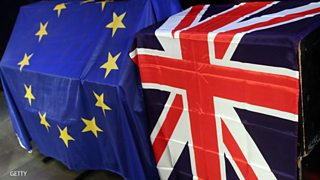
The seismic year of Brexit, Trump and fake news knocked the stuffing out of old assumptions and left the traditional media with plenty to chew over. We asked a cross-section of journalists, including some Academy bloggers, what they’d learned from the turmoil of 2016:
Jeremy Bowen, BBC Middle East editor
2016 is a reminder that accepting received wisdom is a mistake. Don't follow the pack. Don't experience the world through a screen. Get out there and talk to people. Don't allow your analysis of what's happening to be static.
Charlie Beckett, journalist, LSE media professor, Polis think-tank director
Journalists need to listen more and lecture less. This means leaving the newsroom, meeting people in their communities and on their own terms, in real life and online. The best journalism has been more creative at listening to the audience ‘data’ not just to win attention and gain more traffic but to build relationships and find hidden stories and trends.
Cathy Newman, Channel 4 News presenter and blogger
As a journalist, you like to think you're well plugged-in. But after Brexit and then Trump, a bit of humility is in order. There are many reasons why we missed the clues, but the only solution, as someone paid to ask the questions, is to ask a few more and listen more carefully to the answers. And, above all, in this post-fact universe, probe those in power to be absolutely confident we're getting to the truth. That might not make us popular with some of those in positions of authority, but challenging in a calm but determined way is what we do, and what we must carry on doing.
Suzanne Franks, former BBC broadcaster, head of journalism at City University
Get out beyond the beltway and listen intently to those ‘overlooked voices’ who might have views different to our own and our chattering class circles.
In this age of big data always question and interrogate opinion polls and ask how they are constructed. Thirdly, ask yourself what ‘balance’ really means and accept that not all views necessarily deserve equal weight.
Ros Atkins, presenter of BBC News’s Outside Source
2016 taught me how polling can disguise rather than reveal stories. We’ve learned this lesson three times now! It taught me that politicians and journalists, including the BBC, need to work harder than ever to earn people’s trust. And as for asking EU leaders for interviews, if at first you don’t succeed, try, try and try again. Some will and did say yes.
Frank Gardner, security correspondent, BBC News
Try not to be blinded by the most dramatic aspect of a story. It can sometimes eclipse other narratives that are just as important editorially.
Rob Watson, UK political correspondent, BBC World Service
My lesson re-learned: just because people are angry about stuff doesn't mean they're right. So, yes report on anger, yes try to understand it, but don't confuse it with being right.
Henk van Ess, internet research, social media and multi-media trainer
In 2016 journalists criticised journalism, which doesn't worry me. Thanks to journalism I now know that journalism may be losing its prominent place.
Jo Ind, digital media consultant, trainer and BBC Academy producer
Humility. I came into journalism 30 years ago because I believed in telling the stories of those who weren’t being heard. Our collective surprise at the result of the referendum reveals how much we in the media are failing to cover the views that differ so much from our own.
Declan Lawn, reporter and documentary maker, BBC Spotlight and Panorama
2016 has taught me that journalism needs to reinstate an atmosphere of intellectual inquiry. It's not enough anymore to expose the dodgy practices of one company, or one person who isn't paying tax. The questions are bigger than that now, and we need to step up. It's OK to be smart.
Bill Thompson, writer, broadcaster, partnership lead for BBC Make it Digital
2016 has reminded me, and we all need to be reminded of this from time to time, that not everyone sees the issues of the day the way I do. My duty as a journalist is not just to give every side of the argument the best possible chance to be convincing, but to let every single person reading or listening have the best possible chance of understanding, whatever their individual beliefs.
Fergal Keane, foreign correspondent, BBC News
The same as 1979 - my first year as a reporter on a local paper: be faithful to the facts and be brave in the face of all bullies.
… and a final word from LBC breakfast presenter Nick Ferrari
Assume nothing.
In part two of this blog, journalists and journalism experts reflect on the social media lessons of 2016.
BBC Academy blogs by:
Charlie Beckett, Frank Gardner, Henk van Ess, Declan Lawn, Suzanne Franks and about Nick Ferrari
Describing the scene: Jeremy Bowen
How to tell TV news stories: Frank Gardner
