What makes a great radio voice? After Radio Times poll, experts have their say

Cathy Loughran
is an editor of the BBC Academy blog
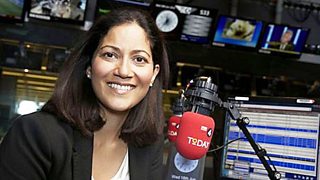
Mishal Husain's 'natural' delivery gets the experts' vote
This week’s Radio Times poll of favourite radio voices was topped by BBC Radio 4’s Scottish duo of Eddie Mair and Kirsty Young. The male and female top tens included three Scots (Mair, Young and Ken Bruce), two Welsh presenters (John Humphrys and Lynn Bowles) and Jamaican-born broadcaster Neil Nunes - but omit big hitters like Chris Evans and Chris Moyles.
As a self-selecting survey of 32,000 Radio Times readers, it may not tell us anything very scientific about wider listener tastes. But it does prompt the question about what makes a great voice for radio in 2016.
I asked two experienced voice coaches for their take on the latest RT readers’ picks and more generally about voice qualities that cut through on radio.
Former actor Kate Lee has been training broadcasters for 25 years, including at the BBC, ITN and Channel 4 News. Elspeth Morrison is an ex-TV documentary producer who specialises in working with all the major broadcasters and coaches actors in different accents.
Here they offer some professional insights, a shared aversion to ‘low, slow and sexy’ female tones and a few expert tips for sounding your best at the microphone:
Kate Lee
“What struck me was that this was a poll of people who listen to the radio all day, and mainly to Radio 4, so – as a Radio 4 fan – I’d say it’s a bit limiting.
Some of the public’s choices would definitely be in my top ten, however. Mishal Husain on the Today programme (in at number four) is very natural, never gets on your nerves, and doesn’t try to sound like a man.
But there were notable omissions too. My top five would have to include presenter Laurie Taylor (below), who combines incredible warmth and humanity with real interest in his subject. His voice has good rhythm and he doesn’t take himself too seriously.

Another is Martha Kearney, presenter of World at One (yes, Radio 4 again). She has great range in her voice, clarity and fantastic authority, but you can hear her smile.
Is it surprising that the top two are Scottish voices? I think we’ve always known that people like Scottish speakers. They have a musicality that appeals to your listening brain.
In research, the voice of another Celt, the actor Richard Burton, was found to relax the brain waves to the perfect level for learning - listeners were totally engaged. Kirsty Young and Eddie Mair both do that - they don’t attack us.
I think this business is harder for women. ‘Who’s got a nice voice?’ often translates as ‘who’s got a deep voice?’ Too many women feel they have to speak low and sexy - frightened to go above a certain note, instead of using their range. You’d damage your voice if you spoke like that all the time.
So I was glad that Classic FM’s Anne-Marie Minhall edged into the top 10. She’s incredibly natural. The Food Programme’s Shelagh Dillon and Cerys Matthews of BBC Radio 6 Music (both on the Radio Times long list of 40) are also refreshing. Cerys in particular has a classic musicality.
What makes the perfect voice for radio? For me it depends on the context. Much was made of Chris Evans not making the RT long list despite having the UK’s biggest radio audience. If you’re voting for voice quality only, then leave him out. But he’s pulled in some of the biggest audiences on TV and radio because of the way he speaks, in the most interesting speaking style – like a big kid. It just works.
My top tips for radio broadcasters
- You don’t have a voice, you use a voice. You can probably do a lot more with your voice than you would imagine, so don’t be afraid
- Broadcasting takes more energy than people think. I’m not a fan of that frequent advice, 'imagine you’re talking to one person', as if you don’t have to make much effort because that person’s already there. You first have to pull listeners in, and you can do that in an Eddie Mair or a Chris Evans way, depending on your audience
- Warm up. The throat needs to be as relaxed as possible. You can’t beat humming and big breathing”
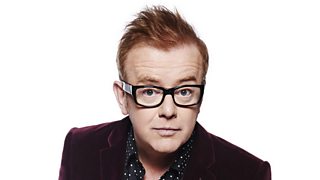
No poll place for Chris Evans, despite drawing the UK's biggest radio audience
Elspeth Morrison
“A ‘great voice’ is very much in the ear of the beholder. Most of the poll-topping voices are beautiful in terms of quality, but some of them, I feel, fail to use their full range and can be a bit monotone. You can decide who I’m talking about!
There has been some comment about the number of non-English accented voices chosen. But no one here has a particularly strong accent. Kirsty Young and Eddie Mair, for example, have ‘barely there’ Scottish accents. Other polls have shown that people find Scots, Welsh and Irish accents ‘warm’ and the way that Welsh-accented speakers ‘lean’ into their consonants tends to produce clear diction - think John Humphrys (number two in the poll) and Huw Edwards.
There is a definite pressure on women broadcasters to adopt a ‘lower is better’ mindset, with the danger of slipping into a “this is not just food, this is M&S food” style of sultry speech. Not always appropriate for news!
I’m probably more interested in different generational sensibilities. The accompanying RadioTimes.com poll of RT website readers, as opposed to traditional readers of the magazine, produced different top tens, with some overlap. Topped by Absolute Radio’s Leona Graham and Steve Allen of LBC, it includes people like Lauren Laverne and Cerys Matthews (below).
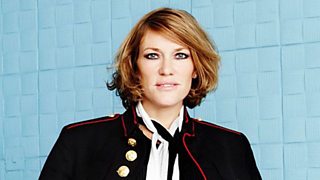
People under 30 appear not to be as interested in ‘the voice beautiful’ as older people. I once did an experiment with 18 year-old drama students, using the smooth tones of poll number two Charlotte Green, when she read the news on Radio 4, and a slightly squeaky newsreader from a commercial station. While the students mostly loved Charlotte’s bass tones, they felt they got more information from the other newsreader who had a higher pitch, droned on a bit (to my aged ear) and who often used a rising inflection at the end of the sentence.
For older people (i.e. your average local radio or Radio 4 listener) those features are a bit of a no-no. For younger audiences, well, they are not so concerned.
My personal favourites? Mishal Husain - she’s clear, and sounds interested without being overbearing. I listen to the content of what she says without being distracted by her voice. And I love Steph McGovern for her warmth and energy on what can be the dull topic of business.
I do believe that great broadcasters are born. But with help most people can learn to put the emphasis on how as well as what they’re saying.
My top tips for radio broadcasters
- Don't bellow into the microphone. Think about just talking at the volume you’d use when talking to one person who is close by
- Breathe naturally - when you need to and through your mouth - to avoid sounding tense. You can mark up the script to help show you where it’s appropriate to take pauses for breath
- The only valid reason to tweak an accent is if there is a sound that can't be understood by a particular audience. Speak clearly and listen back to yourself”
Presenting: Looking and sounding your best
Hosting a radio programme: Paddy O’Connell
BBC Academy section on presenting
