Balancing head and heart when filming sensitive documentaries

Jack Burgess
is a BBC content producer
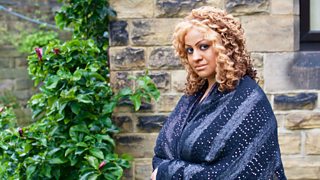
Katy had almost no contact with the outside world for three decades. Photo:BBC/Perry Images
How would you approach an interview with a woman who had been raised in captivity for 30 years and brainwashed into believing that if she disobeyed her controlling father, major global disasters would strike?
Or an interview with someone who believes that, as a journalist, you are a mouthpiece of the fascist state and that an attempt was made on their life as they came to meet you?
Tricky, to say the least. This is exactly what BBC documentary-maker Vanessa Engle had to resolve for BBC Two’s revealing investigation The Cult Next Door.
“Nothing prepared me for how strange and unfathomable this story is. It’s very disturbing”, Engle told an audience at a BAFTA preview screening in London.
Initial meetings with key interviewees had been extremely difficult to secure. The first was with Katy, born into the Maoist cult led by her father Aravindan Balakrishnan in a small house in Herne Hill, south London. For three decades, until her rescue, she had little contact with the outside world.
Understandably, she was at first very reluctant to talk and kept cancelling over several months, despite long phone calls with the producer. When she did eventually choose to get in contact with Engle, the groundwork could begin.
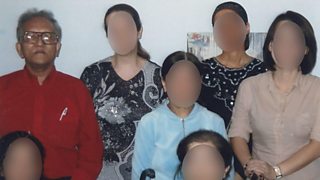
Aravindan Balakrishnan and some of the cult members. He was later jailed for 23 years
Speaking to me after the BAFTA event, the film-maker described the “rigorous preparation” that was needed for each of the interviews she conducted. These were women who had been held captive by the cult leader and subjected to brutal physical and mental abuse.
She researched 40 years of press coverage documenting 75-year-old Balakrishnan’s Maoist movement, filling three lever-arch files of information for each person, to isolate exactly what to ask them.
“It was an eight-month process. I was fanatical about it,” she said.
To give the women a chance to come forward and open up to her, Engle felt she had to “create a safe environment” that would put them at ease: “You have to be aware that you are dealing with vulnerable people.”
The make-up of the crew was a part of that process. They had to be people who exuded “experienced, professional calm”. And if contributors like these are to feel comfortable, it is often best to avoid delays at the start so the interviewee’s nerves aren’t given opportunity to build, she advised.
Being emotionally intelligent was one of the most important considerations on this assignment, Engle stressed, and one of the most personally challenging, even for a film-maker of her experience. Past documentary credits include the harrowing Love You To Death: A Year of Domestic Violence and her examination of the cosmetic surgery business, Inside Harley Street.
There were aspects of the former captives’ delusions that they had not yet come to terms with, she explained, and which needed to be played along with to elicit responses: “I don’t have any training dealing with people who are delusional. You have to play along, but I had a moral conflict within myself.”
Although you have to hold it together and not let distressing subject matter affect you to the detriment of your interview, it is OK to show your human side, Engle maintains, and express genuine emotions to your interviewee.
“Think clearly at all times. You’ve got to be aware that it’s all on camera. But I’m not afraid of having feelings. I might cry and that’s fine.”
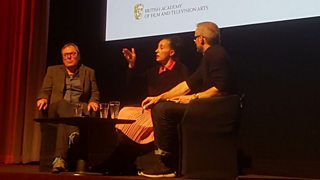
Vanessa Engle takes questions after the screening of her documentary at BAFTA
Another challenge in dealing with distressing reality is that it can be difficult to switch off afterwards. Engle admitted coming away from some of the interviews feeling depressed and even started suffering “night terrors”. She found herself worrying about her own son who was travelling in Asia at the time, and fearing for his safety.
“You become a barometer for your contributor’s unexpressed feelings. But you just have to deal with it,” she said. “You keep reminding yourself that you’re lucky it’s not happening in your daily life, and that helps.”
Engle explained how she had assured her executive producer Peter Dale that she would only make this documentary if she knew it would not cause the contributors more distress. That emotional awareness extended to the cutting room, she told me - making the correct decisions to omit material that might undermine the interviewees.
One of the cult members, Josephine, chose not to appear in the programme but her part in the story comes through in the interviews of others. After gaining her freedom, she continued to subscribe to Balakrishnan’s doctrine that journalists are tools of a British fascist state.
Consequently, her opinion differed to that of the other women interviewed, so it was important for Engle to consider Josephine’s right to reply when making the programme.
As she reminded me: “We had a duty of care towards her, even though she wasn’t in the film”.
With editorial sensitivities like these there will always be an element of emotional unpredictability that needs to be handled in a professional, intuitive manner. It is clear from speaking to Engle, however, that thorough preparation is just as key to controlling and directing such demanding interviews.
The Cult Next Door, 9pm, Thursday 26 January, BBC Two and on BBC iPlayer.
The Academy section on dealing with vulnerable contributors
Trauma in journalism: Sian Williams
How to tell seven murder stories in 60 minutes
BBC Media Centre: The Cult Next Door
BBC News: Maoist cult leader Aravindan Balakrishnan jailed for 23 years
