BBC Academy launches sites in Bangla, Kyrgyz, Somali, Spanish and Ukrainian

Najiba Kasraee
Editor of the BBC Academy's language websites
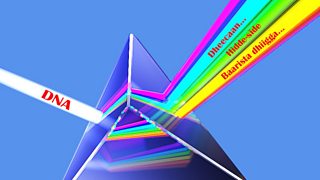
One challenge for BBC Somali journalists is to standardise translation for terms like 'DNA'
Nine years ago I proposed to the BBC Academy that we needed to provide BBC World Service journalists with the resources to standardise their broadcast language around a shared style guide. Back then it was hard to believe that we’d ever reach the point where we are now.
With this week’s launch of five more Academy language websites, we are very close to reaching our goal: to provide all the BBC World Service language teams with bespoke linguistic support and training, delivered in the languages in which their journalists mainly broadcast.
The addition of new sites in Bangla, Kyrgyz, Somali, Spanish and Ukrainian means the BBC Academy now has a total of 23 language websites, in addition to English.
The more I work with journalists from around the world, the more I realise how closely language and journalism are intertwined. Impartiality, accuracy and fairness can be endangered so easily by the wrong use of a single word, a wrong accent, a misplaced comma.
There is a huge repository of skills and linguistic experience in each World Service language department. What we have done in just under a decade is simply to consolidate and capture that knowledge and make sure it is passed to new journalists joining the BBC. Ensuring these sites are a free resource allows us to share this professional know-how with the rest of the world.
In their first iterations, the new mobile-first websites offer content in three main categories - language, skills and standards - reflecting the BBC’s editorial standards and core values.
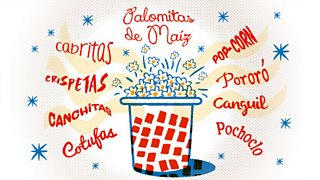
But the BBC’s language services broadcast to speakers of a language, not individual nations. Spanish, for instance, is spoken in at least 21 countries and serving a large, disparate audience with many different dialects and accents is one of the biggest challenges faced daily by the BBC Mundo service. When the English word ‘popcorn’ can be translated into more than seven different words in Spanish (above), you get the picture…
On the new Somali site we have managed to update and digitalise the BBC Somali language style guide for translation. Abdinur Mohamed, broadcast journalist with BBC Somali, explains why that’s important: “We are trying hard to standardise the Somali language for current and future journalists. But even experienced journalists will sometimes translate the word ‘DNA’, for instance, as ‘saliva’ or ‘blood test’ - clearly referencing what they have seen or heard elsewhere, when in fact we do have a proper translation for DNA.”
Like all other international language sites, the latest releases also cover a wide range of multimedia skills in television, radio and digital production. As you’d expect, the sites focus on presentation, writing and the use of social media, but there’s also special guidance on producing and presenting under pressure, to deadlines.
The new sites build on existing resources for BBC journalism in Arabic, Burmese, Chinese in simplified form, Chinese in traditional form, French, Hausa, Hindi, Indonesian, Kinyarwanda, Kirundi, Pashto, Persian, Russian, Swahili, Turkish, Urdu, Uzbek and Vietnamese.
This week’s development is in line with the BBC Academy’s pledge to provide support for all of the BBC World Service languages - including the new language services that will soon start delivering content as part of planned BBC World Service expansion.
As with all of our language sites, the latest can be accessed via the homepages of the respective BBC World Service languages websites as well as via the BBC Academy website.
"No one size fits all": Hear what senior World Service journalists working in the five languages say about the value of tailored training in this video:
