Social broadcasting: Can quality and authenticity cut through?

Cathy Loughran
is an editor of the BBC Academy blog
If you give big thinkers a platform they rarely stick to the script. So when writer, broadcaster and social psychologist Aleks Krotoski launched into her keynote at the BBC’s latest conference on the future of social media the audience was happy to indulge her analogy about the history of US shopping malls.
From the world’s first indoor mall in Minnesota to the “unrelenting excitement” of malls that are also Disneyland-style themes parks, Krotoski’s theme was that these are places “where no-one lives and everyone consumes”. A bit like social networks, probably more successful.
“Except that our consumers come from the digital world, and they’re not hyperlocal,” she observed.
Both worlds have however got used to tracking consumers - in Disney’s case through entry wristbands linked to family profiles via credit card, to ensure a highly personalised experience, Krotoski explained.
“The reason the online space is so complex is that, unlike a 1950s mall or Disney, the online world is also created by its audience… It’s as though you were handed a spanner at the entrance to Disneyland, instead of a wristband.”
The challenge for the social environment? “To be the most compelling and most authentic place in the world.”
Both qualities have a resonance at the end of 2016 - a year scarred by the ascent of fake news and characterised by a social clamour, including in news, that makes it harder than ever to cut through.
Neither was lost on the Social Broadcasting - Where Next? audience in the Radio Theatre of London’s Broadcasting House last week. And plenty more speakers had big ideas of their own:
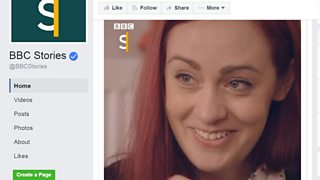
Emma's repackaged story of overcoming Parkinson's disease had 38m views on BBC Stories
‘Context is king’
So said NowThisMedia publisher Ashish Patel - one of a number of contributors who hammered home the message about screen-specific content. Where is the user? Are they viewing on mobile or laptop? What will my content be competing with for their attention? In other words: “What are they doing on the other side of that screen?”
In her conference intro Fiona Campbell, BBC News controller for mobile and online, agreed that “format is crucial” but insisted that “the storytelling can be the same”. Her case in point: the moving story of an artist with Parkinson’s disease who was able to draw again thanks to a new piece of tech. Told in full in BBC Two’s The Big Life Fix With Simon Reeve, a 1.43-minute version has had 38 million views on the new BBC Stories feature on Facebook.
Quality over fat in online video
The volume of live-streaming and its rewards in terms of audience spikes means content producers were under pressure to stream anything and everything, warned Shadi Rahimi, senior deployments producer at AJ+. The result is that “Facebook Live has turned into bad TV,” she claimed, hoping for a more creative approach in 2017.
Rahimi thinks the online world has now reached saturation point for short, distributed video: “We’re too flabby… It’s time to draw back and produce more quality, long-form content.” Recent six-minute pieces from AJ+ have gained almost five million views, she said, although “catch them in the first three seconds” remains a company mantra.
For Jaine Sykes, ITV’s daytime and factual TV exec, social broadcasting still has plenty to learn about quality from traditional television, but it is about being collaborative and complementary - not “us versus them”.
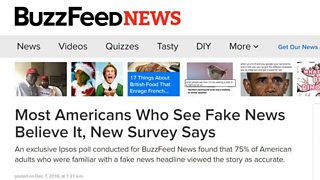
We all need to tackle fake news
Andy Dangerfield, BuzzFeed’s social media editor for news, had some scary stats from his company’s own research: 75% of Americans believe fake news stories and the fakes get more shares than genuine reports - 8 million versus 7 million in the BuzzFeed study.
While Facebook, for instance, has committed to tackling misinformation in users’ news feeds, could the social publishing giant go further, Dangerfield asked. Journalists certainly needed to take more responsibility, he feels: “One way to combat [fakery] is to get more content on those platforms that is real journalism. We can all try harder to push out on social.”
And would fake news be such a problem if genuine news organisations were more willing to link to each other's stories, asked journalist and lecturer Paul Bradshaw.
There was a consensus that fake stories go viral because they engage on an emotional level - broadly generating “happiness, anger or fear”, said Rahimi. She wasn’t suggesting that journalists use those triggers in an inauthentic way to gain attention, but “we need to keep them in mind”, she believes.
Confirmation bias: Who’s behind that story?
There was some pessimism about the future of automated, personal news feeds, including from Emran Mian of the Social Market Foundation: “One of the most powerful things about [traditional publishing] is that it presents you with things that you don’t already agree with… In the end, we’ll bore with social media that gives us what we already know.”
Digital trend spotter and academic Nic Newman had this to say: “There is definitely a search for certainties. People are interested in news but are shutting down, because they are bombarded… People want more serendipity and want to be challenged. We’ll need more literacy and platforms need to take responsibility.”

Streamed live on Facebook and YouTube, the conference also debated the future of websites; the challenge for traditional producers to loosen their grip on IP in order to get their content out there; shifts in how to measure success; the blurring of brands and broadcasting; and the very future of the term ‘social’ - not looking good. All fodder for future Academy blogs.
It was the week we learned that a computer will attempt to complete an unfinished fugue by Bach and Amazon unveiled the checkout-free shop. So when conference speaker Christos Savvides of 4creative pointed out that 70% of people who got involved with an interactive promo for Channel 4’s hit AI drama Humans (above) said they thought the synths were “human”, there were titters, not guffaws.
It was perhaps reassuring to hear this from Nic Newman: “Can AI tell you if a photo from Syria is genuine, or the difference between fake news and satire? I think it will take a long time to get there.”
Social Broadcasting - Where Next? sessions are available to watch again (for BBC staff only).
Faking it: All the news that’s fit to share
Where we are with live streaming: Content, technology, data, ethics
Is AI a threat to media jobs? An encounter with one of the UK’s brightest tech minds
