The women who run the Falklands’ media
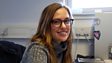
Federica De Caria
is a video journalist for Falkland Islands Television
In her latest post from the Falklands, Federica De Caria talks to three key editorial figures in the islands’ media about their somewhat accidental career paths and what it takes to run a newspaper, radio and TV station in the South Atlantic.
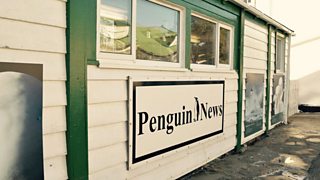
Journalism is not a cool occupation here in the Falkland Islands.It’s a small community where everybody knows each other and knows what’s going on, long before the radio station transmits its daily bulletins or the local TV channel or newspaper put out their weekly editions. You get your news at the supermarket, by talking to people.
The MLAs (Members of the Legislative Assembly in the Falklands Parliament) answer their critics personally on social media through their Facebook profiles, or can be simply stopped on the street.
“Criticising the Government here is very difficult”, said Lisa Watson, editor of Penguin News, the local paper. “In the UK, or elsewhere, often the criticisms come from speculation. People don’t always know what’s going on, so they speculate. But here, the politicians are almost too naive to be corrupted, which actually makes the whole thing quite tricky.”
To explain what it’s like to work for the Falklands media, and to explore its special challenges, I talked to some of its leaders. I’ve been working for the local television station for almost two and a half months, and was looking forward to having my questions answered by those who have worked in this unusual environment for a lot longer than me.
Lisa Watson, editor of Penguin News
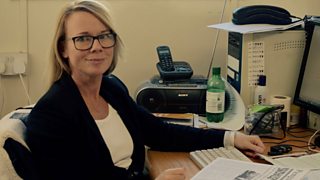
Lisa (above) was born in the Falklands, studied English Literature in Wales, lived in Cyprusfor three years and has been working at the local newspaper for more than17 years – for most of them as editor.
“My start with Penguin News was kind of accidental,” she explained. Like a lot of other things in the Falklands, people can oftentake on very different roles in a short period of time or even a couple at the same time. When Lisa came back from college, she started working for a fishing company as an office manager “just to make some money.”
Then she received a call: “The editor of Penguin News at that time lost his deputy. He knew I’d studied English, he knew me a bit. So he just asked if I wanted to take on the vacancy. I resigned from the fishery company immediately”, she explained, smiling. She became editor when, a year later, the sitting editor became the islands’ head of tourism.
Lisa learned on the job: “The editor who I started with was a former teacher, so he was writing almost from a writer’s point of view as opposed to a journalist’s. He gave me free rein and I picked up how he wrote. But I soon understood that you have to write in a different way, in a more easily digestible way. At the beginning, my sentences were really long…”
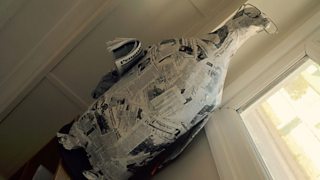
An office mascot has the weekly news all wrapped up
Lisa received some training from BBC presenter/producer Peter Stewart who wrote about his own experiences on this blog. He was able to travel to Stanley, independently of the BBC, thanks to a successful application to the government development fund.
The Falkland Islands Media Trust, which organised her training, has a certain authority both with Penguin News and on FIRC, the radio station, while the local television station is private. The Trust doesn’t interfere editorially but it can help the newspaper and the radio station financially and take care of filling vacancies.
Lisa’s biggest impact on Penguin News was to make the paper independent. “Now we make enough from advertising, so we don’t need any income from the government”, she explained. “We were uncomfortable receiving government money – not because they ever tried to dictate us a line, but because of the perception that they could have.”
In Lisa’s newsroom, just three people run the paper: Lisa, her deputy and somebody who takes care of administration and advertising. Every week it’s a mad rush to get the pages to the print shop on time.
The news might be a bit old, the editor admits: “But we can’t get too precious about the fact that everything we put in the paper is going to be pretty much already reported by the radio station or FITV. In the end, it doesn’t matter because people here still like to sit down and read the paper slowly and try to digest concepts.”
Liz Roberts, news editor at Falkland Islands Radio
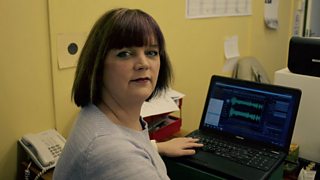
Liz (above) has worked both for local TV and the radio station, but her passion has always been for radio. “I love the way you can hide at the radio station. In radio, you can be yourself, and it doesn’t matter what you look like. You can show up in your pyjamas”, she joked.
Liz came to the Falklands as a teenager. First, she worked in shops and pubs. “It’s not very often that a job in the media comes up here. So when I found an opening at the radio station for the evening shows, I applied immediately”, she said.
Once again she’s been trained on the job. “I’ve done about three media courses,” she explains. “The one I’m doing right now is a six months course via email. We’ve done courses before with the same journalist from the BBC, and he’s due back soon to complete the last stage of the training.
Liz has been at Falklands Islands Radio for about 12 years. There’s a daily routine, but it can change: “For example, the first bulletin at 8am is meant to be three minutes long, but it doesn’t always work that way. It depends on what’s going on in the news.”
If both Liz and her assistant are sick, then most likely there’s not going to be any news broadcast for that day.
In Liz’s view, working in such a small community has its positive and negative sides. It can be hard to get people to express their opinion, as they’re scared of being judged by the rest of the islanders. On the other hand, sometimes you can get a news story from your neighbour.
Paula Fowmes, station manager at Falkland Islands Television
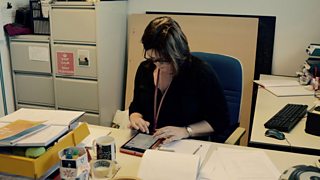
Paula (above) arrived in the Falklands in November 2010, following her husband who had just started working for management company Stanley Services. Part of her husband’s role was to help set up Falkland Islands Television and be in charge of its finances.
Paula had worked in the UK as a senior teaching assistant, a role that also saw her putting together short films for her school. “When Steve got the job down here, I said ‘OK, I’m going to write my book’. I’d always wanted to be a writer."
But something else came along. “There was supposed to be someone from the UK coming to run FITV but she pulled out,” she explained. In a couple of months, Paula found herself in charge because nobody else was able to do it.
The channel is owned by Stanley Services and digital platform KTV. It’s completely separate from the Media Trust. “We have our own code of practice”, Paula explained, “we don’t have any need to be under the Media Trust. There are times when we have given our audio to the radio station or taken photographs for Penguin News and I truly think that a local media group would be a brilliant idea. On the other hand, as it is now, you’ve got just that little bit of competitiveness between the three, which is good.”
When I asked what was the hardest thing about working for a TV channel here, Paula talked about the nature of the community: “People have so many different hats. You could be talking someone who is high up in the government, and you really want to quiz him and put him on the spot, and maybe two weeks later you’ve got to ask his permission to go and film something on his land. In the UK you could probably be more hard-hitting.”
The FITV staff received an initial two week course in camera-work,editing, journalism and presenting. The team was justtwo people in the beginning. “It was very clear, after just a fortnight, that the two of us weren’t enough”, said Paula.
FITV is unique on the island because it’s the only media thatoffers a trainee scheme for journalists from overseas – something they started after struggling to recruit people on the island.
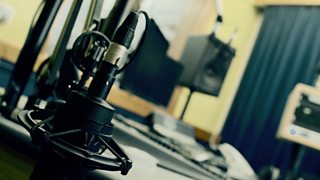
Inside the Falkland Islands Radio studio
As you can see, news in the Falklands has a dominant female voice, as well as a local one. All three of my interviewees had a vision for the future of their outlet. The paper would love to introduce more columns and analysis, whereas the radio station and the TV channel want more entertainment programmes.
But any media in the Falklands depends on an understanding of how to work with the community. You have to produce the news both for your audience and with them. You need to know and respect their rules, or they might not want to talk to you. Working here is not like working anywhere else.
Read Federica De Caria’s other posts from the Falklands
How do you report a Falklands trial when you know everybody involved?
How to tell TV news stories: Frank Gardner
