How the BBC stays safe in the world’s most dangerous places

Chris Kemp
Head of High Risk and News Safety
Tagged with:
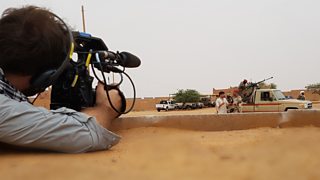
The BBC High Risk and News Safety team has its origins from the time of the Bosnian conflict in the 1990s, when the war's easy accessibility led to a lot of journalists, many of them freelancers, getting killed or injured. There was a need to do something more systematic to make this safer.
The volume of work is mainly from BBC News, but also from Sport, such as for covering the World Cup in Russia; Brazil for the Olympics and World Cup; and the Winter Olympics in South Korea. Other departments we’ve worked with are the Natural History unit, when they’re going out to remote areas, and BBC Factual, for example on a trip to the Goma Volcano Observatory in the Democratic Republic of Congo.
BBC Media Action, the corporation’s charity which provides training and support to local media across the globe, runs projects and programmes in places like Afghanistan, South Sudan and Nigeria, which require our involvement. There are more than 60 BBC international bureaux, with two thirds in areas where there are security concerns, for example in Baghdad, Kabul and Kinshasa.
Risk can also mean high levels of criminality, or government interference. There are many places where the media, and the BBC, are seen as problematic by governments.
There are 16 people in the team, with six constantly deployed around the world going out with teams. They’ve all been in this kind of work for more than ten years, from military, emergency medical, police, and security backgrounds, with a lot of overseas experience. We have people who were in specialist units of the British Army, trained in surveillance and counter-surveillance; covert camera work is pretty similar.
High Risk and News Safety team members are also trained in advanced emergency medical techniques and can provide trauma support in-country.
We advise on one or two situations involving individual members of BBC staff every week, from minor detention at checkpoints, to threats to life. Some complicated cases can continue for months, or years.
We’re probably the largest such team in the world because I don’t think anyone else covers as much as the BBC does - we carry out around 1,000 risk assessments for high risk deployments every year.
On our current radar is the situation in Yemen; Kabul is always a concern given the complex and deteriorating security situation; lots of teams looking at accessing north east Syria; and of course Russia is always full of surprises.
Mosul has probably been the place which has most worried me. Not only were the risks exponentially high but we had teams exposed to these risks for extended periods. There were a number of very close calls, particularly reporting from the house-to-house fighting in the old town. The so-called Islamic State were prolific in their use of improvised explosive devices and expert in setting these up as booby traps.
While we provide the advice, it’s always an editorial decision whether to go or not. We see these difficult decisions being made every day. The BBC is full of experienced, ambitious, professional journalists, who want to get out there and get the best stories. Our challenge is about making them as safe as possible.
