
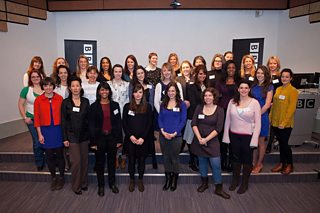
Last Friday 30 female specialists in subjects ranging from physics to addiction braved snowy conditions to make it to the BBC Academy’s headquarters in London for a day of training, discussion and networking.
Titled Expert Women’s Day, it was our attempt to address an industry-wide issue, widely acknowledged by broadcasters, that we just don’t hear from enough from female experts in the mainstream media.
It was a pilot project, one which aimed to demystify the media and give a skills boost to some very eminent female experts. This would then give them the confidence to put themselves forward more readily to media outlets as potential contributors, interviewees and presenters.
We spoke to commissioners and editors to find the editorial subject areas they had most difficulty finding female experts in, and then advertised the free day online. The response was overwhelming - we had an incredible 2,000 applications. It was tough to whittle them down, and the process meant that we now have a database of more than 200 experts with video clips that we are now sharing with editors and commissioners.
The final 30 (pictured above) were eventually selected because of their intense passion for their subjects and their ability to communicate in a clear and engaging way. They are an impressive bunch who vary in age from their 20s to their 50s, and come from diverse range of backgrounds.
One of the most distinguished candidates, Professor Frances Ashcroft, is a physiologist whose specialism is insulin and diabetes. Last year she was awarded the highest science award in the L’Oreal-UNESCO Women in Science Awards. One of our youngest scientists is a dynamic science communicator, Stephanie Hoddinott, who presents shows with Explorer Dome, a portable planetarium company that travels across the UK.
It was fantastic to see them and their fellow experts in action on the day in the Academy’s TV and radio training studios. Here they got hands-on experience of interview situations which ranged from One Show style sofa encounter to a radio panel setup like Radio 4’s Start the Week.
Afterwards they received honest feedback, which is invaluable for any contributor making an appearance in the media. Often contributors will only have a few minutes to put across complex information in a conversational manner. Having someone iron out any awkward postures or complicated language means that when our expert women enter a studio, they’ll know what to do.
One woman said how she learned how to make her presentation interesting and animated in a variety of different ways: some topics lend themselves to smiling, but talking about rebellion amongst renaissance puritans with a big grin on your face doesn’t quite fit. Another remarked on the surprising intimacy and conversational nature of her panel session in the radio studio – she’d been up all night memorising facts and figures, but found most of these weren’t needed when she just relaxed and went with the flow.
A key part of the day was for our experts to meet senior figures from across the industry. At the networking lunch we had over 50 commissioners, producers and other industry figures on hand, while in the Business of the Business panel sessions – which were filmed and streamed live via the BBC Academy website – they found out how the media works from the likes of Andrew Cohen, head of the BBC Science unit, Radio 4’s Jane Garvey and Sky News anchor Kay Burley. It was a golden opportunity to meet some of the most important decision makers in factual programming, and something our experts certainly made the most of.
Many people helped make the event a reality – it was truly an industry-wide response to an industry-wide problem. Broadcast magazine, Creative Skillset and FindaTVExpert.com were all involved, and we had representation from all the major broadcasters and many independent production companies.
This is an issue that isn’t going to go away, and I’m sure it will remain on the agenda for some time. But I believe events like this are a step in the right direction. Thanks to support from BBC Diversity we will now be taking a couple more of those steps: the next few months will see a follow up day and also a repeat event for a further 30 women who originally applied but didn’t quite make it through.
In the meantime, I hope that our expert women now have the confidence and skills to take their passion for their subject to an even wider audience than ever.
Anne Morrison is Director of the BBC Academy.
Expert Women’s Day featured on Radio 4’s Feedback programme on Friday 25 January.
Dr Emily Sidonie Grossman has written about her experience of the Expert Women Day on the BBC Academy website.
