
Every year we have to counter the charge that the numbers of backstage talent the BBC sends to create Glastonbury is excessive. If the figures were 600, 300 or 100 people I don't think it would make any difference. Last year we sent 274 staff and freelancers and this year it will be less.
Glastonbury is a major cultural event and the UK's most significant popular music festival. Last year our coverage reached nearly 16 million people, was listened to by 5.7 million individuals and the website featured around 170 hours of video. The BBC prides itself on its high-quality coverage of major events like Glastonbury, so I thought I'd give you a glimpse of what I see backstage to give you a better scale to understand why, later this month, the BBC will send 263 of its best people to Somerset to bring a huge amount of content to our audiences across all our platforms.
The Glastonbury site is 1100 acres - more than double the size of the Olympic Park and Alton Towers and the equivalent of 550 football pitches - it's huge! It took me an hour to walk across the site (with no people there) and when at capacity over the weekend with around 135,000 people on site it can take much longer!
We have cameras and crew at six stages across this massive site - bringing audiences 38 hours of TV on BBC Two, Three and Four and around 50 hours of radio across 6Music, Radio 2 and Radio 1 plus extensive coverage on bbc.co.uk, as well as on four Red Button streams, offering a complete multi-platform experience.
As a former sound engineer, I'm going to tell you about the main Pyramid Stage sound for the Radio, TV and on-demand. We're talking about delivering some of the world's greatest artists (this year there's U2, Coldplay and Beyoncé) to your TV, radio and computer in super quality. I can tell you that mixing the hundreds of sound feeds does not happen on mobile disco equipment - Sound II is the BBC's big digital mobile music studio - a truck crammed with the highest possible quality mixing desk, monitoring and FX systems. Inside, our very best sound engineers work on a shift system to deliver great sound day and night; there are stage technicians who lay the cables and set the mics; and production assistants who log, time, quality check and upload hundreds of tracks so that the BBC Radio stations can play out live music in their Glastonbury specials.
This is only one stage and only the sound - across a sprawling site which is bigger than Bath. There's also the John Peel Stage, West Holts Stage, The Park Stage, Other Stage and BBC Introducing Stage with each one having dedicated technical points. And there are dozens more stages, tents and areas where music and comedy acts are doing their thing - so getting around the site with equipment and artists can be a real challenge.
All this, even before we get to the multi hi-def camera points, the vision mixers, directors, vision control engineers, producers, the website techs and the fact that tons of kit has to be installed in a fairly remote valley in Somerset and taken down days later by riggers and drivers. I hope you'll appreciate that this is why it takes the number of people it does to deliver the BBC's high quality multi-platform content. I should add that as the broadcast partner, the BBC's pictures are beamed across the world with BBC WorldWide selling rights to coverage overseas and generating funds to be invested back into the BBC for making programmes.
And this is certainly no 'junket'. There's no BBC corporate hospitality and any BBC executives attending will also be working. Every member of staff onsite has a clear and accountable role - working hard and extremely long hours to offer unparalleled coverage. The people who work at the festival are some of the most dedicated, talented hard-working and professional crew I have come across in my career - and I have been around a long time!
Andy Parfitt is Controller Radio 1, 1Xtra, Popular Music and Asian Network
- More details of this year's festival on the BBC Press Office web site.
- The BBC's Glastonbury web site has this year's lineup and an archive or content from previous festivals.
- The official Glastonbury festival web site has further news and information - although tickets are sold out.
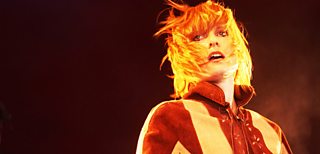
- The picture shows Lisa Elle from Dark Horses on the BBC Introducing Stage at Glastonbury 2010. It's by Rory Connolly.
