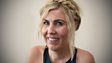
BBC Three's Defying the Label season tackles perceptions of disability with real stories from a 'disabling world'. As the season launches tonight (Monday 20 July) Nikki Fox the BBC's Disability News Correspondent talks to us about her role.
It's been a year since you were appointed Disability Correspondent for BBC News. Give us a rundown of what that year has entailed.
It’s really been one of the quickest years. The very minute our team was established we hit the ground running. Before I knew it I was buying a few smart jackets and setting off to film across the country. One of our first stories took us to Hull to meet two disabled managing directors of a company that supplies and designs technology that assists disabled people, like the exoskeleton. A robotic suit that helps people who can’t walk, walk. Next we covered assisted dying, the peg being Lord Falconer’s bill. I was aware many disabled people were keen to see an alternative to the ‘pro’ argument that up until that point, they felt, hadn’t be covered on national news. Producer Ruth found Pam, a seventy-year-old lady with Motor Neuron Disease who could only communicate using her eyes with the help of a funky bit of technology. Pam didn’t want to die, or for the bill to be passed and she wanted the audience to know. The cheekiest, most intelligent woman I’ve met in a long time (we’ve shared a few emails since, mainly juicing recipes). I’m still very proud of that piece and I think it showed what our team can do.
But I’ve always been adamant that I want a balance, I want fun and uplifting stories alongside the serious and I think we’re achieving that balance quite nicely. I’ve been in Nic Hamilton’s racing car at 150mph, my little chubby cheeks squished in a headache-inducing helmet. Brother of Lewis, he has Cerebral Palsy and is the first ever disabled driver to compete in the British Touring Car Championships. He was great and I’m very proud of that piece AND we got to use the drone which got some unbelievable shots of Nic’s car at high speed.
We’ve covered a lot of stories including disability hate crime, autism, personal independence payments (PIP, the new Disability Living Allowance), assistive technology and I got to have a go at walking in an Exoskeleton, that was quite something. I’ve also made two major radio docs for BBC Radio 5 Live, one on dating, sex and disability called Date Me, I’m Disabled, the other was called Learning to Walk Again.
This unit was set up to get stories that affect disabled people and their families on the national news and there are high expectations of our Disability Affairs team (made up of senior producer Ruth Clegg and shoot edit David Cheeseman) not just from my boss Dec, but from everyone in news. They want us on Breakfast, the 1, 6 and 10 o’clock, all radio and online, so we need to come up with the goods and that’s exactly how it should be.
What attracted you to journalism?
I didn’t get in to journalism the traditional way. I didn’t study it at Uni or work for a newspaper, I studied Music, I was terrible and then I worked really hard for what felt like a very long time, knowing that this was the job I needed a substantial CV to land.
I had a career as a producer behind the scenes in TV on mainly factual entertainment programmes for C4, ITV etc. But at the same time I was given the opportunity to write and direct my own film and co-present a mini series of How to Look Good Naked with the lovely Gok Wan. Always working in-between the big jobs, I was then lucky enough to get a meeting with the controller of 5 Live who gave me my first opportunity to make a one hour radio documentary and I will forever be grateful for the faith he put in me. Paired with an independent production company and producer, we made the Adventures of a Blue Badger about what it’s like being disabled in 2012. It won a Sony Award. We went on to make a further four documentaries for BBC Radio 5 Live and Radio 4. Ideas I wanted to investigate like what’s it like being physically disabled and in prison, being unemployed. Disability and sex/dating and learning to walk again, what's not to love about all that.
I think it was also important that even during those dark financial freelancing years, I always turned down requests to talk about my experiences and myself as a disabled person. I had never wanted that, I’m not a campaigner. That doesn’t mean I don’t care, of course I do, privately, but like any other journalist or correspondent I work with, my job is not to express my own opinion but to tell a story in a fair, balanced and engaging way. Gary Smith, one of the big bosses in London praised my 'editorial rigour' the other day: Best. Compliment. Ever.
I’ve done plenty of other jobs along the way but whatever I’ve done, I’ve done to the best of my ability and worked hard. It’s not all been smooth, if anyone’s having a tough time work wise I always say, don’t worry, the How to Look Good Naked episodes I presented went out on Channel 4 around the same time I had to start signing on at the job centre for a brief while. I’ve never had so many people asking me if TV pay is that bad.
How has the role helped raise awareness of disability-related stories?
My role was created because the BBC understood that in news, stories to do with disability were not being covered quite as often as they should. They recognised this and then did something about it by creating our unit.
As a correspondent my job is to cover these stories. In the past, whether it’s the radio documentaries I have made or the short film I directed for Chanel 4 on subjects to do with disability, I have always thought of the wider audience, of making these pieces interesting, engaging, and (where appropriate) entertaining, so that those who aren’t disabled can get something from them. That's my job in a nutshell.
How has the role changed your perception of disability? What have you learnt about yourself?
I’ve learnt that a regular blow dry is very important when you work in news and have hair like mine. On a serious note, I’ve always been strong when it comes to what I want to achieve and the kind of pieces I want to put out whether that's for radio, TV or news. I’ve learnt that I’m even stronger than I thought.
Nikki Fox is the BBC's Disability News Correspondent
- BBC Three's Defying the Label season is made up of 15 programmes across four weeks, examining life for young people with a disability. Opening on Monday 20th July with the BBC Three drama Don't Take My Baby based on a true story, the season of programmes from specialist documentaries to current affairs features and a comedy panel game show explore issues ranging from invisible injuries to acquiring a disability later in life; sex and romance; poverty; bullying; hate crime and role models. See the full schedule.
- Read the press release
- Watch the season trailer
