
The viewing public seem to have awarded new Doctor Who Matt Smith an overwhelmingly enthusiastic thumbs-up. It's great news for him, the team at BBC Wales and the BBC, especially as these tricky transitional times haven't always been so warmly received. As a document from the BBC Archive's latest collection shows, even the most popular Doctor Who actors had a rough ride when they made their first appearance, such as Tom Baker, ever recognisable with his long, multi-coloured scarf and staring alien eyes, who initially struggled to win over fans of his predecessor Jon Pertwee. The naysayers were soon won over though and Baker went on to star in the series for seven years.
Back in February, the BBC Director of Archive Content, Roly Keating, promised that the BBC Archive would be providing an online retrospective of Doctor Who to tie in with this latest series.The BBC Archive Collections team revealed all this week with a collection that contains three galleries of images, each telling a different story of Doctor Who's history, plus nearly 60 years of correspondence, internal memos and Radio Times clippings. My particular favourite is a memo proposing how a potential replacement for original Doctor Who William Hartnell might come about, in which the process that would come to be known as regeneration is described in detail.
"The metaphysical change which takes place over 500 or so years is a horrifying experience...It is as if he has had the L.S.D drug and instead of experiencing the kicks, he has the hell and dank horror which can be its effect."
You can read the full memo here.
Just like the Tardis there is much more to discover than is immediately apparent so I urge all die-hard Doctor Who fans to go and explore the collection.
Also, be sure to check out Andy Dudfield's post about the relaunch of the Doctor Who website.
If you saw the last episode, you'll know that the Doctor will soon be meeting the legendary statesman Sir Winston Churchill.
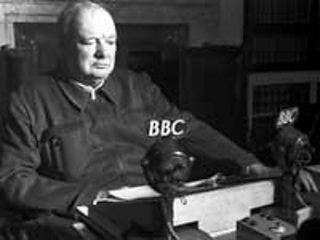
Sir Winston's complex nature is revealed beautifully through interviews with the people who knew him. Colleagues such as Anthony Eden and Harold Macmillan pay tribute to him, while we also hear from his former bodyguard, his private secretaries and the cook who served at 10 Downing Street for both of Churchill's terms in office. A real gem in the collection is an interview with Lord Alanbrooke, who was one of Churchill's closest advisers during World War II. Promoting the publication of his diaries, Alanbrooke discusses Churchill's strategies and reveals that at one time or other, he tried to have every one of his senior advisers sacked.
The Churchill collection is vast, offering so much to discover about the legendary statesman who was voted greatest of all Britons by BBC viewers in 2002.
