On 23 October, 300 lucky ticket-holders attended a special screening in Bristol of the first episode of Seven Worlds, One Planet before it aired on BBC One last Sunday.
It is the first BBC wildlife documentary to focus on each of the seven continents in one series and concludes 1,794 days filming 2,260 hours of footage. Those at the screening for the first episode joined Sir David Attenborough, the show’s narrator, in exploring the depths of Antarctica.
Bristol is also the home of BBC Studios’ Natural History Unit where Seven Worlds, One Planet was produced. Working in wildlife documentary-making is a job like no other. I spoke with Fredi Devas (Producer), Abi Lees (Assistant Producer) and Bertie Gregory (BBC NHU Camera Bursary recipient) who all worked on the first episode, Antarctica, about how they got here and about their highlights working on the series.
How did you start working in wildlife documentaries?
Fredi Devas: I did a degree in Zoology and then a PhD in baboon behaviour, following them around in the deserts of Namibia for three years. But I was always really keen on photography.
After, I did an anthropological study into the bush meat trade in Central Africa, I then worked on the sound for Meerkat Manor in South Africa. My role was really to hold the boom and collect sound, relatively straight forward, but it was much more taxing to try and recognise all the individuals in all the groups we were filming, and to predict their behaviour. Those six months solidified that I really wanted to work in wildlife documentaries. It was from there I ended up working at the BBC on Frozen Planet, which was amazing as I had always wanted to work in the polar regions.
Abigail Lees: I was surrounded by wildlife in my childhood. I lived in Australia so growing up around ‘the bush’ certainly inspired me.
I have always been into natural history documentaries. I read David Attenborough’s autobiography Life On Air when I was 15 years old, and in it he mentions that he studied Zoology at university. So I got it in my head that I had to study it too. I read Botany as well, and also completed a Bachelor of Journalism, so I spent a bit of time at university. I did two degrees and two majors within science at the same time - I really wanted to get this job!
I moved to Bristol because I knew that was where I needed to go to get my foot in the door. I spent two years working at a pub and did a couple of unpaid internships for some small independent production companies around Bristol. Then I became a runner at the post-production house Films At 59 - where most of David’s films are edited. I’d buy fruit, clean the suites, make coffees and make toast for the editors.
Bertie Gregory: I’ve always been obsessed with wildlife, I think that’s because my family were obsessed with watersports so I spent a lot of time bobbing up and down the coast of Cornwall on a surfboard. When you spend that much time outside getting a face full of freezing cold water, you by accident begin to appreciate being outside with wildlife!
I grew up in Reading and explored some nearby farmlands with loads of animals. I began to realise if I took pictures of the animals, I could explain to my parents when I snuck off for four or five hours. I then won a competition called 2020VISION, and so I was mentored for 20 months by 20 top photographers. I thought I drew the short straw because I was stuck with rats and pigeons as a photography subject, but I struck it lucky as my pictures of animals in an unusual setting stood out.
I then went to Bristol, the home of wildlife film-making, to read Zoology, so I would have three years to make contacts within the industry. After graduating I worked for National Geographic as a camera assistant to Steve Winter. This gave me the skills and experience to apply for the BBC’s NHU Camera Bursary. Having spent many hours flying drones for Steve, I thought I could help bring something new to the project which turned out to be a key tool on Seven Worlds. And now, since I finished on that I’m freelance working with Natural Geographic producing and presenting on-camera for them and behind the camera for the BBC.
What is it like working in the Natural History Unit?
AL: I was starstruck when I met Sir David. After a few hours in the green room, all I could pluck up the courage to ask him was, ‘have you eaten David?’ He said ‘yes’. I said ‘great’ and then I just walked away! It was ridiculous. My hero is in front of me and I have not an interesting word to say. Wednesday night, at the public screening of Antarctica he did this amazing speech about doing our bit for the environment and the little things we can do to help. Every time he speaks he instils hope, and he inspires young people.
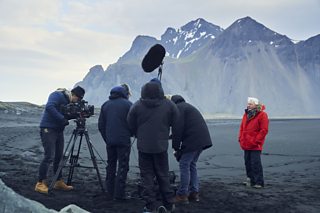
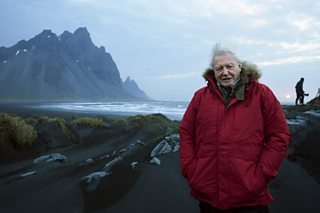
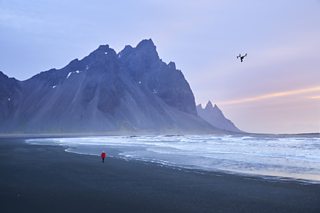
BG: I got to film Sir David on the beach in Iceland, I was doing the helicopter and the drone filming with him. So to be on location with him was amazing. I’ve been face-to-face with polar bears, but none of that comes close to the fear of flying a drone over Sir David Attenborough’s head!
Watch the Prequel to the Seven Worlds, One Planet series below - featuring an original composition by Hans Zimmer and vocals by Sia.
What were your teams like?
FD: I think we had absolutely fantastic filming teams on the Antarctica episode. When you are going to very remote places, if something bad happens you need your team to look after you. We were 10 days sail from the nearest hospital - longer if there’s a storm - so you’re looking at potentially keeping someone alive for two weeks. And of course we’re going to be sensible on location. We go in there with a really light touch to respect the wildlife.
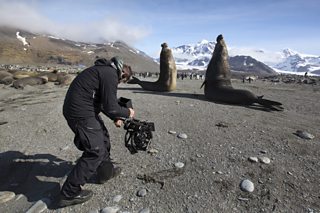
AL: You might not see a colleague for six months at our weekly Seven Worlds meeting in the office, because there is always someone away on location. When you do, you have this huge catch-up. You know you’re making something big and there’s a great glue that binds the team together. We’re all very passionate about what we do. It’s very much a family atmosphere, even if you haven’t seen them for six months.
What were your highlights of being on-location?
AL: I have had so many firsts, it’s ridiculous. I got to film the grey-headed albatross with John Aitchison, a hugely skilled wildlife cameraman. He filmed the albatross 20 years ago, 10 years ago and then with me, so it was a privilege to work with him.
Another highlight was filming a great whale feeding aggregation in Antarctica, which has never been captured on film before. Bertie and I shared this moment, and our footage, with the scientists who dedicate their lives to studying them. It was a very special moment.
FD: It was a hell of a journey getting to the location where we filmed elephant seals fighting. The seas were really rough, and I felt sick continuously for that entire 10 days sailing. When you arrive at St Andrews Bay what you see is pretty spectacular. The beach is rammed with elephant seals, beyond them is a colony of 500,000 king penguins, and rising right up from the beach are mountains the size of the Alps.
Some of these animals may never have seen a human before. The king penguins don’t perceive us as threat. I was getting everything prepped for our camera operator when a king penguin just came over and looked through my stuff! This penguin just started peering into my camera bag, and then gently nibbled at my trousers. It was just investigating gently. It was trying to make sense of what all these alien objects were. It was a magical moment.
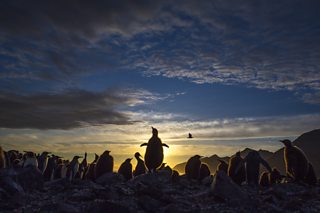
BG: I was lucky enough to film for six of the seven episodes and a total of 12 sequences in the series, so picking one highlight is very difficult. But a highlight which Abigail spoke about - the congregation off the coast of Antarctica - to see that many animals in one location was just amazing. That is a feel-good story, a spine-tingling special moment.
What would you say to someone who wants to be doing what you do?
AL: Have that resolve. If you really want to work in this field you have to be happy to work your way up and do those menial tasks, which really show you’re a hard-working person and that you really care.
I’d say absolutely go for it. It is hard work and hard-graft. Nothing is beneath you- make a coffee and make it well. Put your all into every job you do.
BG: We live in a really amazing age where cameras are really affordable. The quality of a phone camera is crazy. You have a camera, you have a platform like YouTube. If you want to make wildlife films you should make wildlife films. Use your initiative and be proactive. Everyone’s route in is different and totally random but it’s your initiative that counts.
FD: My key advice is to demonstrate your passion for the natural world. If someone is absolutely passionate about the natural world then there’s a role for them in wildlife film-making. It doesn’t matter what your background is or your academic results, you’ll find a role.
The first episode of Seven Worlds, One Planet, Antarctica, is available now on BBC iPlayer.
Asia, the second episode, is on BBC One and BBC iPlayer from Sunday, 3 November from 6.15pm.
