Sarkozy marks anniversary of General de Gaulle's BBC broadcast
There's no denying that we British are a bit funny about the French. We love them for our houses in their countryside, their tasty gourmet food, their filmstars, their sex appeal. But when it comes to politics, it's a very different story. So it's a turn up for the books when there's a real moment of entente cordiale. And not token co-operation, but absolute open emotionalism.
I witnessed it at the French Institute, when I went to the first UK screening of a film about 'the Free French' in London during WW2. At the end of the film, an auditorium of (mainly) French viewers stood up and applauded their surviving Resistance fighters but also the BBC that gave them a unique voice.
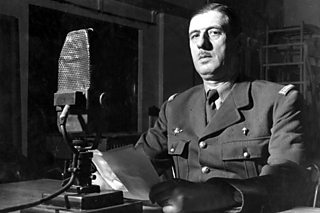
It will be even more publicly expressed when President Sarkozy, his wife and an entourage of over 800 people come to the UK - and more especially the BBC - for the 70th anniversary of General de Gaulle's famous broadcast on BBC airwaves to occupied France on 18 June 1940. We in Britain know little about this momentous broadcast, but for the French it is absolutely huge. For this broadcast did in some way create the public personality of General de Gaulle, create the Resistance movement, and in turn create (in modern memory) the idea of unified and free France. President Sarkozy has himself said - 'We are all the children of the 18 June'.
So what exactly happened? General de Gaulle had fled his country on June 17, 1940, as the new administration, sought an armistice with Hitler. A relative unknown, de Gaulle entreated the British government to let him broadcast to France from London in a last ditch attempt to save his country. The cabinet initially refused but Winston Churchill insisted. And so the general went on air urging the French not to capitulate, but to fight on alongside Britain and the US, ending his broadcast with the famous words: 'The flame of French resistance must not, and will not be extinguished.'
The French Resistance - which went on to play a crucial role in defeating the Germans - was born as a result, and de Gaulle named as its leader. The Free French (as his followers were called) were allowed five minutes each day on the BBC French Service to broadcast to occupied France and orchestrate their defiance. Many impassioned addresses were made by de Gaulle himself, either from Broadcasting House or Bush House, and he was regarded as the 'secret hope' by those living under German rule. Even today, the sound of the opening jingle of those BBC broadcasts can bring tears to the eyes of surviving listeners. 'Unprecedented in media history' is how one of the most famous Resistance survivors described these lifeline broadcasts.
It's moving and humbling to be told by others of the impact of the BBC 70 years ago, and it's salutary to remind ourselves that wars go on, media freedom is still a precious thing, and many of our BBC News and World Service colleagues are today carrying on that vital role of giving voice to the voiceless on air.
Robert Seatter is Head of BBC History
- Director of BBC Global News, Peter Horrocks speaks to the Telegraph
