Lallo Lallo: Telling children’s stories on BBC Pashto

Najiba Kasraee
Editor of the BBC Academy International Sites
Tagged with:
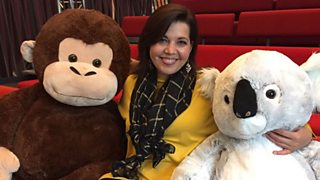
BBC Pashto has started a 10-part digital and TV series of bedtime stories for children. Yes, that’s right – in the company of a (toy) bear and monkey, I am telling children in Afghanistan, Pakistan – in fact, anywhere else in the world – fairytales in Pashto, about honesty, sharing, being safe in the street, the importance of brushing their teeth and washing their hands and many other things that help educate them about the world around them.
The diversity of the BBC World Service is its inherent - and celebrated - quality. As Editor of the BBC Academy International Sites, I live and breathe this diversity, working with our language teams to ensure that BBC standards of impartiality and accuracy are maintained by the journalists of our language services.
This diversity also manifests itself in the way different language and regional services reach out to, and engage, their audiences. As a former BBC Pashto journalist, I know that very well. The new BBC Pashto children’s stories series has a story of its own.
It was 1995. Civil war was raging in Afghanistan. The country was controlled by several warring factions, and as we reported conflict, destruction, internally displaced people and refugees, we couldn’t help thinking about how all this was affecting the children. We were acutely aware that there was hardly any programming produced for them. Hardly any books were written for them. All they had was war. And when they played games, they played war. I will never forget seeing a group of four- or five-year-olds in Kabul playing a game, pretending to be injured by rockets. They were “waiting for an ambulance” – and, holding the boy, the little girl was saying, “He will survive, he hasn’t lost too much blood!..”
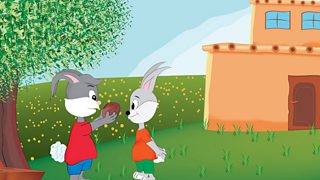
At the BBC in London, we started a weekly radio programme for children. I had come up with the idea of Kharaki, the little rabbit, my co-presenter. As I read my stories to my little daughter, her reaction helped me to fine-tune my narrative. I made Kharaki ask the questions my daughter had asked me. Although Kharaki was a radio character, we all knew she was a grey rabbit – and who voiced her remains a well-guarded secret to this day.
Kharaki won hearts across Afghanistan as she helped me tell stories about hope, health, respect, living without parents or being disabled by war. Those were stories of a glittering fairyland where peace was the winner and everyone loved each other. Three generations in families would come together to tune in to our stories. And those, who didn’t have a radio set, went to their neighbours’ who had one.
As a BBC Pashto journalist was interviewing a senior Taliban commander in Kandahar, at the end of the interview my colleague was asked by his interviewee, now smiling: “So who really is Kharaki?” The BBC journalist’s response was: “She is a very dear member of our team.”
After all these years, young Afghan men and women still tell me that they grew up with our stories. I am proud and humbled and moved every time I hear that.
When the BBC Pashto Digital Editor, Ismail Miakhail, asked me to help create this new, digital and TV series for children, to reach out to an undeserved and new audience, I first saw it as a challenge. Do I still have that voice, will I manage that tone? But spurred on by the medium of TV, the tales were evolving.
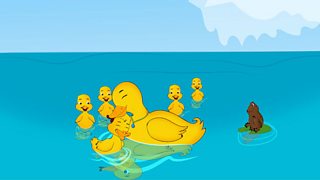
We made a point of finding a female Afghan artist to illustrate the series. Nineteen-year-old Nasima Mohammadi in Kabul worked to our brief, creating heart-warming characters and scenes which connect a child’s everyday life with a world of magic. She told me that working on the series had been her best professional experience.
Our Lallo Lallo (Lullaby) series is now running on bbcpashto.com, on Shamshad TV in Afghanistan and a Pashto-language channel in Pakistan, Mashriq TV. As we reach out to the young children in the region, we also hope to reach out to their parents and make them active consumers of our news and information.
Reaching young and female audiences is a priority for the BBC World Service around the world – but especially in this very important region. I hope that as I greet my audience – Salam, granu kuchnanu (Hello, dear children) – families in those remote places will welcome me to join them during their peaceful evening hour. I hope that our stories will add fun, colour – and a tiny bit of magic – to their lives.
Najiba Kasraee is Editor of the BBC Academy International Sites
- Find out more about BBC Pashto
