How we learnt to dance

Wayne Garvie
Chief Creative Officer, International Production at Sony Pictures TV,
Tagged with:
The movie Strictly Ballroom is about an ugly duckling who becomes a swan through dance. The dancing isn’t Ginger Rogers and Fred Astaire, it’s regional Australian ballroom dancing. Its big song wasn’t even a Number One. The lead actor was a roofer. It shouldn’t have worked. No one should have seen it. And yet...
May 2004: “Glitter balls, sequins, scantily clad dancers – it doesn’t get more public service than this!” was how I introduced the BBC’s new entertainment show at its press launch. A launch that was met by total derision in newspapers, radio and even on Have I Got News For You. Another example of a terrible idea from BBC Entertainment. A programme that would not work. And yet, like the film from which we nabbed the title, it was an ugly duckling that became a swan.
Ten years ago, BBC Entertainment was in pretty bad shape. The launch of reality television caught the BBC out: whilst we were making Big Break, others were making Big Brother. When I inherited BBC Entertainment, I knew that we had to respond; we needed ideas that could compete in a changing landscape, ideas that were bold, loud and entertaining.
The spark for Strictly came from Jane Lush’s commissioning team. Jane deserves enormous credit for starting a golden age of entertainment on the BBC: Strictly, The Apprentice, Dragons’ Den, still hits almost a decade on, all commissioned by her. She was having a brainstorm with her team, discussing old formats, when Fenia Vardanis suggested a celebrity version of Come Dancing. But could the BBC make an entertainment show that had celebrities in it? Could we deliver it?
Jane passed the idea on to Richard Hopkins. Richard was the first person I brought in to kick-start the Entertainment department. I got lucky with Richard, he had been behind some of Endemol’s most recent successes and brought a different energy and perspective. A development team under Amanda Wilson, no more than a bunch of kids, people like Karl Warner, Nick Mather, Chris Sussman, all highly regarded now. And a new Executive Producer, Karen Smith.
Karen joined us in October 2003. Driven, tenacious, with a great eye for detail, she remains the best live entertainment producer I have ever worked with. Karen got the idea immediately. She had just overseen The Games for Channel 4 and she understood that this new show had to be a sporting competition; rigorous, true and authentic. The starting point was never Come Dancing – I don’t think anyone even watched the old show – the starting point was ballroom dancing as a competitive event infused with glamour and celebrities.
Karen and her series producer Izzie Pickstarted to learn everything they could about the ballroom dancing scene. There was scepticism and even hostility from many in the ballroom world. Surely we were just going to take the piss? There are probably a few dancers and judges out there who now regret refusing to return calls. Some of the characters the nation now loves were in from the start, especially Anton du Beke and Brendan Cole, who bawled out Karen at their first meeting: “They’re not sequins, they’re rhinestones!” But it was the dancers’ insistence that there had to be proper judging, that it couldn’t just be a popularity contest, which got Karen to design the 50:50 voting system.
Karen and Izzy wanted a staircase at the back of the set, because of a shared fantasy they had about standing at the top with their prince waiting below. They claimed lots of women did.
Originally there were going to be three judges. There was some push back against our fourth, mostly because of his age, but we needed proper ballroom expertise and that is how Len Goodman got on to the panel. Mind you, I don’t think any of us thought he would become an international household name.
To pitch the show to the then BBC One Controller Lorraine Heggessey we had to come up with something different. So we hired a small outside studio. Lorraine was ushered into a totally dark room. Lights came on, music blasted and two near naked dancers, glistening in baby oil, writhed inches away from her. I wouldn’t suggest this in any way affected Lorraine’s professional judgement – but put it this way, it didn’t do any harm. There was a slot in the summer available, let’s give it a go.
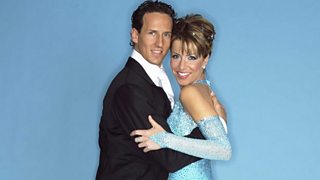
Casting the first series strained everyone. People weren’t exactly throwing themselves at us. We struggled to get eight celebrities. The hardest of all was Natasha Kaplinsky. We were desperate for Natasha. Natasha wasn’t sure it was the thing a BBC newsreader should do. There were meetings, lots of them. Somehow we got her over the line.
We learnt things along the way. Sports stars were good bookings: utterly competitive, used to training, they raise the commitment of everyone else. We underestimated the level of training the celebrities would have to do, we thought two to three sessions of two hours a week would do.
The first show went on air on 15 May 2004. Even then the critics weren’t kind. Karen had to go on Points of View and defend it from people who said, “This isn’t Come Dancing”. Typically combative, when she finished, Terry Wogan said, “So that’s told you lot”.
But as the series rolled out, so it began to grow. The highlight for me of that first season was the absolutely appalling, train wreck that was Chris Parker’s paso doble. But the moment when Strictly started its journey to cherished national icon was in the final. Karen had created a “there are no lifts in ballroom” controversy throughout the series, but now, in the final dance, she had bad boy Brendan and Natasha do “The Time of My Life” with a big nobody-puts-baby-in-the-corner lift. The roof came off. We had our first winners and we felt we had a show that would probably get a second series.
Karen and Izzie packed their bags for a girls’ holiday to Ibiza. On the Monday I called them. Lorraine wanted a second series. But she wanted it for the autumn, we had less than four months, we thought we’d better start making some calls...
Wayne Garvie is Chief Creative Officer, International Production at Sony Pictures TV, formerly Head of BBC Entertainment.
