
"This must just be a rumour!"That's what I, and many others in the BBC India team, said when we first heard of the big investment in languages - when the government gave the BBC £289 million over the next four years to enhance the World Service. Who could have believed that it was all real!
I'm very excited - I'm excited about the enormous challenge we face in the already crowded, noisy and advanced media landscape of India. Punjabi, Gujrati, Telugu and Marathi – the four major languages of India - are all available online and on social media, and some on TV. With this expansion, Delhi becomes the biggest bureau outside of London.
This is the first time the BBC has reported in these languages and they make up four of the 12 new services being launched as part of the wider expansion.
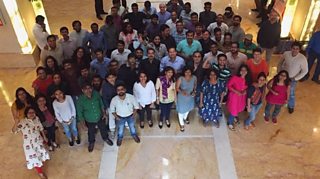
But I'm really excited about the team we've built to meet this challenge. Suddenly the average age of the BBC team in Delhi has been slashed by a decade, at least, as we've built our new operation and recruited more than 150 new staff.
More than anything, I'm excited about the fact that we have built a truly multilingual team with the aim of making the 'biggest ever' impact in the market – going way beyond the traditional Hindi heartland that the BBC has been known for, and reaching out more widely than we have ever done before.
The new Indian languages - Marathi, Gujarati, Telugu and Punjabi - are among 11 new services launched under the 2020 project.
The BBC is already an established brand in India - with BBC Hindi, BBC Tamil, BBC Bengali, BBC Urdu, and of course World Service English already serving the audience across platforms.
We have a very loyal audience and people, especially in rural India, say how listening to the impartial news on the BBC has been part of their staple diet.
When I have been out and about, I have met people with such love, admiration and respect for the brand. They often name the BBC as a 'knowledge enhancing potion!'
During my own career with the BBC there have been times when I thought I was going to need to look elsewhere for a career in journalism in India.
Until recently, it was a story of retreat and decline BUT that's now excitingly reversed - and, even more excitingly, the British public, the British government and the BBC have shown an unprecedented enthusiasm to tackle this amazing market and bring the unique qualities of the BBC to the Indian table.
The launch is part of the World Service's biggest expansion since the 1940s, following a government funding boost announced in 2016.
I know I can speak for my entire team in saying that we are fantastically energised by the opportunity we have been given.
It is so encouraging to see such a comprehensive portfolio of languages now in place and we're determined to make a great success and justify the investment by engaging with the market, increasing our network of reporters and, in doing so, provide a 'best ever' coverage of India for consumers in the UK and around the world.
This is a true commitment to India and also a sign of interest in the 'story of India'. We are aiming to target people who haven't before been given a great deal of choice when it comes to news providers, and to especially focus on younger people and women.
We are setting the bar high – our programming is all about quality; editorial excellence, of course, with a major focus on original journalism, BUT also technical excellence and innovation.
We will bring new formats on all platforms and develop innovative partnerships across the market, deepening our relationships with local media houses, mobile operators and digital innovators. We want to collaborate with partners in creating formats and share knowledge and learning.
We are going to engage with our audience in India in a way – and on a scale – that we never have before, giving platforms to people to express their views and share them with national and international audiences. Watch this space…
Rupa Jha is Head of Indian Languages
This article oroginally appeares in BBC Ariel
