Making Waves: extending the BBC’s digital radio coverage to a further 2 million people

Alix Pryde
Director, BBC Distribution
Tagged with:
Today, I am giving the keynote speech at Tech Con, the day of technical discussions, experiments, and debates which kicks off each year's Radio Festival. It is a great privilege to be asked to speak to such a passionate and interested group of my peers.
Inevitably much of what gets discussed at any industry event is about the future: new technologies, new opportunities, new ways of serving the audience. My message to Tech Con this morning is that in having this important conversation about the future, we shouldn't lose sight of the fact that overwhelmingly our audiences still come to our services through broadcast platforms.
For radio, nearly 90% of listening hours are delivered through FM, AM, and digital (DAB), equating to 900 million hours of radio each week in round numbers; a staggering figure. It's the same for TV; some 98% of viewing is to live or time-shifted programmes which were delivered to the home on satellite, cable, or Freeview.
So I am making the point that we have to balance our critical investment in the future with investment in broadcast platforms, in order that they are worthy as the nation's favourite places to watch and listen to our services.
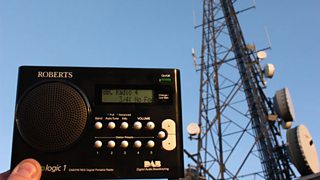
And it gives me great pleasure to be able to show that in action, by announcing the next phase of the roll-out of our UK-wide digital radio network, which will bring an extra c. 2 million people into coverage. Our DAB network carries our UK-wide radio services, including BBC Radio 1 to 5Live, 1Xtra, 4 Extra and 6Music. Having placed the contract for the services with transmission company Arqiva earlier in the summer, we're now able to confirm that we will be building a further 162 digital radio transmitters over the next two years. That's three a fortnight on average, every fortnight, between now and Christmas 2015.
This phase of the network will get our coverage up above 97%. But we're not just building transmitters to bring new towns and villages into coverage; we're also building ones to reinforce coverage in key areas. Glasgow, Liverpool, Oxford, Leicester, Coventry, and Eastbourne are all examples of places which will get improved coverage for many, as well as coverage for the first time for a few.
The first transmitter in this phase to come on-air will be for Basingstoke and we expect that to be in operation this side of Christmas. Arqiva is still working on the timetable and even when it is finalised, it will flex as project work at each site concludes, so we won't be publishing a detailed version. We will make sure that there is appropriate publicity in the relevant areas as new transmitters are switched on. We'll also keep the industry postcode checker up to date as we go.
You might be wondering what this means for BBC Local Radio or our radio services for the Nations. Not a lot, I'm sorry to say. As you might know, our Local Radio services and our radio services for the Nations are carried in capacity which we buy from a commercial multiplex operator in each area. The expansion of the commercial multiplexes is tied up with the Government's digital radio action plan. There is extensive work going on across the industry on that front and we expect some more news at the end of this year. So, for now at least, this phase of network expansion covers only the BBC's UK-wide services.
So where will the 162 transmitters be? Well, we're still finalising the exact specifics but below is a summary of the areas we're looking to serve in this phase of the network.
BBC DAB Phase 4 by area, number of transmitters in parentheses, including principal towns/villages
City-centre boosts
Aberdeen, Bournemouth, Coventry, Glasgow,Leicester, Lincoln, Liverpool, Oxford and Plymouth
England
Berkshire (2) – Wokingham,
Maidenhead
Buckinghamshire (3) – Chesham,
Aylesbury, High Wycombe
Cambridgeshire (1) – Wisbech
Cornwall (2) – St Just, St Erth
County Durham (1) – Weardale
Valley
Cumbria (1) – Barrow-in-Furness
Derbyshire (6) – Ashbourne, Glossop,
Chapel-en-le-Frith
Devon (10) – Ashburton, Bampton,
Beer, Brixham, Dartmouth
Dorset (3) – Lyme Regis,
Blandford Forum
Essex (2) – Braintree, Harlow
Gloucestershire (2) –
Stow-on-the-Wold
Hampshire (4)
Hertfordshire (2) – Letchworth,
Stevenage
Isle of Wight (1) – Ventnor
Kent (4) – Folkestone, Faversham,
Dover, Deal
Lancashire (5) – Darwen,
Blackpool, Whalley, Whitworth
Lincolnshire (7) – Boston,
Bourne, Grantham, Scunthorpe, Skegness
Norfolk (11) – Brandon, Fakenham,
Downham Market, Kings Lynn, Thetford, Wells-next-the-Sea
North Yorkshire (3) – Harrogate,
Pateley Bridge, Skipton
Northampton (1)
Northumberland (3) – Haydon
Bridge, Hexham, Alnmouth, Alnwick
Oxfordshire (1) – Banbury
Redcar and Cleveland (1) – Skinningrove
Shropshire (4) – Bishop’s Castle,
Church Stretton, Ludlow, Oswestry
Somerset (2) – Chard,
Weston-super-Mare
South Yorkshire (1) –
Stocksbridge
Suffolk (7) – Southwold, Bungay,
Felixstowe, Sudbury, Ipswich
Surrey (4) – Caterham, Haslemere,
Dorking, Leatherhead
West Sussex (3) – Crawley, East
Grinstead
East Sussex (2) – Rye, Eastbourne
Teeside (1) – Barnard Castle
West Yorkshire (4) – Hebden
Bridge, Calder Valley
Worcestershire (1)
Scotland
Aberdeenshire (3)
Argyll and Bute (2), including
Islay
Borders (3) – Innerleithen,
Jedburgh, Peebles
Dumfries and Galloway (4) –
Kirkconnel, Langholm, Moffat, Thornhill
Ross-shire and the isles (1)
Isle of Skye (1)
Perthshire (1) – Montrose
South Ayrshire (2)
South Lanarkshire (1)
Wales
Bridgend (1)
Camarthenshire (1) – Kidwelly
Ceredigion (2) – Lampeter,
Newcastle Emlyn
Conwy (1)
North Anglesey (1)
Flintshire (1)
Neath Port Talbot (1)
North Wales (5) – Deiniolen,
Dolgellau, Cefn Mawr, Wrexham
Pembrokeshire (2) –
Haverfordwest, Tenby
Powys (4) – Brecon, Hay-on-Wye,
Llanidloes, Machynlleth
South Wales (1) – Aberdare
Swansea (1)
Northern Ireland
Ballycastle (1)
Bangor (1)
Newtownards (1)
Channel Islands
Guernsey (1)
Isle of Man
Ramsey (1)
Port St Mary (1)
So to conclude, I’d like to share the happy thought that, when we've finished, around 49 in 50 people in the UK will be covered by our digital radio network.
Alix Pryde is Director, BBC Distribution.
- Read Alix's Happy Birthday Radio blog marking 90 years of radio.
