Making Alan Johnson's World War One iWonder guide

Joe Goodden
Senior web producer, BBC Wales
Tagged with:
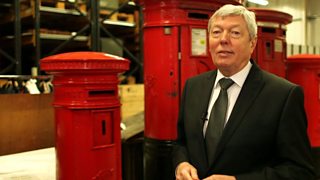
Alan Johnson
As Tim Plyming recently announced, the first BBC iWonder guides have attempted to bring colour and clarity to some of the lesser known aspects of World War One.
Here in Cardiff we've produced four of the guides released so far, including today's on the wartime postal service featuring Alan Johnson MP. By working with experts and presenters we were able to draw out tales of honour, industry, innovation and occasional skulduggery.
The key to bringing history to life is using real people's stories and experiences. The Labour politician and former postman Alan Johnson proved a perfect fit: someone who had worked for the Royal Mail, and who was eager to delve into its past.
Our filming took place at the British Postal Museum and Archives at Freeling House in London, and at their extensive store of World War One artefacts in Loughton, Essex. The museum's experts showed us letters, photographs and mementoes from the war, which they were happy to discuss on camera with Alan.
Nowadays we're used to instant communication. Over 50 million tweets and Instagram images are sent each day, and around 300,000 Facebook statuses are updated each minute. A century ago the options available to soldiers and their families were far fewer, but the scale and efficiency were no less impressive.
Post from the front took two days to get to the UK and vice versa. By 1917 over 19,000 mailbags crossed the English Channel each day, with deliveries to the trenches taking place every morning. A comprehensive network of lorries and carts carried written communication and parcels between units at the front.
The postal service was vital for soldiers' morale, which the British Army saw as crucial for an allied victory. Keeping soldiers informed and providing them with home comforts helped stave off boredom and kept them occupied, and helped sustain popular support for the war.
Of course there wasn't total freedom of communication. The letters and parcels were routinely checked by army censors – perhaps the modern day equivalent of the NSA or GCHQ – and much correspondence was removed for reasons of security or morale.
Soldiers were forbidden from discussing their locations, action plans or suspected enemy movements. At the start of the war there was just one censor; by November 1918 there were 5,000, many of whom were junior officers at the front.
These guides have been fascinating and enjoyable to work on, and it has been a privilege to work closely with teams right across the BBC on the war commemorations. We look forward to bringing many more tales to life in this centenary period.
- Alan Johnson MP's iWonder Guide about the World War One postal service is available via the BBC's World War One website.
