Making 'The Day the Clown Cried' with the BBC South team
Richard Latto
Multimedia Producer & Presenter, BBC South
Tagged with:
In a special BBC Radio Solent iPlayer documentary, The Story Of 'The Day The Clown Cried' Jewish comedian David Schneider discovers exclusive unseen material from one of the world’s most notorious unseen movie projects starring comedian Jerry Lewis about the Holocaust. In this post, Richard Latto explains the background to the new BBC Radio Solent iPlayer documentary.
There are countless examples of comedians who yearn to play a ‘straight’ role or relish the opportunity to tackle serious subject matter. Whether it’s Bill Murray with The Razor’s Edge and Lost In Translation, or more recently Steve Carell in Little Miss Sunshine and Foxcatcher. Closer to home it’s always a thrill to enjoy David Jason in the re-runs of Only Fools & Horses and A Touch Of Frost, two shows that couldn’t be further apart in terms of tone and characterisation, but both parts expertly portrayed.
I suppose this is why I’ve always been fascinated with the abandoned Jerry Lewis project The Day The Clown Cried. Can a comedian who is so synonymous with loud and outrageous physical comedy, star as the lead and direct a project set against the harsh backdrop of the Holocaust?
The rumoured storyline involved Lewis starring as a clown who suffers a breakdown after some misfortune and is eventually thrown into prison. It is here that the character is beaten and forced to use his clowning skills to lead children into the gas chambers. Something perceivably very different when compared to his previous projects, such as popular family comedies The Nutty Professor and The Bellboy – both massive successes. Filming ended in 1972, and since then Lewis has kept all the footage under lock and key – never letting anything to be seen.
I was first told about it while at university 15 years ago. It was a time when the world of internet forums and discussion groups were really beginning to gather momentum. Although there were countless dark corners of online societies who made mention of the movie, information was very sparse. The rarity of facts seemed to provoke even more discussion, making it the perfect subject to cultivate a continued life online. Even now a quick search on Twitter shows that every day someone in the world is mentioning the movie - pretty remarkable for a film that has never actually been released.
A few years ago my interest in the story peaked when some behind-the-scenes footage was discovered and released online. It was a very short video, showing only the circus scenes being filmed, apparently in France. Despite its brevity this was reported by media all over the world and brought the story to an even wider audience. It was clear that this abandoned movie was of continued interest, with people even asking Lewis about it at press events and during interviews, much to his apparent dismay.
I began to wonder if I would be able to find out more about the project. Soon I had made contact with several cast and crew members. Then I was sent some incredibly exciting photos and behind-the-scenes material that I’d never seen before. This made me realise I could create something lavish for the BBC about this fascinating film production. The legal process to obtain use of the exclusive material was complicated, but the expertise of the BBC lawyers enabled a smooth journey to a positive resolution.
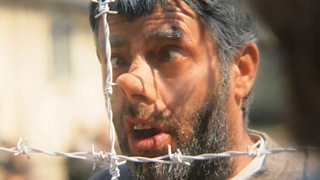
Jerry Lewis in The Day The Clown Cried
With the exclusive material in place it became clear we needed to explore the subject with appropriate sensitivity. Although the images portray specifically fictional scenes, the context of the Holocaust and the delicate nature of the rumoured storyline made this a project that had to take the advice and expertise of Jewish academics at the heart of our approach. This is when the cooperation from The Parkes Institute at The University Of Southampton became invaluable. The knowledge and enthusiasm shown by Dr James Jordan and Dr Devorah Baum gave us the important clarity required to treat the subject with respect and an informed level of detail into Jewish Relations.
We needed a solid presenter. Someone with a background in Jewish humour and an appreciation of the religious and creative implications that must have faced Lewis when he was trying to succeed with his unique project. This is when we thought of David Schneider. After a few conversations it pleased us that David seemed fascinated by our documentary. He describes himself as: “a comedian for many years and a Jew for even longer” and recognised how many Jewish comedians have explored the area of the Holocaust, because it’s so central to their identity. The presentation skills David brought to the documentary were excellent. Moments of humour were smoothly conveyed beside moments of sensitivity, and the depth of discussion with our expert contributors also gave worthwhile pauses for reflection.
Although filmed locally in Southampton and very much made closely with the expertise of The Parkes Institute, the potential appreciative audience of this documentary is as global as the success Lewis enjoyed at the peak of his career. This is where the BBC stands strong with its multiplatform capability. The whole video documentary is available globally online, and a complimentary offering on radio gives a chance to hear fuller versions of interviews and discussions that didn’t make the cut. BBC Online are telling the story on several sites, each linking to the video. There are also many BBC shows on both TV and radio that are featuring the story as an item.
I’m very proud that a small team of people at BBC South have helped make such a multi-platform story possible. Head of BBC South Jason Horton saw potential in the idea and backed the unconventional piece with supreme confidence. My colleagues have been invaluable team players, especially Catherine, James, Neil, Pete, Ian and the superb video editing skills of Simon who has worked under tremendous pressure to create a very polished product. Once again, the special relationship the local BBC has with surrounding academics, has enabled a project of wider significance to be developed.
Richard Latto is a Broadcast Journalist at BBC Radio Solent
- Watch The Story Of 'The Day The Clown Cried' on BBC iPlayer and via the BBC Radio Solent website.
