
Animals With Cameras is one of the most exciting projects I have worked on in over 20 years of making factual television because it is a genuine collaboration between film-makers and scientists.
For some time now there’s been a movement in the scientific community to use cameras to learn more about animals’ lives. The problem is that there are enormous technical challenges involved in building cameras which are small enough for an animal to wear comfortably, without affecting their behaviour, but which can also generate footage of a high enough quality to be useful. With hindsight, it was a no-brainer to bring the Natural History Unit’s accumulated 60 years of camera-innovation experience to bear on solving the scientists’ problems.
Animal welfare was our number one priority. Before even thinking about putting a camera on an animal we had to be certain that the camera wouldn’t inconvenience it or cause discomfort. Building the cameras involved a constant dialogue between us and the scientists. They would specify the size limits, the best way to attach the camera, the maximum length of time it could be deployed and the best way to get it back afterwards. The production team would then source the parts and work through a number of designs and prototypes until everyone was happy. Without the scientific experts’ sign-off on animal welfare there was no deployment.
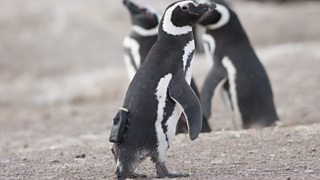
There also had to be a clear potential scientific benefit to putting the camera on-board. We only got involved if the scientists felt that the footage would help them to better understand their animals’ lives and we were led throughout by the questions they wanted to answer. The reality is that it is very hard to observe animals everywhere they go. How do you follow meerkats through their labyrinth of burrows, a chimp into the treetops? Sometimes an on-board camera is the only way and the knowledge gleaned can be of great value in protecting the animal into the future. Understanding more about how and where penguins feed, for example, could help to shape decisions about fisheries policy.
Most of our camera systems were designed and built by Chris Watts, for whom camera innovation runs in the blood. Chris’ father, Jonathan, has been building bespoke specialist cameras for wildlife film crews since the Eighties.
The cameras really are marvels of miniaturisation. Most were built from scratch, with the components - batteries, lenses, circuit board etc - often plundered from other cameras. It’s only been in the last few years that technology has moved to the point where it’s possible to make cameras on this scale that can shoot in High Definition and have enough battery power to run for hours at a time.
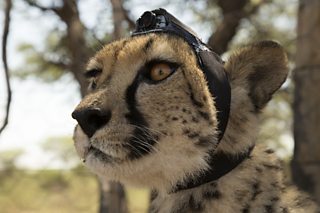
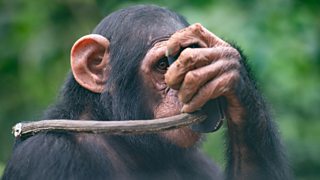
We went to great lengths to ensure there was as little disruption to the animals as possible – shaving the penguin cameras down millimetre by millimetre to minimise drag for example, or cutting holes in the cheetah head harness to create a cooling flow of air between head and camera. Most of the cameras could be removed by the animal (though this did result in some being destroyed in spectacular fashion, most notably by Kimbang, our orphan chimp) and the maximum length of time they stayed on was a couple of days (most were just on for a few hours).
Picture quality was also crucial and we have the perfectionism of Chris and Marcus Shirley, our underwater camera designer, to thank for helping us achieve that. Marcus dived into the sea off Plymouth at night in mid-winter in order to test the light sensitivity of a range of different potential underwater cameras and spent months working with a Portuguese engineering company to perfect the innovative ‘Devil Ray Cam’ (a ground-breaking design which is towed along behind the animal). Chris spent long hours making sure his camera could see past a baboon’s chin and testing different ‘Guardian Dog Cams’ on his pet Labrador.
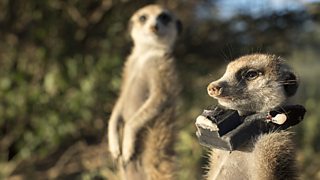
Perhaps my favourite example of perfectionism, however, came with the meerkat cameras. Not only did he manage to fit miniature infra-red LEDs on to the camera collars to help us to film in the pitch black of the tunnels (without disturbing the meerkats) but he also adjusted the LEDs so that the lights bounced off the walls, rather than pointing directly down the tunnel. This gave the lighting a much softer feel, resulting in much more attractive images, and also enabled the cameras to pick up much more of the detail of what was going on.
The revelatory footage we’ve shot has enabled us to tell some great new stories about animals’ lives and allowed us to see the world through their eyes in a way that’s not been possible before. As wildlife film-makers, however, there’s something even more satisfying about this series. We rely constantly on scientists to point us to exciting new animal behaviour so it’s great for us to be able to give something back and help the scientists in return.
Dan Rees is Series Producer, Animals with Cameras
Animals with Cameras continues on BBC One on Thursdays at 8pm, or catch up on iPlayer
