
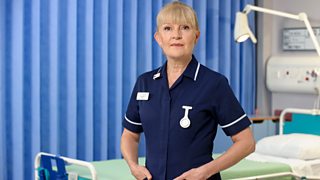
We caught up with Casualty's Cathy Shipton, who will be leaving the BBC One continuing drama this year about what the last 33 years on the show have been like.
What's been the most memorable moment of the last 33 years on Casualty?
The last thirty-three years of Casualty have been so memorable, it makes it impossible to pick just one stand out moment.
I suppose taking it right back to the moment I got the job will always be up there as a highlight. It turned my life around, things became very different, very quickly. I was about to go off to University to be a journalist, so getting that call changed everything.
I’d say another key moment was when the character (Duffy) was attacked at the end of the first series. Up until then she had just been a part of the background action, running around doing her job, being a nurse - without actually having a storyline or anything in particular going on for her. Suddenly this awful thing happened and it opened up a whole connection with the audience that wasn’t there prior to this. A sense of vulnerability, it was like this secret she shared with the audience in a way that the cast didn’t see, but the audience were a part of. She was able to get her life back on track and that was a pivotal moment that changed the way the character developed from then on. She was featured more and it all hinged from that one episode.
It’s nice reflecting on all of the funny things too, like Duffy becoming a mum before I even became a mum! I was playing the character of a mum to three boys, never having been one myself so that was good fun in a way. Giving birth was hilarious, when Charlie delivered the baby - people often use that clip and by the time we were filming I had actually had a baby in my own life so I was doing what I knew really happened. People were looking on at me and I was saying, ‘Sorry - but you really do make these kind of noises,’ so that was quite funny!
I would say that coming back for the 30th celebrations was huge for me because prior to this I’d left the show for nearly ten years, so coming back was fantastic. This last stint of four years I’ve done came via email and I jumped at the chance. Suddenly, I was back in the show. I could go on about how incredible the last thirty-three years have been, there’s been ups and downs, but far more highs than lows. This last episode is looking like it’s going to be a complete one off, standalone fantastic piece of work that will hold its own.
What it’s like playing someone with dementia
When a person has dementia, once it’s really kicked in, they don't really know, they’re not aware of it. It’s the early stages when it’s coming on for them, that’s the troubling part and I can sense that when we’ve been playing the scenes out.
It’s important to bear in mind these are long running storylines, like Michael Stevenson’s story with depression, leading to a suicide attempt. These are long lead plotlines that are built up over time, it’s not a guest story that is over and done with in one episode without much context. So once you start living with something over quite a long time you have to get your head straight and remember it’s not you, it’s an act. You have to make that separation, because it can be very upsetting, but it’s also your job as an actor to explore that as accurately as you can.
The reaction I was getting from those watching in the room when we were doing the scene, confirmed that I was on the right lines with how I was portraying the character and her story. Often people come to me in tears and say that happened to their nan or grandma, or that was similar to living with their aunt at the minute. This subject touches a lot of people’s lives so it’s necessary to do thorough research and make sure there is truth and realness behind the character’s emotions. The show’s researchers and writers have been incredibly careful with this storyline - it’s pace and attention to ensure its accuracy. The hard work is paying off because I have people stop me in the street daily and comment on it, so I really believe it’s a job well done in that respect and I genuinely hope it’s helping people.
My advice for anyone who wants to become an actor
It’s a tough old business. It needs to be something that you can’t live without.
I was studying to be a journalist, doing a degree in languages and then I joined a Shakespeare production at my college and that was the turning point for me, that was when I realised this is what I want to do, I’m going to do this and I’m going to make it happen.
If you really love it and you know you wouldn’t want to do anything else, get some drama training because there are so many different types of acting – stage, screen, radio. I’d say going through some form of training does expose you to a broad base of all of those mediums. There’s knockbacks, there’s ups and downs but if you want to do it, then do it. If you want to be a painter, if you want to write a book, if you want to be a brain surgeon but it isn’t something your family understand you just have to stick to your dream and keep your focus and you will do it, you really will.
Also, don’t be what you’re not. I can’t be a leggy, busty, brunette, that’s not what my special thing is. It’s vital for young actors to work out who and what they are because that is your unique quality, just be you.
