
The Olympic Games, broadcast innovation and Super Hi-Vision
 |16:28 UK time, Wednesday, 18 July 2012
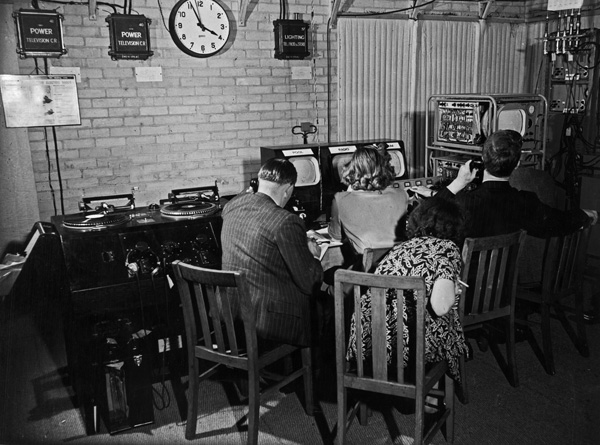
The television control room at BBC Broadcasting Centre, Wembley for the1948 Olympic Games, held in London where pictures from the Empire Pool and Empire Stadium were switched before being transmitted to Alexandra Palace.
'May the weather be fine, the events well contested, and may records be broken.' With these words from Prime Minister Clement Atlee in 1948, Britain took on the hosting of the Olympics, launching the so-called 'Austerity Games'. Coming only three years after the end of World War II, they were run on a proverbial shoe string - no new venues built for the Games, athletes housed in existing accommodation, and competitors even bringing their own food along (as rationing was still in operation in UK).
However, these London Games were highly innovative - in broadcast terms. They saw the advent of the first ever Olympic television outside broadcast operation, with programmes going direct into domestic homes. A total of 64 hours of BBC programming created. Yes, the Berlin Games in 1936 had seen early TV in operation, but they had not transported them directly into people's living rooms.
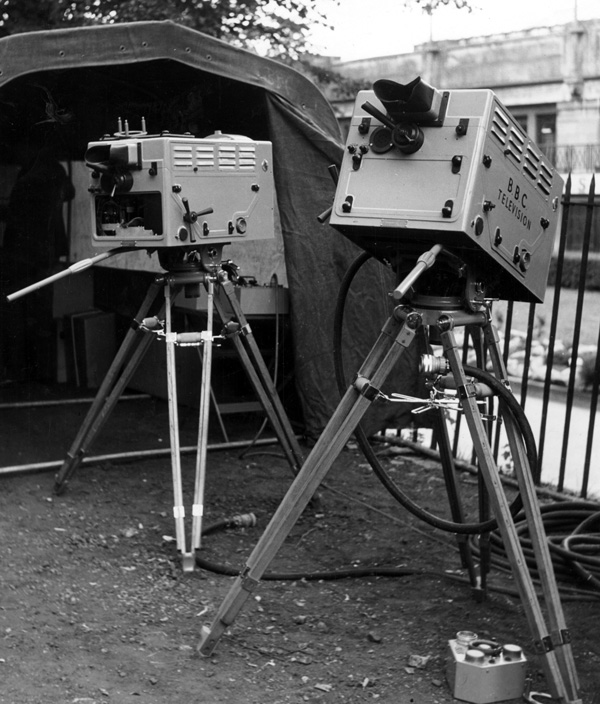
Take a look at the short film the BBC released just before the 1948 Olympics, showing lots of young men with pipes enthusing over the new outside broadcast kit. The star performer was the CPS Emitron camera or Cathode Potential Stabilized (pictured below), which gave much better pictures and performed particularly well at the indoor swimming events. Only two surviving examples of this camera exist, and you can see one of them on display at Broadcasting House during this current Olympic season.
Since 1948, whichever events you look at almost every modern Olympic Games without exception have heralded broadcast innovation, as broadcasters around the world have sought to match sporting excellence with the next new technological wonder.
Up to 1956, TV pictures were still limited to the host country. The Winter Games at Cortina d'Ampezza changed all that, and saw television pictures relayed for the first time outside the host. By 1960, television crews were flying tapes of the Rome Games to New York to be broadcast, changing the way that the wider public interacted with the Olympics. In total, 21 countries received the feed from Rome. Thanks to broadcasting, the Games were really going global.
Four years later, and the Games pushed at the boundaries of broadcasting, when experimental colour arrived at the Tokyo Games - broadcast via satellite to the USA, with the results stored on a computer for the first time ever. Forty countries now tuned directly into the Games. By the next Games in Mexico, live colour broadcasting was watched by over 600 million viewers. The leaps were exponential.
Another big 'first' came in 1984, when Japanese broadcaster NHK trialled experimental high definition television at the Los Angeles Games, along with the first use of email.
You can see the very camera they used as part of a special free exhibition at Broadcasting House in London this summer, courtesy of our current broadcast partner NHK, who have shipped it over to the UK especially for us. A further twelve years would pass before the first ever Olympic Games website was launched, at the Atlanta Games, when it received an astonishing 189 million hits.
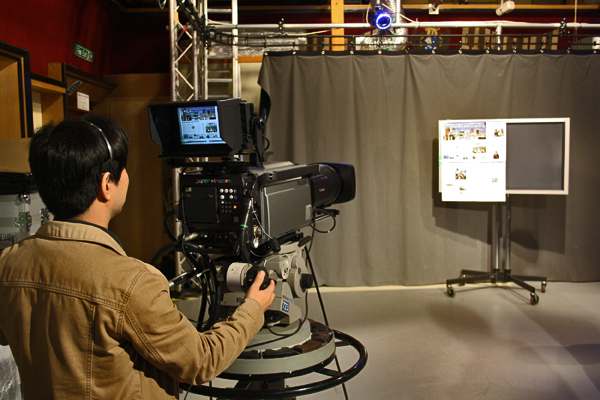
Working in partnership with Japanese broadcaster NHK the BBC has been experimenting with Super Hi-Vision in a dedicated studio in BBC Television Centre in London. This picture shows the SHV camera used during the 2010 trial. The image in the viewfinder is of a quarter-page from then in-house newspaper Ariel hanging on a board on the other side of the studio.
And so the wheel comes full circle, from London 1948 to London 2012, where the Olympic Games have really set a new standard in online delivery. These will be the first all-digital Games, with 2,500 hours of live sport coverage across multiple platforms. They will also see the advent of yet another new broadcast innovation - Super Hi-Vision (SHV). Developed once again by NHK in Japan, working in partnership with BBC and the Olympic Broadcasting Services (OBS), SHV has 16 times the definition of current HDTV and offers 360 degree surround sound.
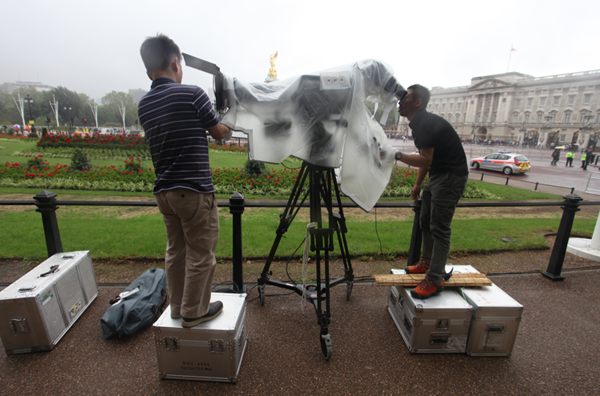
NHK cameramen make final adjustments to a super hi-vision camera used to gather material for special screenings in London, Glasgow and Bradford.
It won't be available for 20 years or so domestically, but you can get a taste of the future at three special screening venues in the UK: BBC Broadcasting House in London, BBC Pacific Quay in Glasgow, and at the National Media Museum in Bradford. Screenings are combined with a display featuring a giant timeline on the Olympics and broadcast innovation, plus some of those ground-breaking cameras (see above) in situ. Of course if you're lucky enough to be in Bradford, you'll get the whole story of TV in the museum's supporting gallery. My production colleagues tell me that SHV is just like being in the London stadium - so grab a (free) ticket and tell us what you think.
Robert Seatter is the Head of BBC History
To attend a Super Hi-Vision screening, visit the BBC Shows and Tours website or book via the National Media Museum.
The BBC's Research and Development Blog have two videos from the 2010 experiments in Super Hi-Vision and Full 3D including sequences from the Charlatans' performance and a Tae Kwon-Do demonstration. BBC Click presenter Spencer Kelly also reported from the trial.
Read more about the BBC's television coverage of the 1948 Olympics on the History of the BBC website.
Listen to a broadcast by then Prime Minister Clement Attlee welcome Olympic athletes in a special broadcast on BBC Radio in 1948 on the BBC Archive website. A collection of archive material from the 1948 Olympics curated by the BBC is also available.
For more updates, follow About the BBC on Twitter.

Comment number 1.
At 15:05 19th Jul 2012, Kit Green wrote:The paper version of Ariel is of course now also history.
I can just remember watching gymnastics from Tokyo.
I well remember watching events from Mexico in colour on BBC2 while eating my breakfast before school. The TV set was a DeccaColour and larger than a chest of drawers, even though the tube was probably only 20" at the most!
Complain about this comment (Comment number 1)
Comment number 2.
At 12:33 24th Jul 2012, amrilusaguy wrote:This comment was removed because the moderators found it broke the house rules. Explain.
Complain about this comment (Comment number 2)