About the BBC - BlogAbout the BBC - Blog
Local Navigation

Archives for August 2011

BBC at the Edinburgh Festival Fringe

Blog comments are currently unavailable. Find out more.

Post categories:

Sophie Taitt|11:31 UK time, Tuesday, 30 August 2011

On Saturday we ended our two week run at the Edinburgh Festival Fringe which, for the first time, saw BBC television, radio and online come together under one roof at our own pop-up venue on Potterow in the heart of the world's largest arts festival.

Over the course of the last fortnight over 100 hours of radio and 200 hours of TV and red button content has been produced from our temporary home at the Fringe with more than 10 BBC networks involved and over 20,000 fringe-goers visiting our venue. I'm very proud that we've had every nominee from the Comedy Awards on our stage at some point during the last fortnight including the winner Adam Riches.

This venue was something of a pilot for us as we look to join up our Fringe coverage as well as the BBC's overall Edinburgh Festivals programming.

As the person responsible for bringing all of the production teams together at this single venue it was great to see Radio 1's Fun and Filth Cabaret hosted by Scott Mills and Nick Grimshaw, with guest hosts Dappy from N-Dubz and The Hoff, crossing paths with the team from BBC Radio 4's Fringe favourite Just a Minute, chaired by the legendary performer Nicholas Parsons, who not only recorded radio shows at the BBC venue but also hosted his own daily chat show and appeared in a play at the Pleasance during the Festival.

Under the careful eye of Headmaster Arthur Smith, and new for 2011, the Comedy School at the Fringe included masterclasses with some of the most respected names in comedy including the team behind BBC Three's Mongrels, Miranda Hart and Ricky Gervais.

In addition, with a host of performance and comedy writing workshops and the BBC Three Funny in 15 seconds video booth, we hope to have found a few stars of the future.

For a taste of the last two weeks from the Edinburgh Festival Fringe our short film and website will, I hope, whet your appetite for Edinburgh 2012.

Sophie Taitt is Project Director, BBC at the Edinburgh Festival Fringe 2011

The 3D Wimbledon experiment - your reactions

Blog comments are currently unavailable. Find out more.

Post categories:

Danielle NaglerDanielle Nagler|10:00 UK time, Tuesday, 30 August 2011

Earlier in the Summer, I led a team which delivered our first live 3D broadcasts to homes around the UK. We wanted to get this year's Wimbledon finals out to everyone who has so far bought a 3D set (and the glasses that go with it) and so we used the BBC HD channel to show the matches - free of charge - on Freesat, Freeview, Sky and Virgin. As well as testing to see if what seemed possible in the lab could be delivered in practice, and trying to ensure that we could offer really high quality 3D in production terms, we also wanted to understand what people really think about seeing television content that they are familiar with in 2D in 3D. By doing so we hoped that we could make better-educated guesses about where 3D and television might go in future, and plan what the BBC's response to developments should be.

It seems obvious that in the end it is you - television viewers - who will decide whether 3D TV sinks or swims. There's a long history of technology innovations that haven't made it, because the public just hasn't wanted them. 3D may or may not be one of them. But there's been little if any research so far to understand how people relate to 3D pictures, so we wanted to start to fill that gap in understanding.

We focussed work on the Men's Final, and having invited people in to watch our 3D coverage at a number of cinemas around the UK, we asked them for their thoughts. We also provided people who came to our London screening with the opportunity to watch on the most up-to-date 3D televisions which you can find for sale at electronics shops now. And of course we looked for ways to find out what people who were watching in the comfort of their own homes thought.

People found the 3D very different from watching in 2D - and it provoked a mixed response: a lot of them loved it, and some loathed it. On Twitter, people said "it's like you are there as a line judge", "much better lower angle dynamic shots", "looks awesome... probably as close to courtside view as I can get", but there were also reports that "my head went fuzzy", and a certain frustration that because the cameras offered a courtside seat, it wasn't always possible to track the ball right across the court and see exactly where it landed. 60% of people said that their expectations were either met or exceeded, and a third of those who had never seen 3D before gave the experience 10 out of 10.

Most people we surveyed wanted to watch Wimbledon in 3D because they love Wimbledon, and they hoped that seeing it in 3D would make them feel more a part of the action. Of those who attended the screenings we held, 76% said that the 3D view did make them feel as if they were more involved in the match and many of the cinema screenings had people applauding, hushing others, and gasping at individual points as if they were really sitting in SW19.

Quite a few people told us that they had been sceptical about 3D television, and thought it was a bit of a gimmick, but that our coverage of Wimbledon had persuaded them otherwise - but another important message to emerge was that even for those who enjoyed the 3D, it's "good old-fashioned HD" (as one viewer put it) that really matters and adds to the television experience. We will be doing more - not least the final of this year's Strictly Come Dancing in December. And we'll be using these further experiments to try to understand more about the potential extra value that 3D can add for you as viewers. We want to understand the part 3D should play in the future of what we offer to licence payers, and my conclusion from our analysis of Wimbledon is that at the moment the jury is still out.

If you are interested in understanding more about how we filmed Wimbledon in 3D, the film tells the story of the production and the partnership behind it.

Danielle Nagler is head of HD and 3D at the BBC

  • You'll find a number of interesting blog posts about 3D TV on the BBC Internet blog - mostly of a more technical nature.
  • Danielle is also a regular contributor to the BBC Internet blog. Read all of her posts here.

BBC One - reflecting the nation

Blog comments are currently unavailable. Find out more.

Post categories:

Danny CohenDanny Cohen|15:00 UK time, Saturday, 27 August 2011

I've been the Controller of BBC One now for ten months and have begun to put new plans in place to make the channel as vibrant and creative as it can possibly be.

One of the big things for me is to try and make sure that BBC One offers something for everyone and does a good job of reflecting the nation back to itself. BBC One is the Nation's Favourite Channel, and I think it's important that all licence-fee payers find plenty on BBC One that informs, educates and entertains.

With this in mind, I hope that the programmes you see on this preview video are enticing - and encompass the quality, scale, thoughtfulness and entertainment values that I want BBC One to deliver.

The programmes previewed include brand new drama Call The Midwife starring Miranda Hart and Jessica Raine, the epic new natural history series Frozen Planet, and new comedy starring Sir David Jason, The Royal Bodyguard. It is thrilling to have Sir David returning to the BBC for his first comedy since Only Fools and Horses, and this video gives you the very first exclusive snippet of a show that is currently still in production.

I'd also like to take this opportunity to announce a raft of exciting new commissions for BBC One.

In Drama, we've just given the green-light to The Village - a bold new series from Peter Moffatt. It's the story of one man's journey through the 20th Century, beginning with his humble childhood on a downtrodden farm. The Village is one of those scripts you read and can't wait to see realised on-screen from the moment you turn the final page. It has the richness and emotional depth of the very finest television writing.

Also on its way for BBC One viewers is Fight For Life, a major new natural history series which will use the latest live technology and filming techniques to tell the story of young animals right across the world. This is a very ambitious new live event for BBC One that we hope will bring viewers closer to the daily experience of wild animals than they have ever been before.

In entertainment, we're delighted to be able to announce a new series starring one of Scotland's brightest young talents, Kevin Bridges. BBC One should simultaneously be the home of Britain's national treasures in comedy and also a place where new talent can flourish. We are therefore thrilled to be working with Kevin, who combines brilliant jokes with an acute vision of human nature.

Finally, I'd like to announce two new projects that introduce a new level of risk and experimentation to BBC One. BBC One should be known for boldness, quality and mainstream impact, but I'd also like it to be known for a commitment to risk and innovation that is unusual on a mainstream channel.

To this end, we've commissioned a six-part improvised drama series from Dominic Savage for BBC One - Love Life - that will test the boundaries of fiction on the Channel. We are also announcing a run of new transmittable comedy pilots in order to supercharge the comedy development process for BBC One. Our aim here is to use a run of transmittable pilots as a way of reaching out to joyous new things, in the way we managed with Being Human on BBC Three.

So, from the African savannah to a small English village, from major live events to one of Britain's hottest young comic talents, these commissions show the range and ambition we have for BBC One, and our aim to combine world-class quality with risk and innovation.

Thanks again for taking the time to read this and watch the video - and I hope you find plenty to enjoy on BBC One in the coming months and years.

Danny Cohen is Controller of BBC One

BBC Two - ancient Rome to London in the fifties

Blog comments are currently unavailable. Find out more.

Post categories:

Janice HadlowJanice Hadlow|18:00 UK time, Friday, 26 August 2011

I've just finished my 'Meet the Controller' session at the Edinburgh TV Festival where I was interviewed by Kate Silverton. It was a chance to reflect on what I think has been a really good year for BBC Two. We screened some of the highlights and you can see them in the video.

There's been an amazing resurgence in drama and comedy, with programmes like The Hour, The Shadow Line, Crimson Petal and The White, The Trip and Episodes. We've proved that quality can rate with programmes like Wonders of the Universe, Stargazing Live, Battle of Britain, and we've not been afraid to tackle sensitive subjects in factual programmes, for example Terry Pratchett Choosing To Die and the recent Life Of Muhammad series. We've also nurtured some really engaging and authoritative new presenters on the channel, like Mary Beard, Amanda Vickery, Brian Cox, Lorraine Pascale and Ben McIntyre. We've won five RTS awards and five Bafta awards this year across the range of genres and I'm pleased to say that BBC Two share is up in peak so far this year, which suggests that viewers like the direction that the channel is moving in too. Thank you for all your support.

If you look at what has worked over the last year you can see what the channel needs more of going forward, and this is what we were talking about in the session. I was pleased to be able to announce that The Hour will be returning - a programme that has had tremendous impact and has seen its audience appreciation figures rise over the series. We have agreed with writer Abi Morgan that the next series will be set ten months later and it will be interesting to see how the plot develops. You can read more about it on the BBC Press Office web site.

I'm also delighted that Mary Beard will be returning to the channel with a three-part series on Rome. Following her ratings-busting first appearance on the channel with a one-hour documentary on Pompeii, we have persuaded her to put academia aside for a few more months in order to make a series for us on what life was like for ordinary people in ancient Roman Society. Mary is a wonderfully engaging and charismatic communicator, with a wealth of knowledge on her subject - always compelling, always passionate, she's a joy to watch. There's more about the new series in the press release and if you'd like to know more about our forthcoming programmes, take a look at our summer and autumn press pack.

Janice Hadlow is Controller of BBC Two

BBC Three - gripping, relevant and entertaining

Blog comments are currently unavailable. Find out more.

Post categories:

Zai BennettZai Bennett|16:15 UK time, Friday, 26 August 2011

The Media Guardian Television Festival has kicked off and it's one of the few times in the year when the TV community takes time to discuss the challenges facing the industry. For me, it's the first time I've been to the festival as Controller of BBC Three. In a session earlier today I was interviewed about my vision for the Channel and what kinds of programming I'm looking for.

For me, BBC Three should have a creative or social purpose in everything that we do. Creatively we are a channel that should take risks. These risks can give new faces their break both on and off screen, help break new formats and investigate areas the more mainstream channels shy away from. On screen, I want to work with new talent in comedy, entertainment and drama and give them a chance to work in TV, often for the first time, but also to help develop people into household names. BBC Three has helped bring some outstanding comedy talents to the publics attention like Ruth Jones and James Corden in Gavin and Stacey, Matt Lucas and David Walliams in Little Britain and the amazing Mighty Boosh. I also want to give established artists a chance to try something new - and that's why I'm announcing today that Billie Piper is starting in a new comedy for us for next year called Tom and Jenny. We have already announced two other new comedies for early next year, Pramface and Life Story with Sharon Horgan. The video includes previews of these programmes along with our new drama for this autumn from Jack Thorne - The Fades.

Off-screen, I want to work with new writers and directors, especially in factual where we run a scheme called Fresh (more information on the BBC Commissioning web site) which gives new directors a chance to make their first full TV films. Here are a few more details on the scheme and some information on other shows we are making for the channel:

In terms of social purpose, BBC Three is dedicated to the highest quality factual programming specifically made for our youthful audience. Our factual programming should inform and educate, but in gripping, relevant and sometimes entertaining ways. We want to encourage debate and really look at the issues facing young people. Today I am announcing that through the autumn and winter our documentaries and factual programming will be scheduled every Monday night at 9pm so our audience knows every week where they can see high quality, intelligent, issue-led programming.

Its been a busy five months running a channel which is now the most watched digital channel for the hours it's on as well as being the most popular for young audiences. It's a huge responsibility looking after any channel, but particularly a BBC one, I hope it will also continue to be a very fun experience.

Zai Bennett is Controller of BBC Three

BBC Four - curating content on-air and online

Blog comments are currently unavailable. Find out more.

Post categories:

Richard KleinRichard Klein|13:00 UK time, Friday, 26 August 2011

Thank goodness my interview at the Media Guardian International TV Festival is over. It's always slightly terrifying and good to get some fresh air afterwards, but actually Penny Smith, who was interviewing me, was delightful. Hopefully the audience found it an informative and lively session.

Naturally there was quite a bit of interest in what the future holds for BBC Four post-DQF (Delivering Quality First). While there are no final decisions yet, there's one thing we do know: we've all got to take our share of cuts. Of course no one welcomes being cut back and it will bring changes. I'm not at liberty to talk about it what these changes will be yet as we don't know the outcome, but I promise I will do everything in my power to keep the essence and spirit of the channel - appealing to people who love to think, be entertained on every subject and who enjoy a channel that has an opinion and offers perspective.

In my session, I was keen to talk further about BBC Four's new role as the curator of content online as well as on television. It was recently announced that BBC Four will be the gateway through which audiences can explore the rich heritage of BBC TV programming. BBC Four's collections will be curated around seasons/themes, something I think we are very good at, and will take the viewer on a deeper journey through the subject via the BBC's extensive archive, with content from all genres and channels. Today I announced our first 'collection', which will be around the channel's Army Season in September. We've managed to find some amazing gems from the archive which chart the British Army from the 1950s to 90s, brought bang up-to-date with our programmes that form part of the season on BBC Four.

You can read more about our new 'collection' on the BBC Press Office web site, where we also announce a new arts series for BBC Four, Art Noveau, which explores the short but brilliant life of this movement at the end of the 19th century. I also announced two 90-minute film adaptations of Alan Furst's novels, The Spies of Warsaw - yes, I am still commissioning drama on the channel. The video is the one I showed in my 'Meet the Controller' session at the conference, which features some of our recent successes and offers a sneak preview of The Killing 2. (Talking of The Killing, I hope you are managing to catch our repeat showing of the first series which is stripped across the schedule at 10pm, continuing until 15 September.)

Richard Klein is Controller of BBC Four

The Edinburgh TV Festival - a word from the Chair

Blog comments are currently unavailable. Find out more.

Post categories:

George EntwistleGeorge Entwistle|09:00 UK time, Friday, 26 August 2011

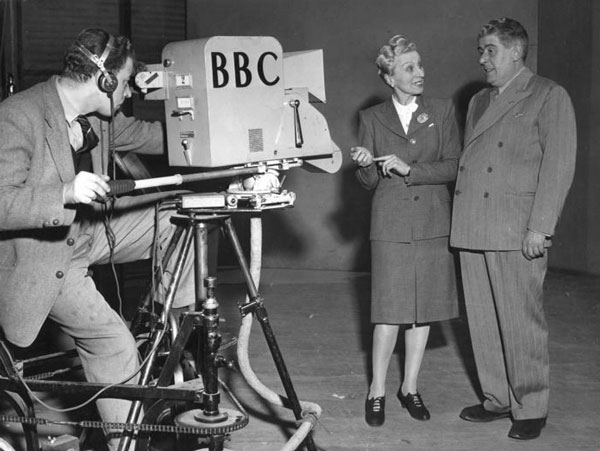
Unidentified camera man and husband and wife team Nan Kenway and Douglas Young in 1947. Original transcript from photo : Nan Kenway and Douglas Young before the television camera. BBC

The Edinburgh Television Festival is a key event in the broadcast calendar; it's an opportunity for media companies to debate the industry's biggest issues and showcase their upcoming content. As Advisory Chair of this year's festival I've pulled together a programme that promises not only to celebrate television but also to examine its future - and to look at how and why, several years after many prophesised its demise, it's actually more popular than ever.

The BBC is of course participating in many of the key debates and the channel controllers for BBC1, BBC2, BBC3, and BBC4 all be discussing their plans with a live audience. As the weekend progresses they'll all be uploading blogs to this page, linking to exclusive clips from some of the high quality programmes which will be hitting your screens over the next twelve months. They'll also be announcing brand new titles and giving an insight into their plans for their channels. I hope you enjoy the updates and for more information on the festival, do visit www.mgeitf.co.uk

George Entwistle is Director, BBC Vision

  • The Media Guardian Edinburgh International TV Festival starts today and goes on all weekend. Details on the official web site. Follow @edinburghtvfest on Twitter.
  • The Guardian has a special page for news from the festival.
  • There's also a special page on the BBC Press Office web site for announcements from the Festival.
  • The picture shows an unidentified cameraman and husband and wife team Nan Kenway and Douglas Young making a BBC television programme in 1947. It's from the BBC's picture library

A fond farewell to Waterloo Road

Blog comments are currently unavailable. Find out more.

Post categories:

Peter SalmonPeter Salmon|00:01 UK time, Tuesday, 23 August 2011

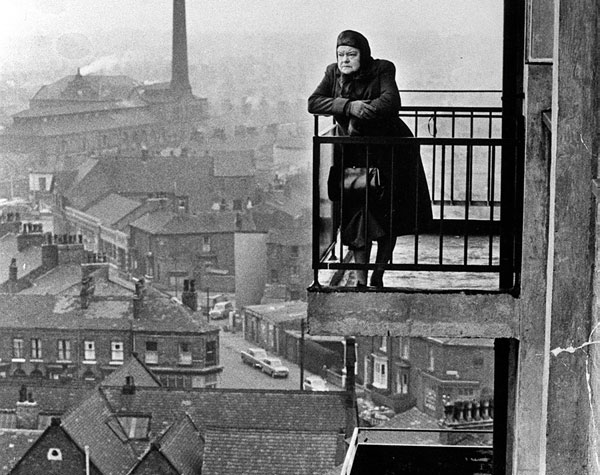
Violet Carson as Ena Sharples in Coronation Street.

When I was a little lass, the world was half a dozen streets, an' a bit o' waste land, an' the rest was all talk.

After all these years, the words of Violet Carson, Coronation Street's legendary battle-axe Ena Sharples still echo in my ears. For me, that line perfectly captures that fine balance between grit and fantasy which has always been particular to the best Northern drama - storytelling with a hard edge but a soft heart.

More recently, I was struck by two articles in the national press about that special relationship between drama and the North of England. Both Mark Lawson in Grimetime TV: why the North rules in the Guardian, and Leo Robson's FT article Why Auntie still has a southern accent, pay tribute to the strength of programmes that had either been inspired by the North or written by people who had their roots in the region.

So it seems particularly appropriate, as we bid a fond farewell to Waterloo Road, to remind ourselves not only of its own success on BBC One but also of its place in this rich Northern heritage.

Like many others, I am lucky enough to have grown up with so many outstanding dramas from this part of the world, such as Boys From The Blackstuff, Auf Wiedersehn Pet, Our Friends In the North, Oranges Are Not The Only Fruit, Born To Run, GBH, Cracker, Cold Feet, Band of Gold, Shameless and Clocking Off. It's been great to work with some of the wonderful writers associated with these dramas on occasion as well - people like Jimmy McGovern, Peter Flannery, Debbie Horsfield, Victoria Wood, Pete Bowker, Alan Bleasdale, Mike Bullen, Paul Abbott and Kay Mellor.

I also take pride that the BBC, supported by some of those writers, has a real commitment to new and emerging talent. BBC Writersroom for example helps writers to find their voice and fine tune their talent which can result in a new piece for the BBC and a career in the industry. Only recently BBC North supported one of their events, The Writers Festival 2011 in Leeds, and I was stunned not so much about the wealth of new talent in the room but also how established writers there including Paula Milne, Tony Marchant and Gwyneth Hughes were willing to share their knowledge and experience - and by their collective conviction that drama can change peoples' lives.

The BBC and ITV continue to make dramas that celebrate the Northern spirit: United, about the Busby Babes; The Road to Coronation Street; South Riding; Eric & Ernie; Accused; The Street; 32 Brinkburn Street; Moving On - to name but a few. Filmed across the region, with local talent both in front of and behind the camera, not only do they continue to entertain audiences, but often challenge them to see contemporary life or recent history from a different perspective.

Since its first troubled term in March 2006, Waterloo Road has taken viewers on a journey, tackling some of the grittier issues of the day - suicide, drugs, bullying and alcoholism. But at the heart of every story, in each of the seven series, Shed Productions, the scriptwriters and the actors themselves ensured that the characters involved were very real and utterly believable. It is this strong, confident storytelling coupled with finely balanced and sympathetic acting from the cast, that ensured that Waterloo Road walked away with Most Popular Drama at the National TV Awards earlier this year as well as prizes from the North West RTS.

We have an ongoing aim at BBC North to train and excite new talent by giving them exposure to dramas being filmed in our area. For last year's Waterloo Road we worked with four schools from across the North. Pupils from Gateshead, Grimsby, Sheffield and Preston worked with the scriptwriters to create, film and star in their very own five-minute mini-episodes. I went to a special screening event in Manchester to showcase the finished works and was very impressed by the talent and energy of all those young people involved. I hope the experience will inspire some of them to become the next generation of Northern writers, actors, directors or producers who will continue this strong drama tradition.

So, after seven very successful series, Waterloo Road is moving to Scotland. Having been made entirely on location in Rochdale, filming of the current series will end soon and from next April it will start filming in a new location, with a new story line, in Scotland.

But the North continues to inspire the very best with a strong slate of new and promising dramas.

First and foremost, we should not forget the immense contribution made by BBC Children's. It's always had a very rich drama tradition, and I'm particularly pleased that this Autumn - as the department moves to Salford - three big series are being made across the North of England. With stories ranging from sibling rivalry and vampires to care home antics, they prove that CBBC is nothing if not diverse.

Brand new to CBBC is The 4 O'Clock Club. Two brothers - teacher Nathan and pupil Josh - clash over the younger brother's dream of becoming a rap star. Currently in production in Bolton, the show mixes music and drama and stars former rapper turned comedy actor Doc Brown. Incidentally, 'club' in the title is the nickname of the detention room where the two brothers seem to spend most of their time. It's Flight of the Conchords for a kids' audience.

Also coming back to CBBC are Young Dracula and Tracy Beaker Returns. Both are big with the CBBC audience and it's good to see them set in Liverpool and Newcastle respectively. Who could have foreseen back in 2002 that Jacqueline Wilson's original story about a feisty young girl in a care home would be such an abiding success with young audiences? That's innovation for you.

And this Christmas CBBC will be unwrapping The Lost Christmas. Filmed in Manchester and starring Eddie Izzard, it's a heart-warming story about one man's unique talent to transform the lives of five ordinary people whose lives have been affected by decisions they made in the past.

And Northern stories continue to make their mark in the peaktime BBC schedules too. Decades after the first larger-than-life characters were tearing up the screen, producers from across the region have fresh stories to tell.

The prolific Red Production Company who, working with AbbottVision, brought John Simm and Jim Broadbent to BBC One in the excellent Exile this Easter, is currently working on Anthony And Cleopatra to be filmed in the Yorkshire Dales. Written by Halifax-born, former Corrie writer Sally Wainwright, also author of ITV's Manchester-based Scott and Bailey, it's a poignant tale of love and second chances for two people in the sunset years of their lives.

Also in Yorkshire, Kay Mellor, who heads up Leeds' Rollem Productions is about to film Syndicate for BBC One. It's a feel-good piece about a group of supermarket workers and a massive lottery win. It charts the impact the win has on their lives and how it changes their fates for better and worse. Just down the road, Tiger are filming in Sheffield, one of the region's most versatile cities. It was such a striking part of the wonderful Channel 4 series This is England '86, and for the BBC it's the backdrop of the tough new series Prisoners' Wives, a fresh take on some sparky women and their turbulent lives.

Closer to new home, Salford's own Christopher Eccleston returns to BBC One in Bill Gallagher's new psychological thriller, The Fuse, filmed and set in Manchester. Eccleston plays a council official hiding a murder behind a façade of public success.

From the pen of talented writer Jimmy McGovern comes a new series of Accused that takes stories and people from every day life and transforms them into the searing, heart-stopping dramas that have become his trademark.

And finally, from BBC Writersroom alumnus Stephen Butchard, whose credits include the Five Daughters, House of Saddam and Vincent, is Savage. Set in Liverpool, it's about the conflict between revenge and public duty. Again, it films for BBC One this autumn.

Both Mark Lawson in the Guardian and Leo Robson for the FT were searching for reasons why the North of England often leads the way in great drama writing and magnificent actors. Is it our heritage, culture or landscape? A spirit of innovation, education or nostalgia? Immigration, the economy or just the power of family life? More likely it's a potent blend of the lot - a tangle of characteristics that is as dense as the weave of Ena Sharples' hairnet.

What is indisputable is that those great Northern-based dramas from the past, with their strong storylines and memorable characters, have had a huge impact. They defined a dramatic generation, created stars on screen and off and made audiences think about and question the society that they lived in. I would like to think that both the BBC and ITV, partners at MediaCityUK and working with production companies across the UK, are keeping that tradition alive for all our audiences.

So while we bid the cast and crew of Waterloo Road adieu, a farewell tinged not only with sadness but with a real sense that it has made a difference, I look forward to sitting back and watching new and bold Northern dramas unfold.

Peter Salmon is Director of BBC North

  • News and information on the BBC North web site.
  • The picture shows Violet Carson, Ena Sharples in Coronation Street.

BBC Radio 4's new home at the Edinburgh Festival

Blog comments are currently unavailable. Find out more.

Post categories:

Steve BowbrickSteve Bowbrick|12:26 UK time, Wednesday, 17 August 2011

 XXXXX

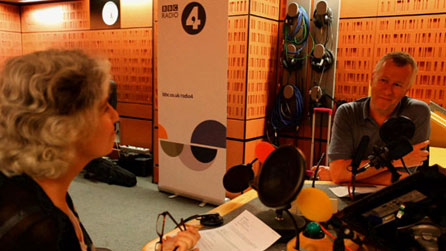
This evening's edition of Front Row, Radio 4's nightly arts review programme, comes from the BBC's new, purpose-built Edinburgh Festival 'pop-up' venue on the corner of Potterow and Marshall Street. We asked Front Row presenter John Wilson to talk to Caroline Raphael, Radio 4's Edinburgh Supremo, about the new venue, the highlights of the BBC's Edinburgh coverage and the history of the BBC's involvement with the festival.

Steve Bowbrick is editor of About the BBC

The 2011 Nick Clarke Award

Blog comments are currently unavailable. Find out more.

Post categories:

Gillian Dear|17:01 UK time, Thursday, 11 August 2011

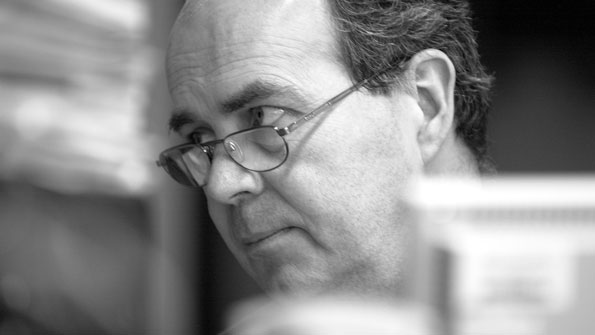
Close-up of Nick Clarke

Nick Clarke presenting the World at One

The Nick Clarke Award is now entering its fourth year.

This hugely popular prize was first launched in 2008 at The Times Cheltenham Literature Festival, and celebrates the single best broadcast interview of each year. Judges of the award are looking for interviews that left a strong impression on the audience, that provided a deeper understanding of their subject matter, or that were particularly memorable.

Last year's excellent winner was PD James, for her interview of BBC Mark Thompson, Director-General of the BBC on The Today Programme.

To be considered for the Award, please send one copy of an interview conducted between 13th July 2010 and 31st July 2011 to the address below by the 8th September. One entry per programme and person, and the interview must be submitted exactly as broadcast.

The winner will be announced at this year's Times Cheltenham Literature Festival on Sunday 10th of October. The winner will receive a dozen bottles of good claret - which Nick himself would have enjoyed.

Entries should be submitted to the address below or by e-mail to [email protected].

Gillian Dear

Room G620 Television Centre

Wood Lane

London W12 7RJ

Supporting UK digital media

Blog comments are currently unavailable. Find out more.

Post categories:

Barbara GreenwayBarbara Greenway|16:58 UK time, Friday, 5 August 2011

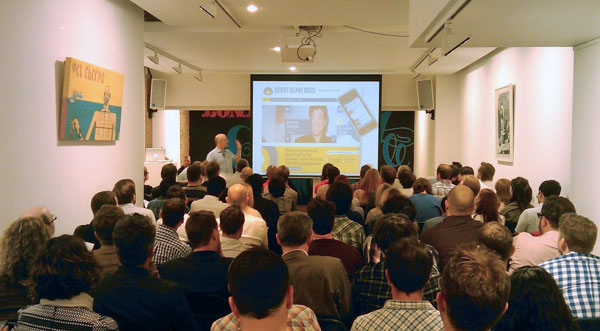
An event held by BBC Audio & Music Interactive for the UK digital media industry in July 2011

Last week, my colleagues and I in the BBC's Audio & Music Interactive department (A&MI) hosted an event for ninety representatives of the UK's digital media industry.

The event gave indies (independent suppliers) the opportunity to meet the BBC staff that commission work for A&MI, and vice versa. We plan to run these events at least once a year from now on.

It was a really important and useful gathering, both for us and the industry. BBC Audio & Music Interactive invested £3.8 million in the digital media industry last year.

We've a good track record of working in partnership with indies to deliver great content and services. Last year we commissioned 391 projects from 91 different digital media suppliers, 41 of which were new suppliers to the department. Projects ranged from building Radio 1's Big Weekend mobile check-in experiment (Future Platforms) to refreshing 6 Music's homepage (Kent Lyons).

This year's Glastonbury site, built by Picture, saw a massive 122% increase in peak weekly traffic, and our new Desert Island Discs site, built by Magnetic North, received critical and audience praise. Meanwhile, the newly-available archive episodes of Desert Island Discs, reformatted by Loftus, attracted 3.3 million downloads in the first two months.

Audio & Music Interactive is one of five BBC departments that make up BBC Online. Overall, BBC Online invested a total £19.5 million in the independent sector last year, exceeding the 25% external spend quota laid out in its Service Licence.

This year, BBC Online's existing portfolio of content and services is being reshaped into a more coherent offer, as we respond to an overall 25% cut in the online budget. Some indies at the event expressed understandable concern over the impact that a reduction in BBC spending would have on the sector.

I was pleased to announce that, despite these reductions, A&MI plans to invest £3.7 million in the UK's digital media industry this year - part of BBC Online's forecast external spend of around £18 million.

So, we'll be looking again to the digital media industry to deliver projects that help unlock the BBC Radio archives; deliver content for mobiles; and further develop BBC Music online.

It's clear to us that investing in UK digital media is good for the industry, good for the BBC, and good for our audiences.

Barbara Greenway is Head of Business Operations and Multiplatform at BBC Audio & Music Interactive

Dragons' Den goes back to school - the outcome

Blog comments are currently unavailable. Find out more.

Post categories:

Steve BowbrickSteve Bowbrick|12:00 UK time, Wednesday, 3 August 2011

 XXXXX

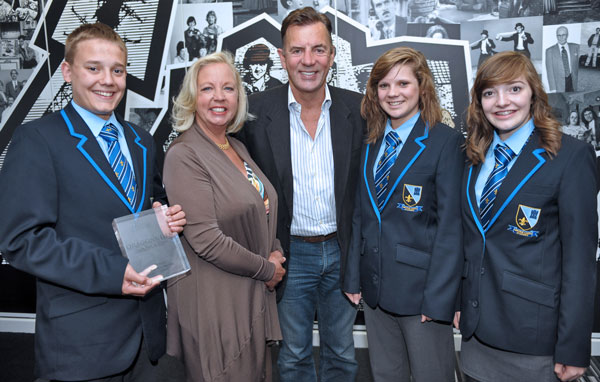
Earlier this month, Sam Lewens, Dragons' Den executive producer, blogged here about the an outreach project called Dragons' Den Goes Back to School. The project is a collaboration between the producers and BBC North. Four schools from the North of England - from Bolton, Bradford, Lincoln and Sunderland - were set a challenge by the dragons and came into the den to present their responses. Two of the schools were presented with awards - for best idea and best pitch. The programme won't be shown on the TV so here's your chance to get a sense of the excitement for the children who joined in.

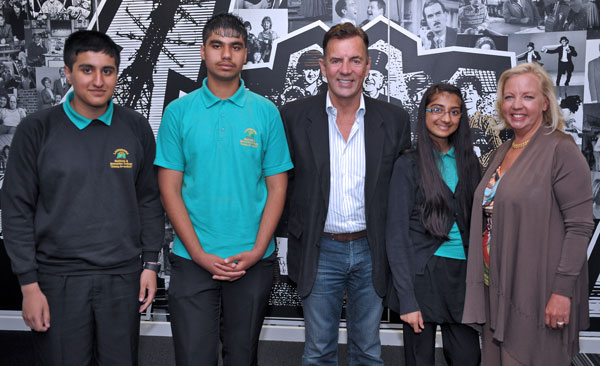
Satnaam, Mohameen and Amaan from Laisterdyke Business and Enterprise College in Bradford with Duncan Bannatyne and Deborah Meaden from the BBC's Dragons' Den

Satnaam, Mohameen and Amaan from Laisterdyke Business and Enterprise College in Bradford with Duncan Bannatyne and Deborah Meaden. The school's team entered the Dragons' Den with a pitch for a free student magazine called 'Brain Freeze' which shares revision tips and exam advice for secondary school pupils.

Oliver, Abigail and Aimee from Lincoln Castle Academy with Dragons, Duncan Bannatyne and Deborah Meaden from the BBC's Dragons' Den

Oliver, Abigail and Aimee from Lincoln Castle Academy won 'Best Idea' for their robust business plan to refurbish old computers and help get the over-50s online. Pictured here with Dragons, Duncan Bannatyne and Deborah Meaden.

Storytelling and technology - Ralph Rivera at the Intellect Consumer Electronics conference

Blog comments are currently unavailable. Find out more.

Post categories:

Steve BowbrickSteve Bowbrick|14:27 UK time, Tuesday, 2 August 2011

Intellect is a trade body for the UK technology industry. At its recent consumer electronics conference, Ralph Rivera, Director of Future Media, explained how he's bringing together storytelling and technology at the BBC.

Steve Bowbrick is editor of About the BBC

Registering risk makes sense

Blog comments are currently unavailable. Find out more.

Post categories:

Peter SalmonPeter Salmon|11:39 UK time, Monday, 1 August 2011

MediaCityUK publicity picture

Every project has its naysayers, and BBC North is no different. Before the first stone was laid at Salford Quays the national and mainly Southern-based media claimed it was a vanity project; a political deal; that it would never succeed and that no one would go.

Despite the almost constant barrage of negativity everyone involved with the project carried on because they believed in the endgame. That we would build - together with our partners on the campus and across the North of England - a state-of-the-art, digital creative community that would not only be part of the long-term and sustainable future of the local economy, but would forge a new and closer relationship with audiences across the North of England. And just as important, that it would help create a new BBC for the digital age.

Even before we opened our doors at MediaCityUK, we began to slowly embed ourselves in the Northern community. We invested in new commissions across BBC Childrens, BBC Sport and BBC Radio 5 live. For example, next weekend tune into Radio 5 live for the first part of Cancer Trials - Behind The Scenes at the Christie. This is a remarkable piece of journalism from Blakeway North in Manchester and a direct result of our Kicker Fund investment in new programmes for the network. I defy anyone not to be humbled by the bravery of everyone featured in the programme. And at the other end of the spectrum click on the CBeebies and CBBC websites to see how our half a million pound investment in digital companies from across the North of England is taking shape with Mr Bloom's Nursery from Sheffield-based The Workshop and CBBC's The Joke Theatre from Newcastle's Th_nk.

Earlier this year we worked with numerous partners (BBC Three, BBC Cymru, Leeds city Council, Welcome to Yorkshire, Marketing Leeds and Phoenix Dance Company) to bring Frankenstein's Wedding...Live In Leeds to thousands of people at Kirkstall Abbey as well as to BBC Three's audience. The ambition of the Frankenstein team was duly recognised when they were awarded Best Live Event at the Broadcast Digital Awards. More recently we brought the piazza outside our buildings to life with a series of audience events. In June, the BBC Philharmonic Presents festival launched the orchestra's first ever free music festival for local residents. Over two weeks Salford audiences enjoyed everything from Baroque to Dubstep, and each concert was broadcast on BBC radio. And only a few weeks ago some of the BBC's most popular characters took part in the Manchester International Festival. CBeebies' Zingzillas were a major feature of Music Boxes and Doctor Who thrilled and terrified audiences who visited The Crash of the Elysium.

We've also been laying the foundations for partnerships with local universities and schools through Connect & Create. Over two hundred students have completed work placements with the BBC and we have run specific placements with Vision+Media North West as well as Salford University. And as vitally, we are making a real commitment to local employment and training. So far we have recruited over 400 new people to BBC North and launched dedicated apprenticeship and ambassador programmes in the Greater Manchester area.

And all this before we even began the 36-week process of relocating our staff to Bridge, Dock and Quay Houses - our new offices on Salford Quays.

To date over 700 people have moved in, and by April 2012 there will be 2,300 BBC staff working at MediaCityUK. These aren't only staff from London and Manchester but new staff who are joining the BBC for the very first time. And from London alone the combined total confirmed as moving is 55 per cent - significantly higher than the national average for a move of this scale, which stands at 35 per cent.

So far, everything is going according to plan and we remain on time and on budget.

But we are not naïve enough to think that there won't be the odd bump or graze between now and next April. On a project of this scale and ambition - the biggest that the BBC has ever undertaken - we should be prepared for every eventuality and that's why we asked every department to list their worse case scenarios on our Risk Register.

Some of you will be acquainted with the BBC's Risk Register. Every big organisation has one and every department at the BBC is required to keep it updated. It lists any and all hypothetical risks to the business, but that doesn't mean that they will happen. By virtue of what departments are asked to consider, the risks can and do range in terms of scale and potential severity but they help ensure that the BBC is able to effectively manage and deliver its projects successfully. Indeed, it would be negligent not to have a Risk Register that covered every potential scenario.

So last week when, under a Freedom of Information request, we issued the Risk Register for BBC North to www.whatdotheyknow.com, it was only a matter of time before a naysayer discovered it. And it didn't take long. This weekend, The Sunday Times pulled together a story under the misleading headline 'Auntie Fears Making No Friends In The North'. Inevitably they were very quick to list the most attention-grabbing risks listed in the register - everything from the loss of key staff and the potential reduction in programme quality to failing to understand Northern audiences or meeting efficiencies. Needless to say they didn't - for the sake of a more balanced report - make clear to their readers the precise nature of the register or the mitigations listed against these risks in their story.

It would be nice to hope that even our harshest critics could take a step back and look at the bigger picture, to stop their hectoring and begin to embrace a future that isn't London-centric. Of course, London will always remain central to our national Creative Industries, but good things can and are happening beyond the capital too.

The North is amazingly rich with talent, people with promise and companies with amazing ideas like Sumo (Sheffield), Brass (Leeds), Amaze (Manchester), Conker Media (Liverpool), Pearl Works Productions (Yorkshire), Soundscape Productions (York), True North (Leeds) and Red (Manchester) to name but a few. All of them are making a real contribution to the future of television, radio and online and BBC North wants to help encourage, support and work with them.

That is our ambition and - touch wood - we remain on track to realise this. But if we do encounter a bump in the road, or have to swerve unexpectedly for whatever reason, we should be confident that the Risk Register will help us find a solution.

Peter Salmon is Director of BBC North

  • You can read the BBC's response to the Freedom of Information request that triggered the Sunday Times article - including the risk register mentioned - on the What Do They Know web site.

About this blog

Senior staff and experts from across the organisation use this blog to talk about what's happening inside the BBC. We also highlight and link to some of the debates happening on other blogs and online spaces inside and outside the corporation.

Here are some tips for taking part.

This blog is edited by Jon Jacob.

Subscribe to this blog

You can stay up to date with About the BBC via these feeds.

If you aren't sure what RSS is you'll find our beginner's guide to RSS useful.

[an error occurred while processing this directive]

Follow this blog

Other BBC blogs

More from this blog...

Categories

These are some of the popular topics this blog covers.