
Partnerships in practice
Post categories: Partnerships, Putting Quality First
 |10:22 UK time, Tuesday, 3 May 2011
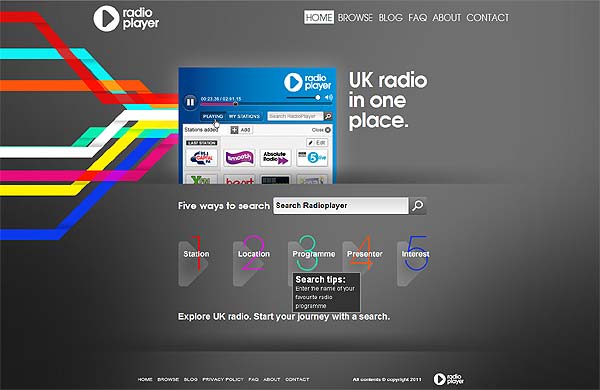
It's now just over two years since the BBC announced a renewed focus on partnerships. This resulted in some healthy scepticism both inside and outside the BBC - would any of it ever happen? Won't the BBC move on to some other novel initiative when the political climate is right? Well, I'm pleased to say that we and our partners have managed to follow our fine words through with some concrete actions - just in the last couple of months we've seen the launch of Radioplayer and iPlayer Linking.
Making partnerships work is a challenge for all organisations - and the size of the BBC and the regulatory constraints we have to work within add to the complexity of working with us. However, the good news is we are learning.
iPlayer Linking is an example of this - it's a product with many of the same benefits as the original 'Open iPlayer' proposal but not as many of the complexities. It is a really simple idea - a new feature in BBC iPlayer that helps you find programmes from other broadcasters and on-demand content providers.
Through partnerships that allow the sharing of metadata, you can now find programmes from ITV, Channel 4, S4C, Five, SeeSaw.com and MSN Video Player, directly from the BBC iPlayer website. Have a look on the left hand side of the screen in iPlayer or read more about how it works.
Another recent launch, Radioplayer, is the culmination of a partnership between the BBC and commercial radio to provide easy online radio listening with very simple search and navigation. With founding partners the BBC, Global Radio, GMG Radio, Absolute Radio and RadioCentre, it lives up to its tagline, 'UK radio in one place'. Read more about it.
We're not just working on technical partnerships or only with other broadcasters. A History of the World was one of the most exciting partnerships of 2010. Its foundation was a partnership between the BBC and the British Museum, but it extended to involve schools, museums and audiences across the UK. You can still listen to and download all the episodes of the radio series.
Something all of these partnerships have in common, as with all the partnerships we're working on, is that they seek to bring benefits to the BBC, our partners and most importantly to our audiences. We'll continue to work away on new and exciting partnerships that support the creative sector and bring more value to licence fee payers.
As we stated in Putting Quality First, partnership is now the default model for the BBC on almost any new large-scale issue - it's becoming a way of life for us.
We will also keep trying to make the BBC a simpler and better partner (one of the aims of the Delivering Quality First project). You can keep up to date on our progress at the BBC's partnerships page.
Adrian Ruth is the BBC Partnerships Programme Director
- The BBC announced a renewed focus on partnerships with the document Public Service Partnerships
- Radioplayer
- iPlayer Linking
- A BBC Trust press release about the original 'Open iPlayer' proposal
- A post on the BBC Internet Blog about how to find programmes in iPlayer from other on-demand services
- A post on the BBC Internet Blog about the launch of the Radioplayer
- A History of the World: The 100 British Museum Objects
- The BBC defined partnerships as the default model on almost any new large-scale issue in the BBC Strategy Review document
- The BBC aims to be a simpler and better partner. You can track progress on the BBC Partnerships page

Comment number 1.
At 18:28 5th May 2011, melisaaaa wrote:This comment was removed because the moderators found it broke the house rules. Explain.
Complain about this comment (Comment number 1)
Comment number 2.
At 19:03 10th May 2011, Andy Parsnip wrote:So does the BBC need a Partnerships Director? Does a Partnerships Director bring value to the BBC portfolio and, most importantly, what does he do all day?
First of all, for those of you that don't understand how the management structure works at the BBC and other companies, let me explain.
First of all you have the senior management team. They are responsible for, er, passing stuff down to the lower management team who write reports for the senior management team.
Then we have operations managers, they are in charge of stuff like "pointless press releases about things that should happen in a company anyway" and "over-budget projects". Operations managers are in charge of those very important memos that will eventually be ignored by front line staff on account of the author not actually having any experience in making TV or Radio shows.
Eventually we get down to the least important people in any broadcasting company. The tens of work experience staff who make 'content' (or programmes as we used to call them before our Head of Phrases sent us a memo). This band of dedicated youngsters really add value to any company, mainly because they don't ask for a salary.
So let's not hear anyone say there's too many management level staff at the BBC. As our Director for Green Things so rightly said last week "We're worth every penny".
Taxi!
Complain about this comment (Comment number 2)
Comment number 3.
At 10:12 22nd May 2011, Adrian Ruth wrote:Thanks for the comment, Andy – I share your antipathy towards pointless layers of management, in any organisation!
Partnerships form just part of my role – it isn’t a full-time job. Having said that, there’s more than enough to keep me busy. Partnerships can be incredibly difficult – many of them run into the same issues. It makes sense for us to coordinate efforts across a big organisation like the BBC, to make them as smooth as possible.
And the smoother we can make the partnership process, the more time programme-makers will have to concentrate on doing what we do best - making great programmes for audiences, like “A History of the World”. That is our ultimate goal.
Complain about this comment (Comment number 3)