Archives for May 2011
Moderation and 'superinjunctions'
Editor's note: a big story for the the BBC and for the whole of UK media this last week has been the limits of what can be said where a court injunction applies and when it has effectively collapsed. Paul Wakely explains the rules that apply to what you say at bbc.co.uk - SB.
I'm the Editor, Moderation Services for BBC Online, which means I oversee moderation of your comments across the BBC website.
I wanted to respond to some interestingdiscussions about the moderation we've applied to comments about the 'footballer injunction' that has received so much coverage during the last few days. Following the naming of the footballer in Parliament I will, as much as I can, explain where we are drawing the line with moderation, and explain why some of you have had your comments removed for saying things everyone is saying on Twitter.
Read the rest of Paul's blog post, and leave a comment, on the BBC Internet blog...
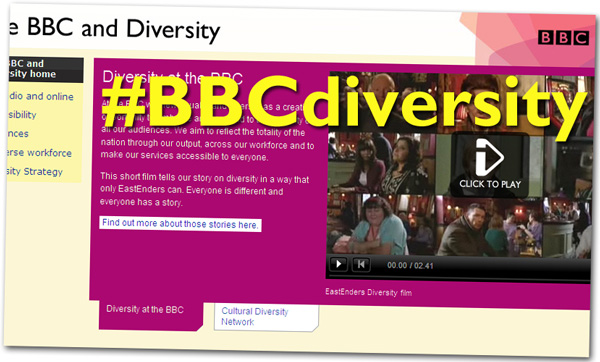
Everyone has a story - the BBC's new diversity strategy
Today we're publishing the BBC Diversity Strategy for 2011-15, outlining our commitment to diversity in the programmes we make and the people we work with. We are also publishing the research and consultation that have helped shape this strategy and perhaps most importantly, the action plans divisions will use to implement it.
Two factors influenced this strategy: our desire to connect with all audiences to ensure licence fee-payers' feedback helped shape the strategy, and the recently introduced Equality Act 2010 - specifically the public sector equality duty which requires all public bodies to take active steps to reduce inequality. This presents the BBC with a great opportunity to bring our obligations as a fair employer together with our wider commitment to reflect the full diversity of the UK in the content we make.
For the research which we commissioned in partnership with the BBC Trust, workshops were held with the public, gathering feedback from a cross section of the UK. We also ran a consultation for staff and the public from November to January, which received almost 5,000 responses. There were a number of themes in the responses to both research and the consultation such as a desire for accurate and authentic portrayal, concerns about the use of stereotypes, and an expectation that the BBC leads by example in this area. There was a broad support for the BBC's diversity objectives, but also a desire to know how we would achieve them.
We've taken the responses in both the research and consultation on board and have worked with the BBC's divisions to lay out action plans that show how each part of the BBC will work towards these objectives.
The most exciting element for us is seeing tangible progress towards these objectives across the organisation. Following our research into the portrayal of lesbian, gay and bisexual (LGB) people across BBC services last year, we've held various workshops with production teams to encourage greater consideration of the portrayal of LGB people and to help inform issues such as the need for accurate authentic portrayal on our output. On the BBC workforce, we've had ambitious staff targets in place for some time focusing on ethnicity and disability and feel we're making good progress to reach these, but there is still work to be done particularly in relation to diversity amongst our senior leaders . We have a range of great schemes in place - just this week, as chair of the Cultural Diversity Network, we launched the Senior Mentoring Scheme, which pairs black and minority ethnic (BME) and disabled staff from across the broadcasting industry with mentors to help them build and develop the key skills to reach senior positions in the media. Also, the Journalism Trainee Scheme and 2012 Apprenticeships have brought in people from an incredible range of backgrounds that have real talent but may not have had the opportunities or experience to consider a career at the BBC before.
For the BBC, diversity is about working with a diverse range of talented people and using that diversity as a creative force to make the most original and distinctive programmes which mirror the whole audience. For the BBC, diversity is about working with a diverse range of talented people and using that diversity as a creative force to make the most original and distinctive programmes which mirror the whole audience. The new diversity strategy will help us to achieve this and I look forward to keeping you updated along the way.
Amanda Rice is the BBC's Head of Diversity
- The Diversity Strategy, Diversity Action Plans, Research and Consultation can be found on the BBC Diversity webpage.
Sharing Albert - supporting sustainability in TV production

About six months ago, Albert started working at the BBC. Albert was tasked with helping our programmes become more 'sustainable' and quickly became well known for asking difficult but important questions to which we didn't always have the answer. Albert was available for work 24/7, never slept and never left the BBC.
OK no surprises, Albert's not a person, it's an online tool, a carbon calculator which was built at the BBC specifically to work out the carbon emissions of any TV programme. 'Albert' was a working title that just happened to catch on.
Albert enabled us to quickly and cheaply learn what a typical hour's worth of BBC TV production means in terms of greenhouse gases. Greenhouse gases mean climate change - we want our programmes to change the world - but not in that way! So the goal is to drive down emissions and drive up production sustainability...
Up to now, as I say, Albert's never left the BBC - it lives on our intranet site. But in the autumn that will change. We've formed a partnership with BAFTA and we'll be sharing Albert with the rest of the UK TV industry. Channel 4 and ITV have committed to using the new-look Albert along with indies, IMG, Kudos, Shine, TalkbackThames and TwoFour.
This is just the beginning of a great partnership and if you want to be involved, get in touch with BAFTA.
Our aim is for the UK to lead the world in the area of sustainable production and we will meet every month to discuss how we can improve Albert and to share best practice...
Albert's not moving house by magic so the BAFTA group has an equally impressive list of technical partners, all working with us on a charitable basis: AMEE, Aerian Studios, Microsoft, Mason Hardy, Outsourcery, Sharepoint City - all ensuring Albert is a practical tool that speaks the language of programme makers while based on a solid foundation of scientific know-how behind the scenes.
Tracking carbon is a moving target, particularly to an industry like ours that's not used to doing it. So in the words of the founder of AMEE - the people the Department of Energy and Climate Change use to check their sums - Albert is 'a fantastic prototype', not the definitive article. Mike Berners-Lee, author of a book called The Carbon Footprint of Everything, has likened today's carbon footprints to the maps drawn up by the ocean-going pioneers who first explored our world: full of uncertainty, with holes around places where we've not been yet, but essential as a first step towards getting us to the next level of knowledge.
Albert is the UK TV industry's first carbon map, our first step. The BBC will be publishing some Albert data later this year. Through our partnership with BAFTA and all the organisations listed above, the map will become more detailed, a little more complete, pointing us to where we need to go to build a sustainable future for content production.
Sally Debonnaire is Controller, Production Operations at the BBC
- Read the BBC's press release about Albert's new departure on the press office web site.
- The BBC's Head of Partnerships, Adrian Ruth, wrote about some recent breakthroughs here on the blog on 3 May.
- The picture shows a TV camera in use at the BBC. It's from the BBC's picture library.
BBC North takes off
Today we embark on the next chapter in the story of BBC North as we welcome our first movers into our new buildings at MediaCityUK. They join the BBC Philharmonic who moved into their new performance space at the beginning of May and kickstart over thirty-six weeks in the single most ambitious staff move in the BBC's history.
What they will find, and you will discover when you visit us, are working spaces that have been designed to foster creativity. We are exploiting the latest technology both in our buildings and in the studios to remove the barriers that have traditionally hindered closer working between colleagues and departments.
As we begin to settle into our new homes, find our way around Salford Quays and get to know our neighbours, it's hard to believe that in just four years we have gone from pipe dream to reality. It's been an exciting journey and not without it's challenges and difficult choices for many people. Yet I think that we have arrived at an important crossroads. If we take the wrong turning, allow our enthusiasm and commitment to be lessened, curb our ability and willingness to take creative risks, create a fortress and not an open and honest environment, then it will be our audience who lose out.
I firmly believe that all of us, those moving from Manchester and London, as well as hundreds who are joining the BBC for the first time, will choose the right direction. Working together we can create a new BBC that will forge a new contract with our audiences across the UK, build stronger relationships with our partners and most importantly, continue to make the very best content for TV, radio and online.
It's something that we have been doing for some time now. We have invested millions of pounds across the North of England, from Newcastle to Sheffield, from Liverpool to Leeds in great programmes, digital content and truly memorable events. From the synchronised dancing of the Kirkstall Abbey audience at Frankenstein's Wedding...Live in Leeds and great dramas like South Riding, United and Eric & Ernie to the enchanting online adventures for young kids with Mr Bloom's Nursery, BBC North has played a part in showcasing the creativity, talent and diversity of this region to the whole nation.
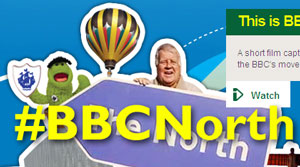
Yet this is only the beginning. Last week we announced BBC Philharmonic Presents, a major new festival here at Salford Quays. For the first time in the BBC's history, all of our major radio networks will support and broadcast live from the orchestra's new home. From dubstep to church music, each night will be music night as local residents enjoy these concerts absolutely free. And following a summer of events across the piazza, bringing to life some of our most loved Children's BBC brands, at the end of the year sport is coming home with the live broadcast of the the fifty-eighth Sports Personality Of The Year from Salford Quays.
And alongside the new people that we will be employing across all the departments that will be based at Quay, Bridge and Dock house, we plan to make a real and long-term difference through our new apprenticeship and ambassador schemes.
And to mark the opening of our buildings today we are launching the online tools for people to find out what is going on behind the glass as well as tell us what they think. A BBC North web site and a Twitter account will hopefully become destinations that will engage with people and encourage them to join us on the journey and help us furnish our new home with fresh ideas and suggestions.
So as we throw open our doors, we face an exciting future. Of course we can expect a few unexpected bumps and scrapes, but let's not forget, home is where the state-of-the-art is.
Peter Salmon is Director, BBC North

BBC Films takes 'Kevin' to Cannes

Steve Bowbrick is editor of About the BBC
- More information about WNTTAK and Ramsey's other films 'Ratcatcher' and 'Morvern Callar', on the BBC Films web site.
RAJARs, Sonys and more make it a good week for BBC Radio

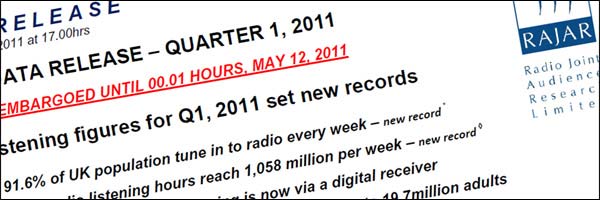
RAJAR day - the publication of the latest listening figures for radio in the UK - brings promising results.
Over on the BBC Radio 4 and BBC Radio 4 Extra blog, Gwyneth Williams, Controller, describes the station's record reach of 10.8 million as "cheering". Read Gwyneth's blog post in full
And Adrian Van Klaveren, Controller 5 Live and 5 Live Sports Extra, celebrates not only the increase of listeners - up nearly 3% year on year - but also the seven Gold Sony Radio Academy Awards received this week. Read Adrian's post on the Radio 5 Live and 5 Live Sports Extra blog
Roger Wright, Controller, Radio 3 and Director, BBC Proms, outlines his busy week: "Proms booking opened on Saturday, the Sony Awards were on Monday night, the Royal Philharmonic Society Music Awards took place the following evening and today the latest set of listening figures have been announced." Read Roger's full blog post
Council spending - making it clear

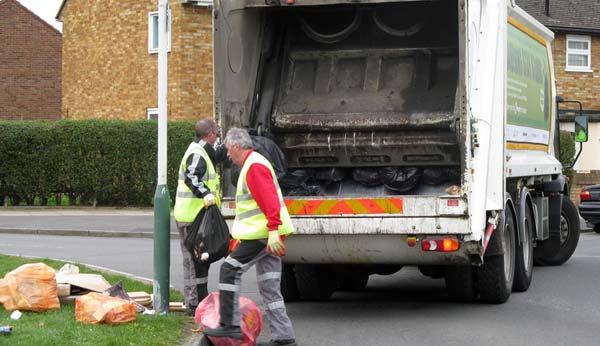
Today we launch the results of a substantial research project analysing information supplied by more than 260 local authorities across England about how their spending plans will impact on public services in their areas, following the Government's Spending Review process.
We have undertaken this survey because we know that people care passionately about their public services - and because the BBC has a duty to explain what is happening, what the choices are for local authorities and how they have made them. Only the BBC can do this kind of work because only we have a network of local reporters serving radio, TV and online, spread across England whose job it is to explain what is happening in their localities and to hold locally elected councillors to account for the decisions they make.
But with that unique position comes responsibility. We have to make our explanations clear and readily understandable for our viewers, listeners and online users. We need to make sure that we present the information in a way that not only tells a compelling story, but that the story we tell is accurate, fair and above all, impartial.
So in launching our survey today we have worked with the Chartered Institute of Public Finance and Accountancy (CIPFA) to map the effect of the new spending round on public services, using data that the councils themselves have verified. The survey was based on CIPFA's SeRCOP* service expenditure breakdown which is used by a variety of organisations, including the Government, to assess what local authorities spend. Every local authority in England was surveyed between 9th February and 28th April 2011 -
Some people talk of cuts, others of savings but the reduction in local budgets has been a regular narrative through 2011. This survey provides audiences with a snapshot of how each local authority intends to implement its savings using a direct comparison with last year. Our local radio teams, alongside regional and network TV colleagues will be assessing the story and context behind those figures to see how each council is coping in this new financial climate.
Whether the resulting stories are about library closures, reductions in Chief Executives pay, a slimming down of administration costs, outsourcing of services, or closure of some services, we'll be telling the stories that matter to communities.
Our audience research tells us that the BBC's independence is a foundation stone of public trust and it is one we will not jeopardise. Fundamental to that independence is political impartiality and with our survey today we strive to present a true picture of public services in England - as they are and without the gloss of political varnish.
It might ruffle a few feathers, it might spark some lively debate, but above all I hope it will help inform you of the choices your council is making about how your money should be spent.
* The CIPFA Service Reporting Code of Practice (SeRCOP) replaces the previous Best Value Accounting Code of Practice (BVACOP) from 2011/12.
David Holdsworth is Controller, English Regions
- Information about the Government's Spending Review on HM Treasury's website
- BBC News England
- The Chartered Institute of Public Finance and Accountancy
First Click Friends - getting everybody online

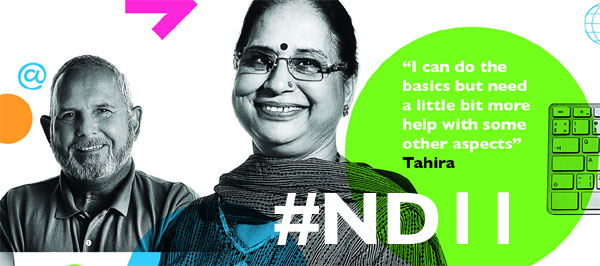
Earlier today I gave a speech at the National Digital Conference to an audience of around one thousand 'digital champions'. It's been an inspiring day to celebrate the launch of a network of 'digital champions' - anyone encouraging family and friends to use the internet. I announced the launch of the next phase of the BBC's own First Click campaign to build on the successes of the last, and talked about future collaborations to broaden digital inclusion. My speech began:
I'm delighted to be joining Martha, Paula and all of you today to celebrate the launch of the digital champions' network and the next phase of the BBC's First Click campaign. At the BBC, we began trying to introduce the British public to the potential of digital technology back in the early 80s with the BBC Micro...
Read the rest of the speech on the BBC Press Office web site.
Mark Thompson is Director General of the BBC
- The National Digital Conference is taking place at Old Billingsgate Market, London this afternoon and tomorrow. Watch live online, from 0900 Thursday, on the ND11 web site. The hashtag is #ND11.
- Read the First Click Friends press release on the BBC Press Office web site.
- Follow @ND11 on Twitter.
- Help someone get online on on the First Click Friends web site.
- There's an post about First Click Friends on the BBC Webwise blog.
Mark Thompson at the National Digital Conference

Later this afternoon, BBC Director-General Mark Thompson will deliver a speech to the National Digital Conference in London on the subject of media literacy. You can watch a live stream of the event on the ND11 website. Mark Thompson's speech begins at about 1535. Come back to the blog for further information after the speech.'
Steve Bowbrick is editor of About the BBC
- The National Digital Conference is taking place at Old Billingsgate Market, London this afternoon and tomorrow. More information on the ND11 web site.
- Follow @ND11 on Twitter.
Partnerships in practice

It's now just over two years since the BBC announced a renewed focus on partnerships. This resulted in some healthy scepticism both inside and outside the BBC - would any of it ever happen? Won't the BBC move on to some other novel initiative when the political climate is right? Well, I'm pleased to say that we and our partners have managed to follow our fine words through with some concrete actions - just in the last couple of months we've seen the launch of Radioplayer and iPlayer Linking.
Making partnerships work is a challenge for all organisations - and the size of the BBC and the regulatory constraints we have to work within add to the complexity of working with us. However, the good news is we are learning.
iPlayer Linking is an example of this - it's a product with many of the same benefits as the original 'Open iPlayer' proposal but not as many of the complexities. It is a really simple idea - a new feature in BBC iPlayer that helps you find programmes from other broadcasters and on-demand content providers.
Through partnerships that allow the sharing of metadata, you can now find programmes from ITV, Channel 4, S4C, Five, SeeSaw.com and MSN Video Player, directly from the BBC iPlayer website. Have a look on the left hand side of the screen in iPlayer or read more about how it works.
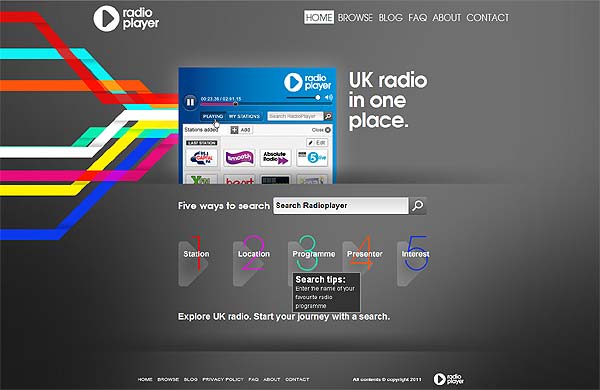
Another recent launch, Radioplayer, is the culmination of a partnership between the BBC and commercial radio to provide easy online radio listening with very simple search and navigation. With founding partners the BBC, Global Radio, GMG Radio, Absolute Radio and RadioCentre, it lives up to its tagline, 'UK radio in one place'. Read more about it.
We're not just working on technical partnerships or only with other broadcasters. A History of the World was one of the most exciting partnerships of 2010. Its foundation was a partnership between the BBC and the British Museum, but it extended to involve schools, museums and audiences across the UK. You can still listen to and download all the episodes of the radio series.
Something all of these partnerships have in common, as with all the partnerships we're working on, is that they seek to bring benefits to the BBC, our partners and most importantly to our audiences. We'll continue to work away on new and exciting partnerships that support the creative sector and bring more value to licence fee payers.
As we stated in Putting Quality First, partnership is now the default model for the BBC on almost any new large-scale issue - it's becoming a way of life for us.
We will also keep trying to make the BBC a simpler and better partner (one of the aims of the Delivering Quality First project). You can keep up to date on our progress at the BBC's partnerships page.
Adrian Ruth is the BBC Partnerships Programme Director
- The BBC announced a renewed focus on partnerships with the document Public Service Partnerships
- Radioplayer
- iPlayer Linking
- A BBC Trust press release about the original 'Open iPlayer' proposal
- A post on the BBC Internet Blog about how to find programmes in iPlayer from other on-demand services
- A post on the BBC Internet Blog about the launch of the Radioplayer
- A History of the World: The 100 British Museum Objects
- The BBC defined partnerships as the default model on almost any new large-scale issue in the BBC Strategy Review document
- The BBC aims to be a simpler and better partner. You can track progress on the BBC Partnerships page
About this blog
Senior staff and experts from across the organisation use this blog to talk about what's happening inside the BBC. We also highlight and link to some of the debates happening on other blogs and online spaces inside and outside the corporation.
Here are some tips for taking part.
This blog is edited by Jon Jacob.
Subscribe to this blog
You can stay up to date with About the BBC via these feeds.
If you aren't sure what RSS is you'll find our beginner's guide to RSS useful.
Follow this blog
Other BBC blogs
- The Editors
- BBC Internet Blog
- BBC Sport - Roger Mosey's blog
- Radio Blog
- Radio 3 Blog
- Radio 4 Blog
- Radio 5 Live Blog
- TV Blog
Find all the BBC bloggers on the BBC Blog Network