About the BBC - BlogAbout the BBC - Blog
Local Navigation

Archives for October 2010

Roger Mosey blog - A Capital Idea

Post categories:

Laura MurrayLaura Murray|09:29 UK time, Friday, 29 October 2010

"This is a post with lots of initials in it. So stand by for not just IOC and LOCOG but OBS, EBU, ODA and BBC - because I want to explain a bit about what we do week in and week out on the BBC 2012 project, and how it takes many cooks to create this particular broth".


Roger Mosey, BBC Director of London 2012, has blogged about the unique challenge of working on the BBC 2012 project and explains how the BBC works with the partners involved.To read it in full and to leave a comment, go to Roger Mosey's Blog.

Laura Murray is Editor of About the BBC blog

Radio Blog - HD sound for the Electric Proms

Post categories:

Laura MurrayLaura Murray|10:53 UK time, Thursday, 28 October 2010

"You may have heard that we offered an extra high quality (320kbs AAC) online audio stream for the last week of the BBC Proms this year (read about the experiment on the BBC Internet blog). The feedback we received was almost universally good. Listeners really appreciated the richer sound quality which made a fairly obvious difference even to the casual listener. Well, I can now confirm that for the first time for non-classical output, we'll offer the same higher quality audio stream for this year's BBC Radio 2 Electric Proms concerts".


Chris Kimber, Managing Editor at BBC Audio & Music Interactive, has blogged about the benefits of HD sound to the listener. To read the blog post in full and to make a comment, head over to the Radio blog.

Laura Murray is Editor of About the BBC Blog

Electric Proms - Creating New Moments in Music

Blog comments are currently unavailable. Find out more.

Post categories:

Jeff SmithJeff Smith|08:26 UK time, Wednesday, 27 October 2010

Sir Elton John will be performing at this year's Electric Proms.

Sir Elton John photographed by Joseph Guay

This year is the first year that Radio 2 took over sole responsibility for the Electric Proms but the concept remains the same and that is its dedication to creating new moments in music.

Working in partnership with BBC2 we wanted to create a unique music event and I as Head of Music wanted to get Radio 2 core artists to effectively curate the three nights. They'd do their own songs new and old but we'd add unique versions of tracks and bring in musical collaborators, including brand new names where possible.

It's been a great joint effort between radio, tv, online and our colleagues at Red Button.

The line up in past years has been impressive, and last year alone featured a diverse range of talent including Dame Shirley Bassey, Smokey Robinson, Doves, Dizzee Rascal and Robbie Williams. As 2010 is the festival's fifth birthday and the first year that Radio 2 has owned the festival, it was important to produce a line-up that was would be favoured by the discerning Radio 2 listeners, as well as producing a fantastic live concert for all platforms.

The key relationship for me has been with BBC TV's music boss Mark Cooper. After I'd had the vision for how I saw the nights running I had a wishlist of artists and Mark and I began meeting the respective managers and artists.

I clearly remember a fantastic two hour meeting with Robert Plant and, after a lengthy discussion about his beloved Wolves FC, we ploughed into detailed chatter about the popular music of this and the last century. We discussed everything from the Delta Blues through to one of Robert's favourite new bands, the Black Keys.

It was these conversations that laid the foundations of each night. We then followed up by leaving the artists and managers to think on who they would like to appear with them.

Following Mark and my initial conversations Radio 2's brilliant live music executive producer Sarah Gaston has been busy linking up with the musical directors of each act to ensure that the set lists are finalised with rehearsals and musicians booked.

I'd been very impressed by my first visit to the British Music Experience at the O2 in Greenwich and wanted to reflect a similar spirit given the line up at Radio 2's Electric Proms. Our interactive team led by Clare Hudson and Tim Clarke have gone on to assemble an impressive memorabilia section on the website using artefacts and materials that our artists have sent to us. Listeners and website users can also send in their ticket stubs, photographs and other mementoes to assemble a fully interactive online partner to the TV and radio coverage. This will be mirrored by a physical exhibition of the artists' artefacts within the Roundhouse venue itself.

Mark Cooper and his team at BBC Two have worked tirelessly on creating new documentaries to compliment the shows and Mark has secured some exclusive, exciting and revelatory interviews recorded around the world, including an interview with Elton's schoolteacher as well as his fellow musicians. These will add real depth and context to the performances, as well as being fantastically entertaining and informative.

Mark and I decided from the outset that we'd like to keep the same host presenters for TV and radio and so we were delighted that Chris Evans and Jo Whiley agreed to be the faces and voices of all our Radio 2 Electric Proms activity

Also when you switch to red button the TV team will be taking viewers deeper backstage and have prepared some additional live content , with exclusive rehearsal footage and artist interviews, all presented by Jo Whiley.

Listeners to the live concerts via the Radio 2 website will exclusively experience the performances in HD Sound, an extra high quality audio stream for live online listening and an exciting development for digital radio.

I'm also really pleased that Simon Mayo is bringing his Radio 2 Drivetime show from the Roundhouse each night with more special guests and atmosphere plus Bob Harris will be there on the final night with a special aftershow programme from 10pm - midnight on Saturday.

Radio 2 is committed to playing timeless melodic music, and Robert Plant, Sir Elton John and Neil Diamond are three artists who have a multi-generational appeal. We're all really excited that they have agreed to perform at this year's Radio 2 Electric Proms and I hope you will enjoy the unmissable music experiences that we have planned on Radio 2, BBC Two, online and Red Button.

Jeff Smith is Head of Music for Radio 2 and 6 Music

Explore the brilliant Radio 2 Electric Proms websitefor updates about the special concerts and the artists performing.

Managing Editor at BBC Audio & Music Interactive, Chris Kimber has written a blog about the benefits of HD sound to the listener at this year's Electric Proms. Head over to the Radio blog to read his post.

Bristol - BBC Anchor Partnership One Year On

Blog comments are currently unavailable. Find out more.

Post categories:

Caroline ThomsonCaroline Thomson|17:26 UK time, Monday, 25 October 2010

Today I’m in Bristol to mark the anniversary of the BBC’s first city partnership – which we’ve called the Bristol - BBC Anchor partnership, paying tribute to the city’s seafaring history.

Our partners are Bristol City Council, the South West Regional Development Agency; South West Screen; the city’s two universities – University of Bristol and the University of the West of England and the city’s creative industries sector, represented by Watershed and Bristol Media amongst others and a number of community organisations including Knowle West Media Centre.

The partnership is one embodiment of the BBC’s commitment to the West of England. Home to factual programming and its jewel, the Natural History Unit as well as local and regional programming, Bristol’s principal agencies have a strong commitment to developing a digital creative industry and already has a strong reputation for cutting edge technology and we believe its important to play our part in helping the industry to flourish.

Anchor was set up to bring together the wealth of talent across the West to unlock creative talent and by working together to help stimulate and grow the creative economy.

We want to develop cutting edge technology and innovation for broadcasting over the next 50 years, based on a tradition of excellence over the last fifty years.

We signed the agreement a year ago this month and you can see the full memorandum of understanding on the partnership website.

This partnership is one important element of the BBC's commitment to partnership working. You can find out more about this from our partnerships website.

A lot of work has gone into the last year from a range of people involved in the partnership. When I look at what all those involved have achieved, its clear tremendous progress has been made. There have been working groups on skills; on Innovation and on film and TV production and multiplatform. BBC Films has invested in South West Screen’s iFeatures project, alongside others. 

Programmes are our lifeblood and in addition to factual, natural history and local radio and regional TV programmes we also have great network radio in bristol.

Last year BBC Bristol radio department celebrated 30 years of Poetry Please at the Old Vic and this year the department are joining with the Festival of Ideas and the Arnolfini to present Matthew Parris and special guests for two editions of Radio 4's biography programme Great Lives. You can apply here for tickets.

And, alongside the proud history of Casualty shooting in Bristol we've continued with location filming for shows such as 5 Daughters, Lark Rise to Candleford and we're currently filming a new drama - Dirk Gently.

We’ve held workshops and discussions with the creative community in the West and there have been both formal and informal conversations taking place sharing knowledge and skills over the last 12 months.

As part of the partnership we’ve also looked at how the BBC can increase its interaction with the community. Around 10% of our staff are now involved in giving some of their time to initiatives around media literacy in the community and we’re on track to double this by 20% by Christmas. We’ve provided BBC workshops and professional training opportunities to community groups and we have offered paid placements to young people as part of our Face to Face scheme which has involved 15 young people from community groups across the city .

We want to encourage young people to believe that the BBC is and can be a place for them to work and learn about programme making and to enrich our workforce with a diverse range of backgrounds and ethnicity. Against industry trends we have improved the diversity of recruits at BBC Bristol, but we can and must do more.

I hope this work serves to demonstrate the BBC's commitment to Bristol and the West. We've been here for half a century and we are very much here to stay!

Just talking has helped us all achieve a better understanding of our respective organisations and goals. We’re all now facing some tough choices, but by working together we can ensure that we maximise our opportunities to grow and sustain the creative industries in the West. I’m looking forward to seeing what we can achieve over the next 12 months.

Caroline Thomson is Chief Operating Officer

Read Head of Outreach, Alec MicGivan's blog about celebrating partnerships in Bristol.

Radio Blog - Sir Michael Lyons on new licence fee settlement

Laura MurrayLaura Murray|11:22 UK time, Monday, 25 October 2010

"In this week's edition of the BBC's in-house newspaper 'Ariel', the main feature is about the heavy workload the BBC's chief operating officer, Caroline Thomson, now has as a result of the recent cull of executive board members. One of her three main responsibilities, it said, was preparing for the renegotiation of the licence fee which was expected to start in 2011 and take a considerable amount of time.

Well hardly had the paper hit the Corporation's corridors than her load suddenly got considerably lighter. On Wednesday the Chancellor of the Exchequer announced that the licence fee would be frozen for six years. The negotiations were over before they had started."

Roger Bolton the presenter of Feedback blogged on Friday about the new licence fee settlement. You can read his blog in full, listen to his interview with Chairman of the BBC Trust, Sir Michael Lyons and make comments on the Radio Blog.

Laura Murray is Editor of the About the BBC Blog

BBC Online - Adopting Product Management

Blog comments are currently unavailable. Find out more.

Post categories:

Erik HuggersErik Huggers|10:51 UK time, Monday, 25 October 2010

Last week, the BBC Academy launched its Product Management Development Programme to give staff an overview of the discipline and the skills it entails. At the same time, the BBC Academy published a specially-commissioned report into the state of product management in 2010. I’m delighted that the BBC as a best practice leader is playing such an important part in the adoption of a discipline which is rapidly gaining prominence in the UK media industry.


Why do we need Product Management? In March of this year the BBC announced a new strategy – Putting Quality First. I have blogged previously about the significance of this for BBC Online. Putting Quality First recognised the importance of BBC Online within the BBC’s overarching strategy, and proposed we focus on doing ‘fewer things better’. BBC Online started life as a flat text-publishing medium via which static web pages were delivered, before the web began to mature and the offering grew. To help us to rationalise this, we’ll be introducing modern management processes to bring it all together.


By 2012 it’s estimated that around 90% of UK homes will have access to our services via the web so it’s important that we get this right. Product management will enable us to think more strategically about developing our online presence, and deliver a better quality and more innovative service for audiences. The pursuit of quality will be supported by better ways of working together. The report published yesterday defines the product management role as ‘a multi-disciplined person who operates at the intersection of technology, design and editorial and is able to bring all of these elements together’ to deliver products whose lifecycle is managed. We’ll no longer build websites which are published and which sit unattended and slowly degrade; products will be managed within a life cycle. This could mean gradual addition of new features, new content, new releases, but also includes the ultimate decommissioning of a product.


How will we make this change happen? The UK is currently behind the US in its adoption of the discipline, but the BBC is lucky to have a small but solid foundation to build on. Some recent hires of practiced, multi-discipline product management experts will help us lead the charge. On top of this, I’m proud that the BBC Academy is investing in professional development to prepare existing staff for cultural change, and more broadly, our contribution to the development of a new generation of world-class product managers and an important industry standard.


I’ve no doubt that product management will soon be embraced by many other European media companies. In the meantime, I’d urge you to take a look at the report published last week which provides a great insight into the state of product management in 2010 via various case studies and testimonials. It concludes that we’ve reached a tipping point where media companies are beginning to understand the value of a product-led approach, but also that there’s a skills gap in the industry, something which we hope our training initiative will begin to address.


Erik Huggers is Director of BBC Future Media & Technology

You can read more about how the BBC spotlights the role of Product Manager in the media in the press release.

Celebrating BBC Partnerships in Bristol

Blog comments are currently unavailable. Find out more.

Post categories:

Alec McGivanAlec McGivan|12:45 UK time, Friday, 22 October 2010

In order to see this content you need to have both Javascript enabled and Flash installed. Visit BBC Webwise for full instructions

I can’t believe it’s been a whole year since the BBC announced its first ever city partnership, yet here we are about to celebrate the first anniversary of the Anchor Collaboration in Bristol. The partnership saw key media organisations in the city agree to work together to create a media and creative hub. Part of the BBC’s commitment was to increase our outreach work in the area. Well, we’ve certainly been getting out and about to meet the people of Bristol in the last year.

One of the highlights was School Report, our flagship student journalism scheme, which has seen the number of Bristol schools participating soar since the city partnership began. On annual School Report News Day in March there was a large outside broadcast live from Bridge Learning Campus, which involved many of the local students.


It wasn’t just school children who benefited. We also provided production training for 15 young people not in employment, education or training through BBC Bristol’s Face-to-Face scheme. All the participants received three days intensive training and BBC mentor support. Three of the young people also went on to complete six-week paid work placements. One of the trainees, Romayne Graham, is now working as a runner on Bargain Hunt. This year’s trainees have just been recruited - so good luck to them.


One year on is a great time to review the project and I’ll be in Bristol next week to meet with the partners involved. I look forward to hearing about the successes of the other partners and plans for the future.

Alec McGivan is Head of Outreach

The videos were made in March 2010 as part of BBC School Report, find out more on their website.

This Time Eighty Years Ago

Blog comments are currently unavailable. Find out more.

Post categories:

Paul HughesPaul Hughes|08:39 UK time, Friday, 22 October 2010

Violins at the Barbican, photograph taken by Lara Platman

As I sit here in Maida Vale's Studio 1 watching the load-in of what looks like the national supply of percussion instruments, I wonder what my predecessor might have been thinking 80 years ago today in the lead up to the very first concert by the newly-created BBC Symphony Orchestra. The Orchestra had been formed from the finest players in the land (and beyond) to bring a range of quality orchestral performance to the widest possible audience as part of the fledgling BBC's commitment to inform, educate and entertain. Created in a time of economic difficulty when the BBC wanted to enrich people's lives through its public service ethos, on 22 October 1930 the BBC Symphony Orchestra embarked on that mission to great acclaim and changed the landscape of British orchestral life for ever.


The opportunity to celebrate the BBC Symphony Orchestra's 80th birthday gives us a chance to reflect on that original mission and how central it still is to what the orchestra does today. If bold programming alone were enough to demonstrate our distinctiveness, then we've thrown down the gauntlet this time. On Friday we open with the very first piece the orchestra performed, the overture to Wagner's opera The Flying Dutchman. We close with Stravinsky's massive ballet score The Rite of Spring (which also changed the course of musical history and caused a riot in doing so), which many people will have first heard as part of Walt Disney's animated classic Fantasia (remember the scary bit with the dinosaurs, the earthquake and the volcanoes?)

Now - I have a terrific management team here; second to none. They can handle just about anything and, like the players, they are usually up for a 'challenge'. Indeed the concert will be as much a showcase of their work as it will of the Orchestra's. So when we co-commissioned Stephen McNeff to write a concerto for the Orchestra and percussionists Owen Gunnell and Oliver Cox (collectively known as O Duo) and then co-commissioned a brand-new concerto by Finnish composer Kaija Saariaho for her compatriot, the astonishing virtuoso clarinettist Kari Kriikku, they barely blanched.


Maybe when we invited the distinguished American director Peter Sellars to stage the work, with lighting, movement for soloist and orchestra and decided to show short archive films of the orchestra in action with each of its twelve chief conductors going back to Adrian Boult, the team's collective brow furrowed for a moment. But they're all downstairs rehearsing it now; the stage management team are smiling and conductor David Robertson is in control. I think it'll be an event to remember.


That's why I love this job and this Orchestra; there isn't another one like it anywhere and there probably never was. They have the right attitude; they play magnificently and are backed by a first class team. If a drink or two is enjoyed after the concert on Friday it will be richly deserved and, when I hear a composer sigh with pleasure and remark 'only the BBC could do such a programme', I think we've got it right still.


Paul Hughes is General Manager of the BBC Symphony Orchestra


The BBC Symphony Orchestra's 80th birthday celebrations are taking place today at the Barbican in London and the concert is broadcast on BBC Radio 3 on 27 October at 7pm.

Visit the BBC Symphony website for more about the celebrations

The photograph of Paul Hughes was taken by Tony Gamble and the violins at the Barbican photograph was taken by Lara Platman.

Exchanges at the Frontier - a BBC World Service series

Blog comments are currently unavailable. Find out more.

Post categories:

Anne KochAnne Koch|13:10 UK time, Thursday, 21 October 2010

Do you want to live forever? The work of Cynthia Kenyon, an eminent Professor of Biochemistry and Biophysics is at the cutting edge in the scientific quest for the fountain of youth. In her laboratory in California she has genetically altered worms so they live twice as long as normally, as she told a packed - and rapt - audience in London, part of ‘Exchanges of the Frontier’, a World Service series of conversations between some of the world’s most brilliant scientists and the equally brilliant British philosopher, Professor A.C. Grayling.

I had no idea, until I heard Professor Kenyon, that there’s a gene called Daf 2 that stops animals from staying young, what she called “the grim reaper gene” – and we have one too! When it’s damaged – which is what she did to the worms in her laboratory - animals can live much longer and stay young twice as long, too, importantly. “What’s the chance that you could do what you do to a worm to a person? Could you double our lifespan all at once?” she asked. “That is what happened in my lab to a worm, and you would never think that could happen. It was absolutely amazing. Could it happen to a person? I couldn’t say it couldn’t”

But would you want it to? 

We in the audience weren’t at all sure and debated the fascinating and profound questions raised by Cynthia Kenyon’s work. Discussion and debate are integral to the public event at the Wellcome Collection and to the broadcast of the programmes on the World Service and online, and I’m sure the conversation will continue long afterwards. I was so glad I’d managed to get away from Bush House to attend this truly riveting event.

I believe that science is fundamental to an understanding of the world and we know it’s important to our audiences because they tell us it is. Brilliant science programmes are essential and we need scientific understanding to inform non-specialist programmes like News. Crucially, for people like me, the complex language of specialism needs to be translated and I need to know more about that interface between science and everyday life. But we’re in show biz, too, and audiences also want Science to be challenging, exciting, amusing and contentious at times. Cynthia, one of three women scientists in this series I am pleased to say, certainly ticked all those boxes.

I think the interview format works well too: Anthony Grayling wears his immense erudition lightly, has thought deeply about the impact of science on society and always has a twinkle in his eye. The interviews are conversational at times, challenging at others – close up and intimate, as the best radio should be. And the scientists, are keen communicators. In this series of five programmes, they’ll be talking about superstring theory, Alzheimer’s disease, malaria control and deviant behaviour – as well as how we might all live longer and stay younger.

And of huge importance, too, our partners in the project, the Wellcome Collection, are very happy. It’s been a creative collaboration, allowing both of us to offer more to our audiences and to new ones - the outcome is most definitely bigger than the sum of its parts.

Although longevity pills may still be a few years away, thanks to this programme I think we’ll all be transfixed by Cythnia’s explanation of the process of ageing. Incidentally when we took her out for tea afterwards, whilst we all tucked into our chocolate cake, she insisted on ordering a cheese plate. You see, according to Cynthia’s experiments, sugar is a baddie if you want to live to a long time.

Anne Koch is a Senior Commissioning Editor for BBC World Service

Exchanges At The Frontier is a series of public events held at the Wellcome Collection, in central London.

The series will be broadcast weekly on BBC World Service from 26 October to 24 November 2010.

You can find out more about the series on the Press Office Website.

You can view the BBC Archive Nobel Prize-winning scientists collection on the BBC Archive wesbite.

BBC licence fee settlement

Blog comments are currently unavailable. Find out more.

Post categories:

Laura MurrayLaura Murray|14:09 UK time, Wednesday, 20 October 2010

"This is a tough settlement, but it's also a settlement that delivers certainty and stability for the BBC and licence fee payers through to 2016/17. It reflects the centrality of the licence fee in securing and safeguarding public service broadcasting. We recognise the importance of securing such a settlement at such an unprecedented time".

Sir Michael Lyons, Chairman of the BBC Trust

Today Chancellor George Osborne unveiled details of the Spending Review in the House of Commons. Above is a quote taken from a statement from the Chairman of the BBC Trusts in response to the announcement of a new licence fee settlement.

You can read the Chairman's statement in full on the BBC Trust website.

BBC Internet Blog - why it's important for the internet to remain neutral

Post categories:

Laura MurrayLaura Murray|11:51 UK time, Tuesday, 19 October 2010

 "There have already been a couple of incidents where access to BBC iPlayer was seriously restricted at certain times of the day. But this is broader than the BBC safeguarding online access to the public services we provide. Along with many other organisations, we recognise the benefits and endless possibilities that come from everyone being connected - sites like theyworkforyou, Mumsnet, and Audioboo have become highly valued democratic and social tools for so many people, while others like Facebook, youTube and Skype have become essential parts of our everyday lives - all having emerged as a result of the open internet. It's exactly these sorts of services that inspire people to go online in the first place, something which we try to help people with through BBC websites such as /connect and initiatives such as 'First Click' - our recently-launched media literacy campaign".


Erik Huggers, Director of BBC Future Media & Technology has blogged today about internet neutrality. You can read the blog post in full and make comments on the BBC Internet Blog

Read Martin Wilson's blog about BBC First Click and Bequi Sheehan's blog about what Radio 2 are doing to encourage us to get online.

Laura Murray is Editor of the About the BBC blog

Get online and join in the BBC's First Click campaign

Blog comments are currently unavailable. Find out more.

Post categories:

Bequi SheehanBequi Sheehan|11:11 UK time, Monday, 18 October 2010

In order to see this content you need to have both Javascript enabled and Flash installed. Visit BBC Webwise for full instructions

"Are you by the computer now? You've got a mouse there and its working? Do you know what I mean by an icon? It's like a little picture." so said Jeremy Vine and his guest, the UK's Digital Champion Martha Lane Fox live on Radio 2 as they helped to get Valerie, a listener who'd phoned into Jeremy's show, online for the very first time.

It was all part of a campaign we ran in March across Radio 2 called Get Connected where we encouraged our listeners to get online. When I was planning the campaign, some people said that it is wrong to "force people online if they don't want to be." That was never our intention but what quickly became apparent after we launched our campaign was that many of our listeners did want to know how to use the internet; they just didn't know where to start. Many told us they felt socially excluded and "out the club". Some, like Jeremy's listener Valerie, didn't use a computer because they were scared they'd break it. Others felt that learning how to use the internet was simply beyond their grasp. But with the encouragement of Radio 2 presenters, many took that first step and over 37,000 of our listeners requested our booklet giving basic help and advice.

This week we're hoping that even more of our listeners will take that step and get online as Terry Wogan launches First Click on Radio 2 on his Weekend Wogan show. An estimated 9.2 million people in the UK don't have access to the internet and so the BBC's First Click campaign is seeking to help them get online, and Radio 2 is very much part of that.

For the next week, we've got lots of discussions and features on Radio 2 looking at the internet. Along with the rest of the BBC, we'll be encouraging our listeners to phone the BBC First Click Advice Line on 08000 150 950 to find a beginners' computer course in their local area.

Or for those listeners who already know how to use a computer we're asking them to share their skills with a friend or relative. We've been busy filming videos for our website of Radio 2 presenters including Ken Bruce, Jeremy Vine, Simon Mayo, Claudia Winkleman and Jo Whiley talking about their experiences of using a computer. There's even a cameo appearance by Ronnie Wood!

Back in March, we flew solo with our Get Connected campaign, so it's really exciting to join with the rest of the BBC for First Click. The BBC works at its best when everyone works together, and the First Click campaign is a prime example of this. Let's hope millions as opposed to thousands see the benefits that the internet can bring to their lives and take that first step online.

Bequi Sheehan is a Radio 2 Producer

Find out more about BBC First Click on the Radio 2 website.

Read Martin Wilson's First Click blog post.

BBC Disclosures Quarter One - April to June 2010

Blog comments are currently unavailable. Find out more.

Post categories:

Laura MurrayLaura Murray|12:02 UK time, Friday, 15 October 2010

“The BBC has for some time now recognised that we must change and work harder to convince the public that we are spending the Licence Fee wisely. That is why over the last 15 months we have become both a more transparent organisation and a better value organisation, committed to serious reductions to senior manager numbers and pay.


“We are focussing relentlessly on delivering quality and better value. We are bearing down on costs right across the organisation so as much investment as possible goes into high-quality programmes. Whilst some expenses are necessary to do the job, the evidence shown today shows real and significant progress on that journey – we have cut expenses by a fifth and are reducing our pay bill by a quarter.”

Caroline Thomson, BBC Chief Operating Officer


Today we have published details of salaries, expenses and gifts, for the BBC's senior staff. The disclosures show the divisions of the BBC which report directly to the Director-General, Mark Thompson.


For more detail around today’s disclosures, read the real story behind BBC executive and talent pay andthe press release.


Laura Murray is Editor of the About the BBC Blog


Read the blog Caroline Thomson wrote last year about the BBC Disclosures - April to June 2009.

Bruce and the bomb

Blog comments are currently unavailable. Find out more.

Post categories:

Robert SeatterRobert Seatter|14:51 UK time, Thursday, 14 October 2010

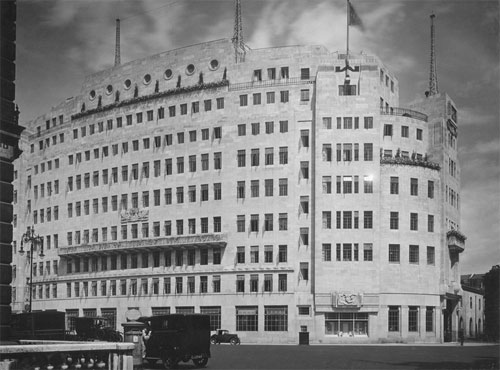
Broadcasting House in the 1940s
Seventy years ago Broadcasting House suffered its worst bomb attack ever. A mere eight years after its Art Deco glory had been revealed to an expectant UK – ‘the new Tower of London’ gushed the press of the day. In fact, this beacon of white Portland stone had been covered with streaks of green-grey wallgrease to make it less of a visible target for the predatory Luftwaffe.

Image shows bomb damage to Broadcasting House when it was hit by a bomb at a seventh floor window, killing seven members of BBC staff

But in spite of this, hit it did – with all the force of a 500lb delayed-action bomb. Smashing in at a seventh floor window, it came to rest in the music library two floors below, killing seven members of BBC staff – but barely disrupting the unflappable news reader Bruce Belfrage. He gave a slight cough as the ceiling fell around him, then continued courageously with his reading of the 9pm news bulletin.

Broadcasting House in the 1940s after being hit by a bomb

One of the BBC staff, describing the aftermath of the bomb attacks on Broadcasting House, called it ‘a scene from Dante’s Inferno’ (obviously a member of the Arts department!), but the BBC was only sharing what the rest of the UK was experiencing: the horror, the danger, the arbitrary nature of the Blitz, where one street survived, another next to it fell to the ground. Who lived, who died, was all a matter of chance.

But of course, broadcasting was identified early in the war as one of the obvious targets – hence its green-grey camouflage. Whole teams of broadcasters were evacuated to less urban parts of the UK, and strategies were put in place to ensure – whatever the eventuality – that broadcasting would carry on. Eventually in 1942, a bunker (or ‘stronghold’ as it was sometimes referred to) with walls 17 inches thick was built under the extension of Broadcasting House, so that vital broadcasting could persist.

Broadcasting House is not the only BBC London building to have been the target of bomb attack. More recently, Television Centre was hit in 2001 by an IRA bomb, leaving the front facade in mangled pieces. And nowadays the BBC, as many other public bodies, has to tread that difficult path between wanting to keep its buildings open and accessible to the public who pays for them, and protecting them from invasive attack, come when it will.

Robert Seatter is Head of BBC History

See and hear the full story on BBC History's audio slideshow.

BBC Archive: Why Science?

Blog comments are currently unavailable. Find out more.

Post categories:

Kate Wheeler|14:15 UK time, Thursday, 14 October 2010

A screen grab of The Great Egg Race
The BBC Archive is one of the largest multimedia archives in the world with over a million hours of TV and radio programmes, six million photographs, four million items of sheet music, and over half-a-million documents and records. With such a mass of information, picking what material to put online can be quite a challenge!


One of the things we've been focussing on this year is science - that's because throughout 2010 all parts of the BBC have been looking to celebrate science. Honestly, I'm not sure if most people think of archive and science as being a natural combination. After all science is all about the new - the latest discovery, the most current theory - and archive is, well, very much not new.


But, throughout this year we've been putting television and radio programmes online which hopefully show that archive and science actually work rather well together.


So, firstly we put up a small collection of programmes from 27 years ago, which feature a man sitting in an armchair discussing things like why rubber bands are stretchy and why tennis balls can’t bounce forever. Which may sound dull, until I tell you that the man in the chair is Richard Feynman. My physics education stopped after GCSEs but I still love these programmes because Feynman, a genius physicist known as the ‘Great Explainer’, has an amazing knack for getting you to share some of his joy in the way the world really works.


Next on our science journey came some more interviews which heavily featured men in armchairs. (Can you see a theme developing?) But again there is a reason why these interviews got us excited. All of these people have won a Nobel Prize (one of them twice!). On top of that, although these interviews were recorded back in 1985 they had never been seen before. The interviewer, Lewis Wolpert - himself a renowned scientist - recorded them simply for posterity, realising that the world would be a poorer place without a record of these discoveries and the men who made them. It’s because of this forethought that we can now watch these eminent scientists explain what it's really like to make incredible discoveries.


Our next archive-meets-science moment is perhaps not as ground-breaking but it is definitely inspirational. Today we've released some of the best programmes from much-loved '80s DIY-science show ‘The Great Egg Race’. I’m a bit too young to remember this the first time round but lots of people in the office could hum the theme tune, and remembered this programme with huge affection. Particularly because of presenter Heinz Wolff - an important scientist in his own right who revels in the show's low-tech ingenuity. The collection aims to inspire people to get into their sheds and start inventing ready for a new TV show in which Wallace and Gromit will be looking for an invention worthy of preserving for immortality (well in a future Aardman production anyway).


So is that it for archive and the year of science? Well not quite. Coming up on 18th October we have a collection of recordings and documents from a man who, whilst not a scientist himself, had a huge passion for getting people to think about how science and technology might change the world. The man in question is HG Wells and this collection is being released to coincide with a fabulous upcoming BBC Four adaptation of Wells’ 1901 classic ‘The First Men in the Moon’, starring (and adapted by) Mark Gatiss. I was lucky enough to get to see a preview of this drama and I really felt that the themes of the archive recordings - about balancing discovery with responsibility - resonated throughout this faithful and thoughtful adaptation.


One of the amazing things about these recordings is that Wells almost seems to be predicting some of the things which have since happened. Listen carefully and you could think that he's describing wikipedia, online book stores and maybe even budget airlines!


And perhaps that's one of the points of archive and science - it is only by looking back that we can realise how far forward we've come. How discoveries which seemed so miraculous and strange are now almost part of the everyday. That we actually live in the future. Having said that though, if there’s anything that the Feynman programmes have taught me it’s that some things never change, one of them – our enduring interest in finding things out.


Kate Wheeler is Editorial Lead, BBC archive project


Explore the BBC Archive

Become a friend of BBC Archive on Facebook

Follow BBC Archive on Twitter


The pull of the North

Blog comments are currently unavailable. Find out more.

Post categories:

John Millner|14:12 UK time, Wednesday, 13 October 2010

A mist-filled valley near Kendal in the Lake District - just north of Manchester

I’m a Londoner. I was born and schooled here, my whole family live here, I know it like my hand. As the song says, I love London town. Its diversity, its cultural richness, its size, speed and buzz, all make it a wonderful place to live.

So why will I be going North when my job relocates to Salford Quays next year?

One answer is precisely that I’ve lived here most of my life, and I’m not sure I want to stay here for the rest of it. I think change is bracing; it makes you stronger and more creative. And as I get older I increasingly find the thing I look forward to most about London is leaving it - for the salt air of the coast or the rough air of the hills.

There’s my job, of course, which I’m not ready to give up just yet. I love working in public service media, I’m fanatical about learning, and am fascinated by the potential for using the BBC’s reach and resources to help millions of people to acquire new knowledge and skills. There’s almost nowhere else I could do this kind of work, so North I shall go.

For me, however, there’s something more important than either of the above:the magnetic pull of the North.

MediaCityUK at night

Manchester truly has the best of both worlds. It’s a big, stylish city with beautiful buildings, more culture than you could shake a stick at, an efficient modern transport system, and the largest student population in Europe.But it’s also got better access to wild, high landscapes than probably any other city in England, so that for anyone who loves hills and mountains Manchester is a location to die for. Head out northwards and you’re in the mountains of the English Lakes; north-eastward takes you to the roll and sweep of the Yorkshire Dales; south-eastward are the Derbyshire Peaks, and south-westward, Snowdonia. As the bloke from The Stone Roses remarked, Manchester’s got everything except a beach.

Another part of the pull comes from Manchester’s long history as a font of invention and unconventional thinking. The city was not only the birthplace of industrial manufacturing, canal building and steam railways, but also the cradle of English radicalism. Chartism and the Cooperative movement both began there. Political reformers like John Bright and early socialists Robert Owen and Friedrich Engels lived there. Women’s suffrage campaigners Emmeline and Christabel Pankurst were both Mancunians; women’s reproductive rights campaigner Marie Stopes was Manchester Uni's first woman lecturer. The Shaker messiah Ann Lee was born in Manchester, one of a long line of nonconformist religious leaders. Great Mancunian scientists and inventors include Richard Arkwright, John Dalton, James Joules, JJ Thomson, pioneer photographer Roger Fenton and early aviators Alcock, Brown and AV Roe.

In the arts, Manchester numbers Elizabeth Gaskell, Anthony Burgess, Alan Garner, Mike Leigh, Norman Foster, LS Lowry, Peter Maxwell Davies, Albert Finney, and Woods Michael and Victoria among its sons and daughters. Massive Manchester bands include The Fall, The Smiths, The Buzzcocks, Joy Division, Take That and Oasis. The place fizzes and crackles with creativity.

The MediaCityUK site, where John and his team will be based next year
Getting there, of course, is easier talked about than done. Change can be costly, and in this case the cost includes disruption to the lives of those BBC people who’ve decided not to move North with their jobs. A big part of my job over the next year is helping to move a sizeable production department over 200 miles North and settling into new buildings with a new technical infrastructure and new ways of working, while simultaneously finding places to live and recruiting a hundred or so new staff. Frankly the task feels daunting.

But it also feels like a huge adventure, which is not something everyone is lucky enough to have in their working life. We’ll be restarting the operation almost from scratch, with an influx of new people and new energy, and the challenge of developing new, more effective ways of working while putting down new local and regional roots. It’s scary, yes. But pretty exciting too.

Then again, maybe it’s just that my father was a Manchester lad…

John Millner is the BBC's Learning Executive for 5-19 Learning 

Read Director of the North, Peter Salmon's blog posts for more about the BBC's move to Salford Quays.

Controller of BBC Learning, Saul Nassé, blogs about his new strategy for learning.

Find out more about the BBC's strategy for learning on the Press Office website.

BBC Internet Blog - Inside a Radio Outside Broadcast Truck

Laura MurrayLaura Murray|11:26 UK time, Wednesday, 13 October 2010

"On 28th September, Audio & Music Director Tim Davie officially launched the new fleet of Outside Broadcast Trucks, at the BBC Media Village in W12. You can read Tim's thoughts on the new BBC Radio blog.

These six, brand new trucks are for use across BBC National Radio. They are equipped to mix audio at Outside Broadcasts like the main stage at Glastonbury or the Proms season, as well as programmes like Any Questions for Radio 4 and bands for Friday Night is Music Night on Radio 2."

James Smith is Portfolio Manager, Development and Delivery, BBC Future Media and Technology


You can read James' blog post in full and leave a comment on the BBC Internet blog.

Laura Murray is Editor of About the BBC Blog

New Edition of BBC Editorial Guidelines launched today

Blog comments are currently unavailable. Find out more.

Post categories:

David JordanDavid Jordan|09:35 UK time, Tuesday, 12 October 2010

Every four or five years the BBC revises its Editorial Guidelines (before 2005 they were called the Producers’ Guidelines). The latest edition is launched today. The BBC’s Editorial Guidelines encapsulate the values and editorial standards every producer of BBC content is expected to follow. Since 2005 they have been formulated within the context of the Ofcom Broadcasting Code and, in addition, since 2006 they have been commissioned and signed off by the BBC Trust. For the first time the Guidelines have been subject to public consultation, under the auspices of the Trust.


But the Guidelines continue to be written by me and my colleagues in Editorial Policy and remain the distillation of years of programme-makers’ experience, common sense and judgements about how BBC can meet the high standards expected by our audiences. As always they are designed to help content makers confront with confidence the very many difficult judgements and ethical dilemmas faced every day.


Just as the 2005 edition of the Guidelines incorporated the lessons learned from the Hutton Report and the Gilligan affair, so these guidelines take on board the painful lessons of the serious editorial breaches that occurred in programmes using telephony and interactivity, the fakery uncovered by Queengate and the controversial Brand/Ross incident as well as other editorial developments over the intervening 5 years.


But the Guidelines also respond to the enormous technological changes and developments in the broadcasting industry since the last update. Convergence was a new concept then and is a reality now. So the previously separate Online Services Guidelines have been incorporated in to this edition and a new chapter about Re-use and Reversioning has been added to reflect the growing importance of on-demand viewing and listening and the growing use of archive.


That’s not the only new chapter. As portfolio working increases, so too do the difficulties of ensuring that the activities of content makers, and in particular on-air talent, are consistent with the values of the BBC. A reinstated section on Conflicts of Interest will help guide content makers through these challenges.


Copies of the new edition of the Guidelines are being distributed to all BBC content makers, including Independent producers from tomorrow. They come in to operation from next Monday, October 18.


The Editorial Guidelines website has been completely revised and its 50+ pieces of editorial policy Guidance will be given new prominence. The Guidance is important information for programme makers about how to meet the standards in the Guidelines. The Editorial Guidelines website is publicly available.

The Editorial Guidelines website will also contain links to new Editorial Policy online interactive modules, which have been constructed in partnership with the BBC Academy. The modules are bite size guides to the Guidelines, between 8 and 20 minutes long, in which the guidelines are explored through interactive dilemmas. They are designed to give a basic understanding of editorial policy in areas like Accuracy, Impartiality, Harm and offence, Fairness, Privacy, Children as Contributors and Conflicts of interest. There are 20 of these modules so far. The number will be added to over time.


All of this demonstrates the importance the BBC attaches to its editorial values and its editorial standards. They are crucial to the BBC’s relationship with its audiences and the trust audiences place in us. Nothing could be a greater recommendation for their use and usefulness.

David Jordan is Director of Editorial Policy

You can find out more about the revised Editorial Guidelines in the press release and read the Editorial Guidelines in full.

BBC launches First Click - a campaign to encourage people to get online

Blog comments are currently unavailable. Find out more.

Post categories:

Martin Wilson|14:02 UK time, Monday, 11 October 2010

In order to see this content you need to have both Javascript enabled and Flash installed. Visit BBC Webwise for full instructions

Our First Click media literacy campaign begins today with a series of short trails on TV and radio, designed to persuade those not online to call an advice line and book themselves on a beginners’ computer course.

I have already had a big thumbs up from two key members of our target audience - my own mum and dad. To my shame, neither was online when I started working on First Click six months ago. So, helping them get connected has been a professional and personal joy. I’ve seen first hand how the internet can enhance lives. The trails are aimed at people just like them – as nearly two thirds of the 9.2 million people who have never been on line are over 65.

The trails, though, are only one part of the First Click campaign. I’ve been really impressed by the way colleagues right across the BBC have been getting stuck in. Local radio and regional TV will be explaining the benefits of the internet. BBC Learning is providing course material and step-by-step instructions for learners and linking-up with external partners who will provide beginners’ computer courses across the UK. We’ve got a dedicated website, BBC Connect, to give beginners a good introduction to the internet and are planning to launch a new online tool, MyDisplay, which will help those with accessibility needs customise the colour, font and size of text. Radio 2 is dedicating a week to First Click from next Sunday, October 17, and on Radio 4, Peggy Archer will learn to surf the web. We’ve also had brilliant support from Sir Terry Wogan and Linda Robson.

This is a hugely ambitious project which shows the BBC at its best. We have, under one roof, the expertise and reach to help our audience make the most of the internet - from understanding the benefits to practical support. And our trusted relationship with this audience makes this support all the more powerful. The BBC has a unique mandate to use its TV, radio and online services to do this work. Under its Royal Charter and Agreement, the BBC has a mission to help ‘deliver to the public the benefit of emerging communications technologies and services’ and also promote media literacy. And it is important that the BBC does all it reasonably can to help licence fee payers gain access to the BBC’s online public services.

But we’re not attempting to do this alone. When Mark Thompson, the BBC’s Director General, launched the media literacy project last October he made it clear that he wanted the BBC to work closely with external partners on this. These partners include Race Online 2012, UK online centres, Digital Unite and Age UK.

We decided to launch First Click to coincide with Get Online Week - a national initiative by UK online centres which runs from October 18 to 24. During this week, there will be more than 3,000 events across the country where people can get online. In addition, local libraries and community centres will be running First Click Beginners’ Computer Courses. First Click leaflets will be available in every Post Office across the UK and a special version of the First Click TV trail will be shown in 400 main branches.

Tonight, on The One Show, Sir Terry will help a retired member of the public to get online for the first time – and Linda Robson will be on the sofa, talking about her recent conversion to the internet. Both Radio 2 and local radio across the UK are dedicating a week of programmes to First Click. On Weekend Wogan next Sunday, October 17, Sir Terry will reveal the first in a series of fun videos by Radio 2 presenters, highlighting the benefits of being online. The Jeremy Vine Show will have topical discussions across the week on his show and will be catching up with the listener he helped get online back in March. The week’s programmes will culminate on Friday with Steve Wright talking to Martha Lane Fox, the UK’s Digital Champion about her drive to get more of the UK population online. Local radio are producing a series of features and following First Click ambassadors, including Stuart Hall and Linda Nolan, as they go online for the first time.

To keep your eyes and ears alert for all the BBC activity encouraging people to get online over the next few weeks. And as you’re already online reading this blog, why not do what I did – and help someone take their very First Click.

Martin Wilson is Head of Media Literacy

Watch a series of short trails on TV and radio.

Read Bequi Sheehan's blog post about what Radio 2 are doing to help us get online.

Waterloo Road school tour

Blog comments are currently unavailable. Find out more.

Post categories:

Alec McGivanAlec McGivan|17:50 UK time, Wednesday, 6 October 2010

Robson Green with children from Northern Schools

It created a bit of a stir when George Sampson, one of the new stars of BBC One's Waterloo Road programme, arrived at a screening event at the Printworks in Manchester last night. In all honesty I didn't immediately recognise the Britain's Got Talent winner, but clearly that wasn't a problem for the mainly teenage crowd - they were whooping and cheering with lots of enthusiasm - and it wasn't just for the celebrities - it was also because they were about to see themselves on the big screen as well.


Waterloo Road is filmed in Rochdale and the screening event was about celebrating the series' northern routes as well as showcasing a project that has got some real-life students involved. Peter Salmon, Director of BBC North, spoke at the event and re-confirmed the BBC's commitment to the north of England. As the BBC's physical move to Salford Quays draws closer (the first staff move in during May 2011), it's really important that we continue to look for new ways of connecting with audiences - and I think this was a fantastic example of that in action.


My team got involved by working with staff from Shed, the programme's production company, to get pupils creating their own versions of the school-based programme Waterloo Road. The BBC bus visited schools to film mini-episodes of the hit drama in Grimsby, Preston, Sheffield and Gateshead. Each school did an amazing job - especially considering the whole thing was filmed in just one day per school.


It was interesting to get pupils' take on some of the issues they face in their own lives - and to see how those compare to the fictional drama! It has been a great chance to get Shed script writers and BBC staff up close and personal with their audiences and real life students. It was also good to see the different stories each school came up with - the Preston school looked at gangs, while Sheffield focused on bullying. All four short films will be on the Waterloo Road website next week so you can watch for yourself.


At the screening last night, we not only watched the students films, we also saw previews of the next series of Waterloo Road. Several people then took to the stage for questions, including two of the programme's other new famous faces, Robson Green and Mark Benton. Both congratulated the pupils - and even said they'd spotted some rising acting talent amongst the young audience. The BBC's Controller of Drama Commissioning, Ben Stephenson, also praised the young film-makers and encouraged them to follow their dreams if any of them now wanted to pursue their own career in the industry.


All the participating schools came along to the event from right across the country, which was very impressive. We also had a great turnout from Shed, as well as a good mix of press and opinion formers. I spoke to Ann McManus, Shed's Creative Director, after the event and it's clear she has a real passion for the project. Their support for the initiative was really impressive and I'm very pleased with the results.

Alec McGivan is Head of BBC Outreach

World Olympic Dreams - the search for schools is on

Blog comments are currently unavailable. Find out more.

Post categories:

Virginia CromptonVirginia Crompton|12:50 UK time, Wednesday, 6 October 2010

In order to see this content you need to have both Javascript enabled and Flash installed. Visit BBC Webwise for full instructions


It’s a month since, Olympic legend Matthew Pinsent and presenter Kate Silverton launched Olympic Dreams School Search on Breakfast on BBC One

Live from Park House School in Berkshire, a hundred kids were ready for action at 5am hurdling and playing hockey during the Breakfast broadcast. And they weren’t the only ones who got active… Kate Silverton decided to try trampolining. Live.

Olympic Dreams School Search is an opportunity open to all UK schools for 2012. We are looking for schools like Park House that are excited by the Olympics, but the heart of our project is an opportunity for UK schools to link up with schools around the world attended by World Olympic Dreams athletes. 

From Loktak Christian Model School in north east India, attended by five times world champion boxer MC Mary Kom to Waldensia Primary, Usain Bolt’s school, in Trelawny district, Jamaica, the search is creating a global conversation between schools.

Not all the schools are overseas. Some World Olympic Dreams athletes are British or attended school here, and so some winning schools will twin in the UK. GB basketball super star, Luol Deng was born in southern Sudan and spent time in Cairo before moving to London. The World Class team filmed with young people at Luol’s school in Croydon. They told us they’d love to twin with another British school – and to beat them at basketball!

World Class has teamed up with the British Council to find dozens of primary and secondary schools across the UK to twin with schools all over the world and to take part in a special project in the run-up to the London Olympics in 2012. 

Schools that want to take part register with World Class here and are then given a unique log-in by the British Council team. Our inbox is busy with more than 700 schools signed up but it would be great to reach a thousand.

Olympic Dreams School Search closes 31 October. Spread the word.

Virginia Crompton is Series Producer of BBC World Class

The RIBA Stirling Prize 2010: A Culture Show Special

Blog comments are currently unavailable. Find out more.

Post categories:

Mark BellMark Bell|09:22 UK time, Tuesday, 5 October 2010

After a three week stint of Edinburgh Festival coverage in August The Culture Show took some time off but is back for a packed autumn of events. Britain loves prizes - maybe we all hark back to those cherished memories of victory in the egg-and-spoon race . For adults, whatever your day-job, there is probably a prize for you. The Culture Show is covering the best of them.

The Culture show's Tom Dyckhoff

This weekend the Roundhouse in Camden was the venue for this year's RIBA Stirling Prize, and The Culture Show's Tom Dyckhoff was joined by Kevin McCloud to host proceedings. It is the Oscars of architecture. It may lack the film-stars and frocks - but my hopes on reading the invitation (the dress-code was 'Smart and Stylish' ) were fulfilled by a fine display of modern spectacles and deconstructed suits. Tom went through the keyhole of all the shortlisted buildings and gave us the lowdown and Kevin was on hand as the winner was announced live on Saturday night on BBC Two.

This year's coverage was special: not only was the Culture Show broadcasting live from the Prize for the first time; two schools made it onto the shortlist as never before, but Zaha Hadid won for her design of Rome's MAXXI gallery. She was clad in an architectural yellow tube to collect the award and gave a generous and heartfelt acceptance speech. It was a good year for public buildings and Hadid's first award in Britain.

Hot on the heels of the accolade for the best new building by a British architect comes the Man Booker Prize. Tim Samuels has gone back to Comrie in Perthshire (and why not) to get the residents to read the shortlist and choose who in their opinion should get this year's gong. Next Friday the Review Show will see what their regular critics make of the shortlist, and the winner will be announced live on the 10 o'clock news on the 12th October - can Peter Carey make it a hattrick with Parrot and Olivier in America - which seemed to win over Andrew Graham Dixon when he interviewed the author in February.

It seems like no time at all since Frieze Art Fair first started - but it has quickly become a draw for the bigwigs of the international art scene and a hot date in the contemporary art calendar. In that week the Culture Show will present a contemporary art special, fronted by Grayson Perry, we will be looking at the work of controversial Chinese artist Ai Wei Wei and trying work out what Simon Fujiwara is saying about art and commerce with the archeological remains he has smuggled in to the art fair.

BBC Four celebrates world cinema by broadcasting some of the best new titles, all of which deserve wider recognition. It also hosts the World Cinema Awards. This year promises to be a vintage WCA with two of my favourite movies - Let The Right One In - a remarkable tender and atmospheric Scandinavian vampire movie (the Hollywood version is about to come out) and A Prophet - an extraordinarily tough contemporary French prison drama. Both of them have stand-out central performances. And Lifetime Achievement Award at the ceremony is going to the legendary Bernardo Bertolucci whose work spans half a century and an amazing range of styles from Last Tango in Paris to The Last Emperor and The Sheltering Sky.

And look out for a big season celebrating books and reading in the New Year, centred around Sebastian Faulks' new series on BBC Two. In using major programme seasons from Poetry and Opera to Proms and the Novel, alongside our regular programmes, we reach millions of people every week. Culture is at the heart of the BBC's output, and our aim to take the arts seriously across all our channels and appeal to the widest possible audience.

Mark Bell is the BBC's Commissioning Editor for Arts

Radio 2 announces new arts initiatives in October.

About this blog

Senior staff and experts from across the organisation use this blog to talk about what's happening inside the BBC. We also highlight and link to some of the debates happening on other blogs and online spaces inside and outside the corporation.

Here are some tips for taking part.

This blog is edited by Jon Jacob.

Subscribe to this blog

You can stay up to date with About the BBC via these feeds.

If you aren't sure what RSS is you'll find our beginner's guide to RSS useful.

[an error occurred while processing this directive]

Follow this blog

Other BBC blogs

More from this blog...

Categories

These are some of the popular topics this blog covers.