About the BBC - BlogAbout the BBC - Blog
Local Navigation

Archives for July 2010

Happy birthday Andy Pandy!

Blog comments are currently unavailable. Find out more.

Post categories:

Robert SeatterRobert Seatter|09:23 UK time, Friday, 30 July 2010

Andy Pandy and TeddyAndy Pandy is - unbelievably - 60 years old this month! The first real star of BBC Children's TV, in his blue and white striped romper suit and odd little tricorne hat, he has survived where others far bigger and far more powerful have fallen by the wayside...


So who came up with the idea? Andy was created by Freda Lingstrom and Maria Bird, and he first bounced (though is 'bounce' quite the right word for his faltering, string-bound step?) onto our screens on 11 July 1950. Andy himself never spoke. Maria Bird narrated the show and formed the intermediary between Andy and the child viewers: Look who's here, Andy... Audrey Atterbury operated Andy via his very visible strings, and songs were sung by Janet Ferber. Andy had two famous friends: Teddy (a teddy bear) and Looby Loo (a rag doll). Every programme ended with the song "Time to go home", as Andy waved goodbye and returned to his basket.


For those of a certain age, he's a symbol of a safe and comfortable (and very middle class) world. There's no evil in this garden: friends are always there to come and play with you, the picnic basket is ready at the end of the show as a secure refuge, and Andy always waves goodbye and always goes home. Where the heart is.


Young children watching Andy Pandy on the televisionBut behind the slow simplicity, there was more. This was a real 'first' in children's programming, as Freda created the first daily schedule of TV programming for the very young. By 1955, there was a programme for every day of the week: Picture Book (Mon), Andy Pandy (Tues), The Flowerpot Men (Wed), Rag, Tag and Bobtail (Thurs), The Woodentops (Fri). Moreover, she seemed to understand that children want to relate to other children - so, in spite of the highly directive adult narrator, Andy is a three-year old little boy staring back at his fellow viewers of the same age.


This was the trick that Teletubbies also understood decades later. In particular, Bill & Ben with their flibadob-flobadob language (vociferous complaints from outraged middle class teacher parents, such as mine!) were an early precursor of that series' parade of toddler-shaped characters, chuckling and gurgling their baby talk language in time with their captivated audience.


It says something too about the endurable quality of Andy Pandy that the 26 programmes went on being repeated until 1969. Then in 1970, some were remade in colour. Later, in 2002, he got another make over as a stop motion animation, voiced by Tom Conti. In effect, I suppose, the story is one of childhood's immortal tales - that toys are real, they come to life when we turn our backs, only pretend to be lifeless. Yesterday's Andy Pandy, today's Toy Story.


A last word: the 'real' Andy Pandy apparently was puppeteer Audrey Atterbury's son, Paul, who went on to become one of the Antiques Roadshow's experts. Which goes to prove that there's no escape from a BBC past!


Robert Seatter is Head of BBC History


A BBC Symphony for Yorkshire - the stage is set

Blog comments are currently unavailable. Find out more.

Post categories:

Helen ThomasHelen Thomas|08:37 UK time, Thursday, 29 July 2010


Doreen Brigham and Benjamin TillThis week the musicians see and hear A Symphony for Yorkshire for the very first time - everyone who has worked on the symphony feels excited and slightly sick as the clock ticks and we get closer to the moment we finally unveil an extraordinary piece of work.


The past few days have been hugely challenging as we've worked to overcome those last few hitches - I would be lying if I didn't admit it has pushed everyone to the limit.


When I meet all the musicians who have played the notes which make up the symphony it will seem as if I know each and every one of them after watching the film so many times - the taxi driver with the tambourine, the wind orchestra shivering on Ogden Moor and those wonderful brass bands which just sound so 'Yorkshire'.


There is one very special person who will be watching the film on Yorkshire Day with her family. Her name is Doreen Brigham and she is 98 years old. Doreen won our competition to write an anthem for Yorkshire, her words have been put to music in the final movement of A Symphony for Yorkshire - it is fun, cheeky and inspirational and I know her passion for Yorkshire will have the power to move audiences.


So the stage is set: the CD is with the local radio teams in York, Sheffield, Leeds and Hull while the film is poised for release on television and online. I hope everyone enjoys it and I want you to know how hard the team here at BBC Yorkshire has worked to make it into a Symphony to be proud of.


It's been quite a journey and the final words of Doreen's Anthem are stuck in my head

'Then let me rest in Yorkshire for it's there I want to lie Neath the sun and wind and heather... And a gleaming Yorkshire sky.'


Perfect!


Helen Thomas is Head of BBC Yorkshire


  • Picture shows 98-year old Doreen Brigham, who wrote the words to the Symphony with Composer and Director Benjamin Till.


Sport Blog - Four thoughts on Two Years To Go to London 2012

Post categories:

Laura MurrayLaura Murray|13:29 UK time, Wednesday, 28 July 2010

"A day of traveling in East London courtesy of a garishly-pink London 2012 bus - part of a fleet taking the media and officials around the Olympic Park - is followed by a day in the office thinking about some of the lessons from the "Two Years To Go" celebrations".


Roger Mosey, the Director of BBC London 2012 shares four thoughts on Two Years To Go to the opening ceremony of London 2012. Read Roger's post in full and make a comment on the Sport blog.


The BBC Proms Archive is ready to be explored

Blog comments are currently unavailable. Find out more.

Post categories:

John BryantJohn Bryant|11:50 UK time, Tuesday, 27 July 2010

Generic shot from the First Night of the Proms, taken by Chris ChristodoulouNew job, first day, first meeting with the boss, first item on the agenda: 'Proms database'. The need to complete this project became more apparent the further we got into it. We all know how easy it is to find out facts about other major events: if you need to know how many matches in the Third Round Proper of the 1983 FA Cup went to a second replay (just one, Sheffield Wednesday eventually saw off Southend United 2-1) it takes micro-seconds to find out. But what about The World's Greatest Music Festival? As gaps were identified in Proms history, our now default reaction - 'I'll Google it...' - wasn't much help, as so much information just simply wasn't out there.

For the Proms team, the project was worthwhile in many ways. So much of what we do these days - from programming, participation events and the extended Proms Plus series all the way through to each season's visual identity - is about taking things forward, and introducing and nurturing new audiences. The Proms Archive is a nod to our heritage, and to the fact that all of us who are lucky enough to work at the Proms are aware that we are merely custodians of this unique musical institution.

One of the volumes of old programmes stored in the radio 3 office - this one is from 1901My biggest worry in the lead-up to launch was the relative simplicity of what we had to offer. No sound, video, pictures, celebrities, animations - just a list of who has played what, when, and where at the Proms. But so rich is the history of the Proms that (for the time being at least) the information is enough in itself. It's as if the Proms Archive has become a kind of sixth sense to people - just seeing the details of a favourite concert on our website seems to have the ability to sweep a tidal wave of memories, sights, sounds, and nostalgia over those present. The feedback from the press has been hugely gratifying, but emails from users have reminded us all just what a special place this series of summer concerts has in many people's lives.

From the personal to the academic: we're hoping to further develop our relationship with Professor John Deathridge and the Music Department at King's College London to use the Archive as a research tool into musical and social trends over the past 115 years. What can the archive tell us? For example, that Wagner is the most performed composer in Proms history may not be a surprise, but the fact that he remained so during 1914-18 and 1939-45 is certainly worthy of further investigation.

So four years on - our complete set of Proms Guides and concert programmes will now be repaired and retired, and those of us involved in getting the Archive ready will take a few minutes to enjoy the reaction to its launch. Of course, some have been slightly put-out that the Archive does not contain an equally comprehensive library of Radio and TV broadcasts. That is certainly on our wish-list too.

John Bryant is the BBC Proms Publications Editor

  • The photo from the First Night of the Proms was taken by Chris Christodoulou

  • The photo of one of the volumes of old programmes stored in the Radio 3 office - this one is from 1901 - was taken by John Bryant

Radio 1 and 1Xtra Summer Surgery campaign

Blog comments are currently unavailable. Find out more.

Post categories:

Aled|12:01 UK time, Monday, 26 July 2010


In order to see this content you need to have both Javascript enabled and Flash installed. Visit BBC Webwise for full instructions


Think about what you were like as a teenager.

If you were anything like me you probably felt fear towards drugs. You had nervous fascination with alcohol. Your world was probably amazing or it sucked depending on whether you were popular in school or whether you were in or out with your group of friends. You probably felt immense pressure about school, homework and exams not because this was a personal mission of excellence but because your parents heaped on the pressure and the word from every available source was that if you failed at these your future was worthless.

More importantly (as it was then) think about how stressful and difficult it was to talk to someone of the opposite sex, let alone how stressed you felt of this impending doom that you were going to have sex with one of them soon. You had to, otherwise everyone will have left you behind and you'll be an adult virgin - a type of person legally allowed to be branded 'sad'.

Focus on this version of the teenager - ie you, and you soon get an idea of who The Surgery on BBC Radio 1 is broadcasting to.

As host of The Surgery I'm faced with an average of 3,000 of some of the most innocent texts per hour from 12-16 year olds and older, as well as other much more serious and difficult problems. Every week we try to be a friend to the awkward, confused and embarrassed teenager who just wants answers to some of the most honest questions but would rather die than ask a friend, teacher or (God forbid) a parent!

I was bullied throughout school, and was therefore either laughed at if I tried to find out answers to life from class mates or alienated for the things I didn't know. Had The Surgery been around while I was a teenager it would really have helped me get through what I was facing throughout my school years.

Research shows that during the summertime is when most young people will try things for the first time. For that reason, this week on both BBC Radio 1 and BBC Radio 1Xtra the evening schedule has been changed with the 9pm-10pm slot from Monday-Thursday being dedicated to a series of Summer Surgeries. The regular Sunday Surgery show kicked off the special week and each night at 9pm we'll be covering a different topic which is of importance and relevance to our young listeners.

A lot of people associate Radio 1 with our entertainment programmes but we also live and breathe the BBC's other original values, to educate and inform, whether it's through our news output, documentaries, specialist music output and of course our great social action campaigns like this.

On Sunday's show I was live from Newquay in Cornwall - including a live audience - and across the week we'll be focusing on alcohol, drugs, sex and relationships, body image and life stress. We'll be answering questions from the most innocent and basic to the more sensitive and painful. This will then hopefully mean that whatever our listeners get up to this summer they'll be making decisions that are a little more informed than they would otherwise have been.

I'm excited about the week - there'll be a lot to do combining the Surgery with producing The Chris Moyles Show, but I wouldn't have it any other way. Putting a spotlight on The Surgery for the whole week on both Radio 1 and Radio 1Xtra for five nights means we can really examine the issues our youngest audiences are facing and provide, what I believe to be, a unique service for our listeners.

Listen to The Summer Surgery on BBC Radio 1 & BBC Radio 1Xtra live every evening this week at 9pm until Thursday.

Aled Haydn Jones is the presenter of The Surgery on Radio 1

World Music Archive is launched

Blog comments are currently unavailable. Find out more.

Post categories:

James Parkin James Parkin |16:39 UK time, Friday, 23 July 2010

Senior Producer James Parkin recording in the studio in Uganda for BBC Radio 3 World Music Archive.

Radio is a great and intimate medium. It's with you in the shower, as you doze in bed, as you cook, as you drive. Part of its charm is that what is broadcast at any given moment is gone for ever. There's no going back, rewinding or dwelling. Of course, this has, to some extent changed with the advent of listen-again, the iPlayer and so on. But even if you listen to your favourite programme in this way, it's only there for seven days and you'll probably listen to it in exactly the way you would have listened to it had you caught it "live".

james_parkin_recording.jpg

This is all very well, but when you spend your professional life going to huge lengths to record dying traditions of folk music in remote parts of the world, maybe, you would like the recordings to be available for a little more than seven days. And that's what's behind the new World Music Archive on the Radio 3 website.

Lucy Duran recording a trumpet in rural Uganda for BBC Radio 3 World Music Archive.

Radio 3 has actually been recording world music on location for a long time, but activity has really increased in the past ten years. It's exactly ten years since World Routes (Saturday, 3pm) was launched. This is our tenth year of live WOMAD coverage (this weekend, in fact). It's nearly ten years since Andy Kershaw joined us from Radio 1 (and this year we've just started working with him again after a break of 3 years). And in those ten years we've travelled the world making professional-quality recordings of local musicians, festivals, and more established musicians, but recorded in their natural habitat. So we thought that it was about time to organise some of these recordings and make them more accessible via the Radio 3 website.

Andy Kershaw joins an OAP dance class in Pyonyang, North Korea for BBC Radio 3 World Music Archive.

As for the highlights, well it really is difficult to know where to start. Perhaps with Andy Kershaw in North Korea. The first radio documentary ever made inside the Hermit Kingdom with songs about the Great Leader. And the Dear Leader. And the Eternal Leader (aka the Great Leader). Oh, and of course the Great General (aka the Dear Leader).


You could then journey to Georgia and hear the ancient songs to accompany wrestling. We recorded Eldar Shoshitashvili in Tbilisi, Georgia's capital. In Soviet times he was an Olympic wrestler, and wrestlers to this day in Georgia are accompanied by the duduki (a haunting end-blown wind instrument). These days, Eldar has swapped roles and instead of wrestling himself, accompanies matches with his duduki. This bear of a man gets the sweetest sounds out of his duduki. And he also enjoys a drink: the last and most touching song he played for us was all about the morning-after-the-night-before. And that's a subject he could relate to - he proudly told us that the night before he'd drunk a mere seven litres of wine.

Picture shows musicians in Svaneti, Goergia for BBC Radio 3 World Music Archive.

Having checked out the ancient Georgian polyphony that we recorded - courtesy of the Georgian Airforce, a crew led by Capt. Shagoyan, and a Russian-built MI8 helicopter - you could go to Iran. There, in the very far south of country, we recorded the group Jahle. Just as we finished the session, Andy Kershaw and I heard gunshots coming from the beach near to where we'd made the recordings. From a safe distance we watched the Iranian police fire warning shots at a group of smugglers bringing TVs, cigarettes and booze ashore. As the action unfolded, our engineer James Birtwistle went inside the house of the musicians to find them jamming. There, as the pirates frantically tried to restart their outboards, James recorded the achingly beautiful "Lullaby". A piece that's become legendary - it generated a huge response from Andy's listeners and has even been arranged and recorded by the Kronos Quartet.

And after Iran? Let's see. I know, Israel. On the archive you can hear highlights recorded at the Jerusalem International Oud Festival. One memorable night there involved a concert given by the Arab-Israeli musician from Nazareth, Dalal Abu Amneh. Her performance was terrific, but the highlight for me was the audience. The festival had laid on transport for Arabs from East Jerusalem and given them very reasonably-priced tickets. That was half the audience. The other half were Sephardic Jews. Sitting next to each other, this mixed audience of Jews and Arabs sang along in Arabic. Both Semitic peoples, they share a common culture and the political divides that tear the region apart were nowhere to be seen.

So if any of those (and many many more) were moments that you heard as you showered, dozed, cooked or drove, and thought, "I'd love to hear that again". You now can.

James Parkin is Senior Producer, Radio 3


BBC Mobile Apps go live

Blog comments are currently unavailable. Find out more.

Post categories:

Erik HuggersErik Huggers|11:31 UK time, Friday, 23 July 2010

Today's announcement that the BBC Trust have concluded their review of our plans to produce native applications for smartphones, means that we are continuing with the launch of apps that we outlined in February.

We know that increasing numbers of you want to access BBC output on-the-go and the rapid growth of internet-connected mobiles and smartphones in the market means we can cost-effectively provide our content and services on these devices, and this is a really important way for us to deliver online services in the future. Today we begin with our News App becoming available for the Apple iPhone, and soon it will come to Blackberry and Android phones in addition to other devices later in the year.

The first class journalism that you expect from the BBC is now available to you in a way that is simple, personalised and optimised for mobile devices. My colleague David Madden has written a blog post and created a video tutorial which will take you through the features of the News app. Please let us know what you think of it.

Erik Huggers is Director of BBC Future Media & Technology

BBC London 2012 Olympics plan has something for everyone

Blog comments are currently unavailable. Find out more.

Post categories:

Roger Mosey|10:12 UK time, Thursday, 22 July 2010

When we set out on the BBC London 2012 project we had one over-riding thought in mind: to help the nation share the excitement about the biggest event in the UK in our lifetimes. But we also knew we had to pace ourselves. The evidence is that audiences have sharply contrasting views on the Olympics and all the other events of 2012. Many want to know everything there is to know now - to look inside the Stadiums, hear the latest on the planning and share the journey every step of the way. Others will be keen when the big moments actually start happening; and a small minority will contemplate putting a blanket over their head and hiding in a darkened room until it all goes away.


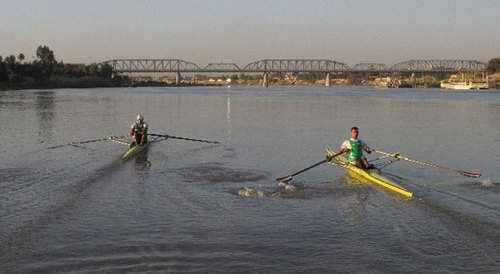
Iraq rowers on the Tigris, image taken by BBC Picture Correspondent, Stephen AdrainObviously, then, it won't be possible to please everyone. But we've heard the voices of those who want more straightaway - and given the ambition of 2012 across a multitude of genres and our position as the host nation broadcaster, it would be bonkers for us to underplay something that will be enjoyed by so many millions of people.


So Tuesday 27 July 2010 will see some special programming across the BBC to mark "Two Years To Go" before the opening ceremony and to cover the events being staged around this landmark by the OIympic organisers. BBC Breakfast, our News Channel and the BBC News at One will be live in Stratford - before a special programme on BBC One at 2.15pm to cover the first run within the main athletics stadium. Radio 5 Live will be there all day too, as will BBC London.

We're also launching a couple of major BBC initiatives. Our BBC London 2012 website will go live, and the aim is to bring together the whole of the 2012 story - not just sport and news, but arts and performance from the Cultural Olympiad along with comedy specials, entertainment and the inside story of how it's all coming together.


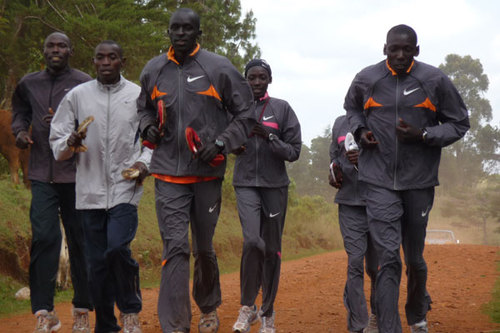
Masai runners. Image taken by BBC Picture Correspondent, Thomas AmterAnd you'll also be able to catch a multiplatform initiative called "World Olympic Dreams". This follows athletes from across the globe as they seek to make it to the London Games and provides an insight into their dedication and the power of their ambitions. So whether it's the triathlete from Bradford or the gymnast from Iowa or the Taekwondo competitor from Kabul, these will be the human stories that illuminate the road to London.


I'd like to think that World Olympic Dreams in particular will win over some folk who wouldn't really consider themselves to be sport fans - and the overall aim in the next two years is to provide something for everyone whatever their level of interest in sport, news, culture and the rest. In a world of massive choice, few things now come close to touching almost everybody. But we hope this will, and that it will truly be something you wouldn't want to miss. The next few days offer a chance to whet your appetite.


Roger Mosey is the Director of BBC London 2012


  • The image of the rowers was taken by BBC Picture Correspondent, Stephen Adrain

  • The image of the Masai runners was taken by BBC Picture Correspondent, Thomas Amter

BBC receptionist to attend Royal Garden Party

Blog comments are currently unavailable. Find out more.

Post categories:

Chris KaneChris Kane|11:33 UK time, Wednesday, 21 July 2010

Earlier this year I had the opportunity to recommend somebody from the Workplace team to attend one of this summer's Royal Garden Parties.

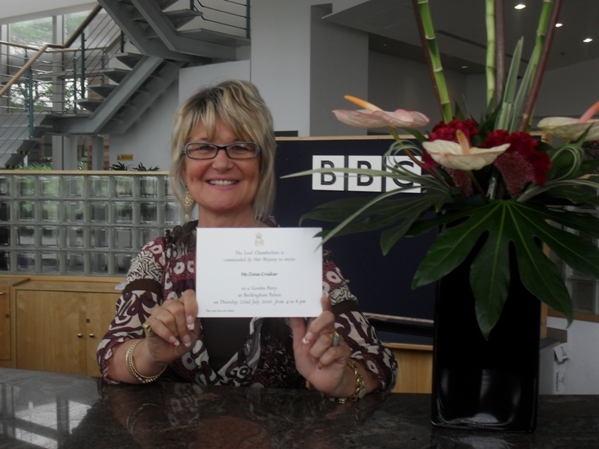
It was really exciting to hear that Zina Craker, one of our long serving front of house representatives, received the gold embossed invitation and she's now off to meet her Majesty at Buckingham Palace.

We have been on tenterhooks for some time as there were lots of formalities to be completed in advance of receiving confirmation of the invitation. But as the photo below shows, Zina has her invite firmly in her grasp and there's no stopping her now!

Zina Craker, receptionist at the BBC White City building

Chris Kane is Head of Corporate Real Estate for the BBC

Internet Blog - new appeals process for the moderation of blogs, message boards and communities

Post categories:

Laura MurrayLaura Murray|18:07 UK time, Monday, 19 July 2010

"Most people who leave comments on the BBC's blogs, message boards and communities will never get a comment rejected by the moderators, and many of you that do will understand why. But there are times when you need more information so you better understand the rules, and there are times when the mods do get it wrong. So today we are launching a new appeals process for moderation".

Paul Wakely, Editor of Moderation Services, BBC online.


To read the post in full and comment, head to the Internet Blog.


Laura Murray is Editor of the About the BBC blog


A BBC Symphony for Yorkshire - editing begins...

Blog comments are currently unavailable. Find out more.

Post categories:

Helen ThomasHelen Thomas|17:03 UK time, Monday, 19 July 2010

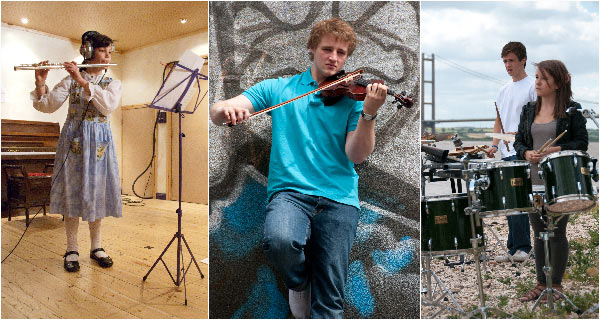
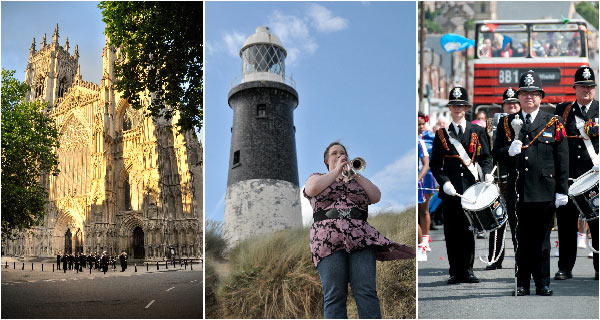
A montage of images from A Symphony for YorkshireOver the past few days I've been lucky enough to hear the Symphony for Yorkshire and I've also managed to see the first three movements in the edit. Over two hundred and fifty people from all over Yorkshire have taken part and many appear in the final film. I am completely humbled by how hard they have worked and the very real passion they have for their music and for this project.


The film and the music has captured today's Yorkshire but it's the people who really make it. There's a folk group singing on the back of a pick-up truck at Spurn Point, a man wearing a life jacket playing a washboard on a very fast boat and a brass band on a hillside in South Yorkshire - that's just for starters.


A montage of images from A Symphony for YorkshireIt is today's Yorkshire, the familiar Yorkshire streets, the Yorkshire hills and the coastline... but it is so much more than the scenery which we all know so well: it's the people, the young (and old) faces and that Yorkshire determination which has stayed with me.


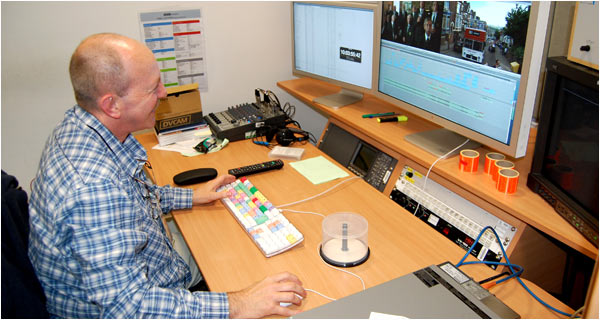
A Symphony for Yorkshire film being edited in an edit suiteThe film is still in the edit and today we are finalising the premiere which will take place in Leeds on July 28th. Benjamin Till and the musicians will be the guests of honour and it will be the first time many of them will have had the chance to meet each other and talk about their experiences around the recording and filming of the symphony. I can hardly remember an event I have looked forward to as much as this one - I can't wait to see everyone who has taken part and to watch their faces as they watch the film - I will probably be holding my breath hoping they think it has captured the Yorkshire spirit along with their passion for the place where they live. Today I am a little more confident of that as the lady in charge of the operational team here in Leeds walks out of the edit with tears rolling down her cheeks whispering '.it's really, really wonderful'..and it's not even finished yet.


Helen Thomas is Head of BBC Yorkshire


Preparing for BBC Proms 2010

Blog comments are currently unavailable. Find out more.

Post categories:

Roger WrightRoger Wright|08:42 UK time, Friday, 16 July 2010

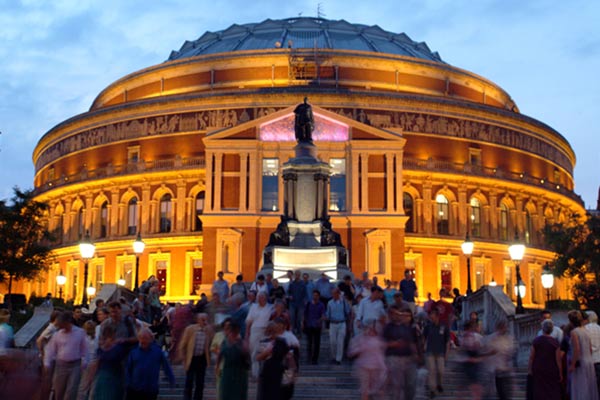
The Royal Albert Hall

In the BBC Proms team we are counting down the hours to go before the 2010 BBC Proms gets underway. For many in our audience the Proms is something that the BBC simply broadcasts, but since 1927 the BBC has run and funded the festival.

The planning for the world's largest music festival begins years ahead and so we have been looking forward to the 2010 programmes for some time!

We live in an odd Doctor Who like time warp in which we are working on urgent things for the start of this festival today and also dealing with pressing matters for future seasons as far ahead as 2014.

The BBC Proms is a huge team effort. Although the Proms team itself is small, the co-ordination between our BBC orchestras and choirs, radio, TV and interactive colleagues is enormous.

I was amazed to look back ten years ago and see that there were less than a dozen televised Proms. This year there are almost thirty and they are on all five BBC TV channels - One, Two, Three and Four and the HD channel. As ever they are all broadcast live on Radio 3.

We are all really eager to get going and see and hear the start of Mahler's gigantic Symphony no.8 tonight.Inevitably, with something the scale of the Proms, there is unexpected news to which we have to respond quickly.

We lost our tenor soloist for the Mahler to illness earlier in the week, but have found a terrific replacement. Yesterday we were all deeply saddened by the death of the conductor Sir Charles Mackerras - truly one of the greats of his profession.He was due to be conducting two Proms this season and so we are dealing with replacements now.We will dedicate a Prom to his memory - next year he would have celebrated the fiftieth anniversary of his Proms debut.His passing is an enormous blow and I know that the Promenaders will feel the loss deeply and miss seeing him and hearing his magnificent work.

September seems a long way off now - but it will no doubt rush by quickly - and we will emerge blinking at the light on September 12th and asking why the days are suddenly so much shorter but I hope with many wonderful musical memories to treasure and a realisation that the start of the 2011 Proms is only ten months away!


Roger Wright is the Director of BBC Proms and Controller of BBC Radio 3


Radio 4 Controller announced

Post categories:

Laura MurrayLaura Murray|12:50 UK time, Thursday, 15 July 2010

Gwyneth Williams, the new Controller for Radio 4Back in April, the Controller of Radio 4, Mark Damazer, announced that he would be leaving the BBC in October to become head of St Peter's College, Oxford. Shortly after Mark's announcement, the BBC's Director of Audio and Music, Tim Davie wrote a blog announcing that the post was being advertised and set out the qualities he was looking for in his search for the new Controller.

Today the search ends as Tim announces that the new Controller of Radio 4 is Gwyneth Williams who was until recently Director of BBC World Service English. You can find out more and comment on the Radio 4 blog.

Laura.

Laura Murray is Editor of the About the BBC Blog

BBC Disclosures: Quarter 4 2009-10

Blog comments are currently unavailable. Find out more.

Post categories:

Laura MurrayLaura Murray|11:38 UK time, Thursday, 15 July 2010

Today we published quarter 4 of the BBC's 2009-10 disclosures around executive pay and expenses. The disclosures show the divisions of the BBC which report directly to the Director-General, Mark Thompson. They give details of salaries, expenses and central bookings, gifts and hospitality received, and now, an annual declaration of personal interests.


Laura Murray is Editor of the About the BBC Blog

A BBC Symphony for Yorkshire - final filming day

Blog comments are currently unavailable. Find out more.

Post categories:

Helen ThomasHelen Thomas|14:25 UK time, Wednesday, 14 July 2010

On Monday, I picked up the Yorkshire Post newspaper and there before me was a photograph which made me smile. It looks like a street parade from the 1950's in the days when the sun was shining and neighbours came out onto the streets for a shared moment and to cheer. This particular photograph isn't from the archive, it was taken this weekend in Sheffield on the final day of the filming of A Symphony for Yorkshire.

At the head of the parade is a policeman in full uniform banging a large drum followed by a group of majorettes twirling silver batons. That scene is rare these days but the picture goes on to show the Stannington Brass band, the Mill House Green Male Voice Choir and a bright red, open top double decker bus carrying a saxophone choir.

The photograph has captured the moment but it has also captured the people from Hunter House Road in Sheffield who came out on the street to wave, cheer and talk to eachother and that's what has made me smile most of all.

The Symphony team sits with composer Benjamin Till in a dark edit room in Leeds as they begin to view the film. It's exciting yet slightly terrifying as they wait to find out if the images are as good as they think they are. Looking once again at the photograph I know they've captured something special, something which I hope, will make the people of Hunter House Road smile just as much as they are on the photograph in the newspaper.

Helen Thomas is Head of BBC Yorkshire


BBC News website redesign

Blog comments are currently unavailable. Find out more.

Post categories:

Erik HuggersErik Huggers|05:15 UK time, Wednesday, 14 July 2010

Today sees the launch of the redesigned BBC News website. This is the first major part of the BBC website to have implemented our new online design guidelines, known as global visual language. My colleague Steve Herrmann in News has blogged in detail today about the improvements - and I hope you'll like them - but I wanted to reflect on why this moment isn't just important to the News website but to BBC Online as a whole.

This is part of an ongoing process to make BBC Online feel like one coherent service, rather than a disjointed collection of websites, which is greater than the sum of its parts.

Our aim is more than making a website easy on the eye; a good user-experience is essential to making the site easy to use, and most importantly to make it easy to find what you want to look at quickly.

This has been a major engineering project for the Future Media and Technology Division and I believe it's a great example of engineering and design working hand in glove with editorial - a way of working that I talked about at the Media Guardian Changing Media Summit earlier this year. To give an example we have improved the content management system, which will make it easier for journalists to upload their story and add video and pictures to it more quickly and gives them better control of the layout. My colleagues who have worked on this will be revealing some of their thinking in a blog later in the week.

As we infuse the new global design through BBC Online we will also be reflecting the plans laid down in Putting Quality First, the strategic review that is underway across the whole BBC. We will look at each component part of the whole Online service through three lenses; first, the degree to which it delivers our public purposes; second, the degree to which it fits our editorial priorities; and third, like any other BBC service, how it scores in terms of reach, quality, impact and value. As you may have read last week the BBC Trust agreed in principle to our plans in this area.

The News website is one of the fewer web properties we'll focus on in future. We have also set ourselves a target to double external linking and news is a big part of this story. A recent report on paidcontent shows we have a good foundation to build on this as in the UK outside of search engines the BBC is the top site delivering readers to UK commercial newspaper websites through our existing external links. But we can do more still.

Image showing BBC News linking to external sites

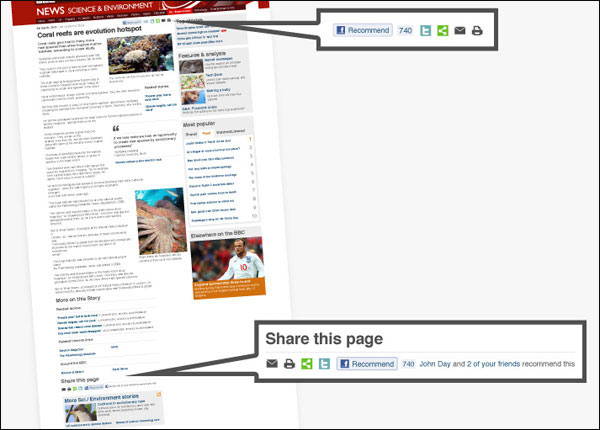
In addition we are also introducing to news the results of partnerships with social networks, improving the way users can share and recommend content on other platforms with their friends.

The new BBC News site allows sharing and recommending content on other platforms with friendsAll that remains to say today is enjoy using the News site and do let us know on the various blogs posted, what you think of it. I know you've already been asking a few questions about some of the technical aspects of the design such as the search function and our plans for HTML5 and colleagues are on the case with answering those points already.

Erik Huggers is Director of BBC Future Media & Technology

Corporate Responsibility Report 2010 is launched

Blog comments are currently unavailable. Find out more.

Post categories:

Alec McGivanAlec McGivan|10:10 UK time, Tuesday, 13 July 2010

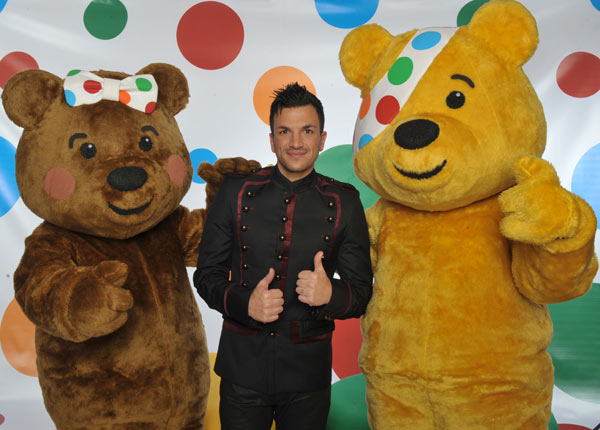
Peter Andre and Pudsey BearIt can sometimes feel like an anxious time when annual reports are looming - the trenches of stats and information, probing questions from verifiers! Essentially though, I think external reporting is a thoroughly useful process - both for ensuring we keep our house in order and also for being more open with our audiences. Reporting creates a useful (and public) milestone and a chance to reflect on the year's achievements - which are by no means small.

For me, one of the highlights of the year has been seeing the strength of the BBC's charity broadcast appeals - in spite of the current economic climate. Audiences have been incredibly generous. Both Children in Need and Sport Relief exceeded their previous fundraising totals, raising £39m and over £40m respectively - a fantastic achievement that will benefit people across the UK and abroad.

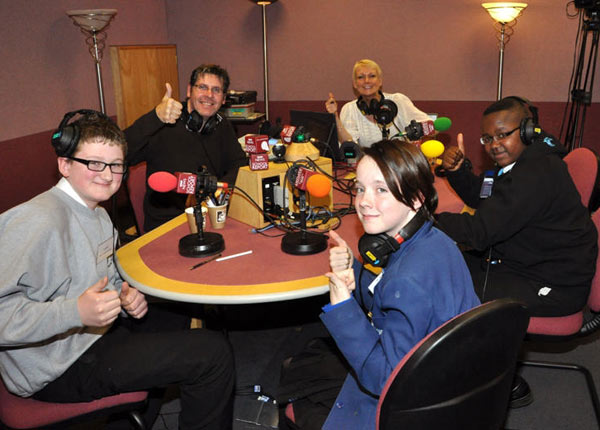
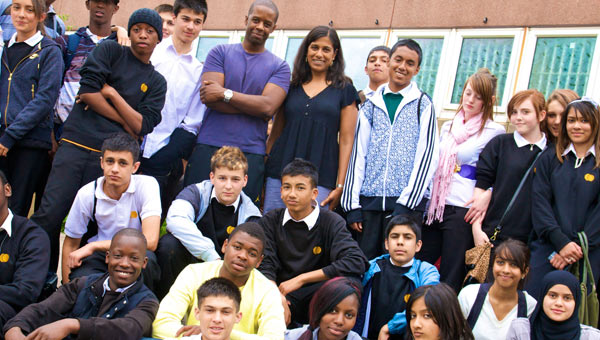
Journalists working with School ReporteesI've also been incredibly proud of the support BBC staff have given to outreach initiatives that

extend beyond their day jobs. School Report is just one example. It's a project that engages 11-14 year olds with BBC News - and one of the ways it achieves that is by drawing on the expertise of BBC journalists.

Staff provide mentoring support and help guide teachers, often including a visit to their matched school. In March, over 25,000 students from over 700 UK-wide schools took part in annual News Day by publishing their own reports, on news that matters to them. It's a fantastic moment in the BBC calendar and creates a truly unique opportunity for our young audiences to have their voices heard across BBC News.

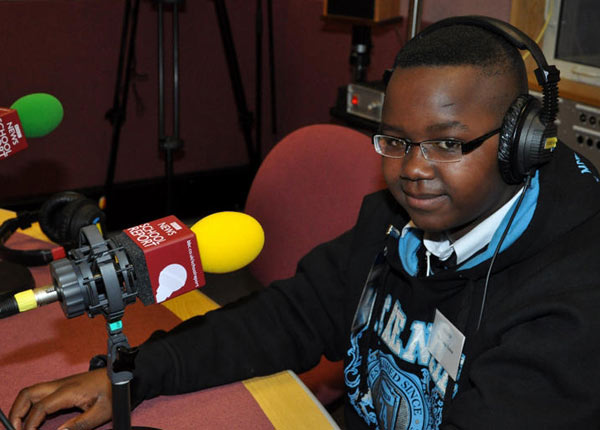
A young boy taking part in the School Report.jpgSeveral of my team have been School Report mentors and they've got a great deal out of it. It's amazing how talking to young people about what you do can reconfirm the reasons you do it - not to mention developing communication skills - it's no small feat to hold the attention of a room full of 13 year olds!

Staff also get involved by volunteering with charity partners through the BBC Connect & Create scheme. Last year, an impressive 694 colleagues took part and I also continued providing mentoring support for the charity Tomorrow's People. Ten new national charity partners have now been selected and real effort has gone into ensuring these represent the diversity of our audiences - so staff can develop their understanding at the same time as developing specific skills. I look forward to seeing how these relationships grow over the year ahead.

Reporting on the BBC's environmental performance was another key focus for this year's Corporate Responsibility Report. We have continued to make progress towards reaching the targets set in the 2008 Environmental Action Plan and we're delighted to be on-track with this challenging task.

One of the most significant developments is that the team have been working hard to extend our environmental initiatives - to include how we make our programmes, as well as the way we run our business. As a result, later this year we'll launch "Albert" - a carbon calculator to help production teams assess and measure carbon emissions. I'm told the name has no particular significance - and can confirm that it's not the name of the project lead either (he's called Richard in case you wondered).


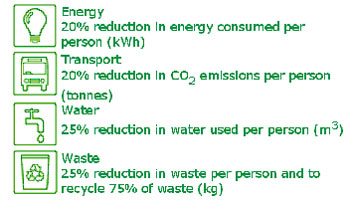
BBC Environment Action Plan targets for year end 2012/13:

BBC Environment Action Plan targets for year end 2012/13While the year ahead will present challenges, we remain committed to corporate responsibility and are delighted to have retained Platinum status in Business in the Community's Corporate Responsibility Index - a benchmark for evaluating our impacts in society and on the environment.

I look forward to the year ahead and in particular we plan to focus on the community impacts of opening a new BBC site in Salford in 2010. We're already developing relationships with people on the ground and I'm optimistic that we can make contact with significant sections of the community in advance of the building even opening. Already we have met over 3000 local young people, through projects including media training and backstage tours for schools.

Alec McGivan is the Head of BBC Outreach

Behind the scenes at the World Cup 2010

Blog comments are currently unavailable. Find out more.

Post categories:

Philip McNulty|16:04 UK time, Monday, 12 July 2010


In order to see this content you need to have both Javascript enabled and Flash installed. Visit BBC Webwise for full instructions


Editor's note. The video above was produced by Assistant Producer for BBC Sport News, Molly Armstrong. It shows the jobs some of the other people were doing at the World Cup - LM 

This blog should have been outlining the grand plans for my part in the coverage of England's first World Cup triumph in 44 years. Instead I have been back home for a week attempting to digest the disappointment of a campaign that ended even more prematurely than even the most pessimistic pundit predicted.

It was, despite a stay curtailed emphatically by Joachim Loew's Germany, a hectic and fascinating South African adventure.

I am the chief football writer for the BBC Sport website. My job is to cover Premier League clubs at home and abroad and England's national side. This takes in all the domestic and European competitions at club level and England's qualifying and friendly games.

I was based at a lodge 30 minutes' drive from England's base at the Royal Bafokeng Sports Campus in Rustenburg, living and working alongside the BBC's chief football correspondent Mike Ingham, a proud and fully-deserved recipient of an MBE during the tournament, the BBC's senior football reporter Ian Dennis, producer Charlotte Nicol and engineer Mike Burgess. And from beginning to end we shared the highs and lows, of England's World Cup campaign, all played out against a unique African backdrop in a vast country in thrall to the showpiece they were staging so successfully.

After navigating the smooth accreditation system put in place by Fifa and the South African authorities, covering England swiftly establishes a busy routine. We had a story almost before we had unpacked our cases, with England coach Fabio Capello revealing Rio Ferdinand had injured a knee in the first training session - news followed a hectic few hours later by confirmation that he was out of the tournament. If we were looking for bad omens for England, we had one right there.

Each day we would arrive at England's camp and go through the understandably thorough security system before being taken to watch 15 minutes of open training. Capello usually takes a position well away from the main group, although he provided plenty of excitement on one occasion with a brief, but explosive, outburst against a photographer he believed was taking pictures of England's medical room.

A chosen player will then undertake an open interview in which he will be quizzed by television crews from around the world, and will then be taken into a separate room for a briefing with the English national media. This is strictly embargoed until late at night for newspaper deadline purposes and gives the national press the opportunity to pursue their own lines of inquiry. Having attended every one of these briefings, I feel I should take the opportunity here to defend my colleagues in the media who are often wrongly accused of revelling in England's misfortune.

Yes, they report on it and take intense interest in it, but they wanted England to win the World Cup. What would be better for newspapers sales, television and radio figures and website stats than an England World Cup win?

John Terry gave the best, and most contentious, England press briefing. In the aftermath of the goalless draw with Algeria, he arrived all guns blazing back in Rustenburg, determined to get things off his chest. It became one of the most infamous moments of England's campaign as he explained how he might just say a few things at a team meeting that could upset the iron man Capello - and then effectively called for Joe Cole to be selected.

It was electrifying stuff and pure gold for the media - although it backfired on Terry as Capello breezed through the team meeting unchallenged and the former captain earned a very public ticking off from the coach.

At the game itself, my job is to serve the BBC website and tap into a number of social media outlets that illustrate the changing face of our coverage. Live text commentary has become an invaluable part of our coverage, both for updates and interaction. I would get to the stadium early and feed copy into the live text commentator, while also providing team news for Twitter and Facebook.

This process would continue during the game itself, thanks to the reliable technology provided for us and wifi inside the stadia. At the end of the game an instant match report is required on the whistle as well as a few final thoughts for the live text commentary.

And then it's off to either the coach's press conference - one or two interesting Capello briefings there - or into what is called "the mixed zone." This is a cordoned off area through which players have to pass. They may or may not choose to stop for interview. One man who did stop, was England goalkeeper Robert Green after his mistake against the United States. It would have been easy for him to race past knowing he would be heavily criticised for his error, but he offered himself up for interview in a manner which did him great credit.

After the game, an in-depth blog is required on England's performance. This can be on a very obvious line that jumps out or perhaps a more analytical look at the game. It is clear that defeat gets fans more agitated than victory as proved by 425,138 page views and 1,148 comments on the piece raking over the ashes of England's defeat against the Germans.

Interaction is key to this new age of social media. It is essential to go back on to the blog to see what comments have been made, reply and then perhaps widen out the debate. The days of just writing the piece and stepping back have long gone.

This was also the first Twitter World Cup, and a useful tool to interact with users was an hour-long Q&A - in which questions were invited on England. Quick questions and quick answers. Perfect.

Sadly, Landon Donovan's last-minute winner for the US against Algeria and Wayne Rooney's failure to score a second against the Slovenians condemned us to the most gruelling journey of all. Instead of first place in the group and a stay in Rustenburg, it was a dawn start and a rendezvous at a freezing cold petrol station for a seven-hour drive to Bloemfontein. Not all glamour - and the return journey in a hurry for Fabio Capello's final South African press conference was not made in the best of spirits after such a crushing loss.

Security was a major issue in South Africa, but common sense and taking advice was the order of the day. On a personal basis the hospitality from the locals could not have been better and the organisation on the ground was also admirable. The South Africans threw out a warm welcome to England.

Yes, the adventure was cut short by England's miserable performances - but it was another unforgettable experience.

Philip McNulty is the Chief Football Writer for the BBC Sport Website

  • Editor's note. Viewing figures for the final game averaged 15.1 million (a 54 per cent share of viewers) on BBC1 - LM


  • BBC News coverage of the World Cup 2010

Radio 4 blog - Roger Bolton on saving 6 Music

Laura MurrayLaura Murray|11:35 UK time, Monday, 12 July 2010

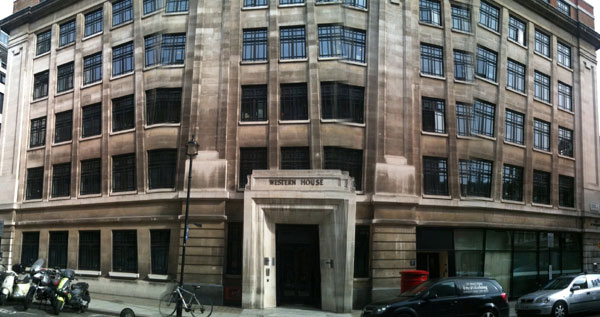
Western HouseEach week, the Radio 4 blog publishes one item from Radio 4's accountability programme Feedback. This week's item concerns the campaign to save 6 Music and features an interview with Peter Croker, one of the key campaigners against the closure of 6 Music.

You can listen to the interview and make comments on the Radio 4 blog.

Laura Murray is Editor of the About the BBC Blog

A BBC Symphony for Yorkshire - recording continues...

Blog comments are currently unavailable. Find out more.

Post categories:

Helen ThomasHelen Thomas|10:20 UK time, Thursday, 8 July 2010

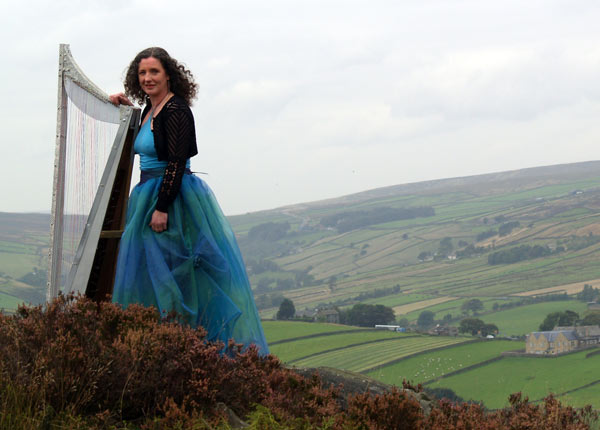
Fiona Katie Roberts with her harp on top of the Yorkshire MoorsYou find me sitting on top of the Yorkshire Moors under traditional leaden skies sheltering from the wind which is sweeping across the heather. I'm watching a woman dressed in a sea green gown playing a harp. It's not what you expect to find on top of the Yorkshire Moors but I'm watching the filming of a Symphony for Yorkshire and it looks spectacular.

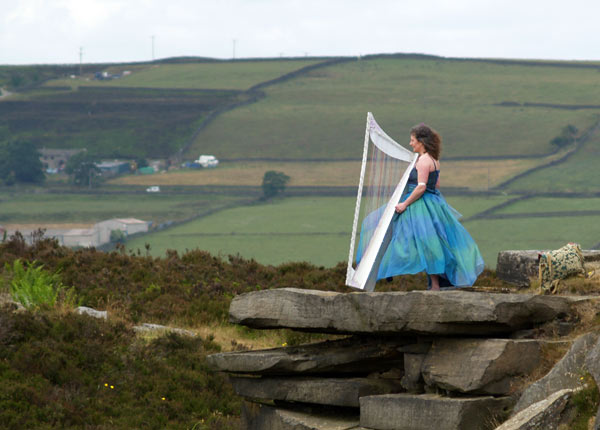
Fiona Katie Roberts (Katie to her friends) is a 47 year old woman who has been playing the harp for over twenty years. She now teaches the instrument and, I was amazed to learn, has started making her own. Today she is standing on a natural grey slab holding onto a silver harp (home made) while the wind dramatically grabs her dress and throws it into the air.

Fiona Katie Roberts with her harp on top of the Yorkshire MoorsThe Composer, Benjamin Till, is looking up to the sky praying for a small patch of blue sky so he can start recording the final shot while our harpist shivers and eats another bar of chocolate for comfort. Suddenly his prayer is answered (this is God's own county), the clouds part and the shot is captured. It's Yorkshire, it's the Symphony and it's breathtaking.

Next stop is Haworth main street where it's teeming with tourists discovering the Brontes. There we meet a lady from Keighley who plays a tambourine, a student from Hull with a mandolin and a music historian who lives in Leeds who is learning the viola. The street provides the perfect backdrop and the team is in high spirits - everything is going so well. That changed when we returned to the now infamous Haworth car park to find our composer's vehicle clamped. I have to admit we were eight minutes late so beware eager clampers in Howarth.

Then we got lost, very lost.We were looking for a tiny village on a hill with a row of cottages. We have quite a lot of tiny villages on a hill with a row of cottages in Yorkshire so finding the right one was a challenge. An hour later we entered the village from opposite directions (not sure how we managed to do that) and there waiting for us was our student from Sheffield with her cello - this was a huge bonus.

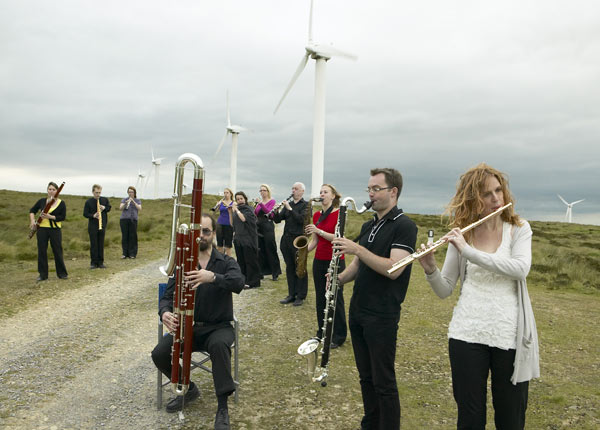
Orchestra on top of the Yorkshire MoorsAn hour later I left Benjamin (not in a great mood following the clamping and the getting lost thing) clambering to the top of a hill to get the right shot of a wind farm where he wanted to film a wind orchestra. Everyone, except Benjamin, looked a bit cold and weary but, as he waved his arms from the top of a hill I instantly knew he had found the perfect spot. I'm left wondering how they managed to get the orchestra up there but a text I received late last night told me they had and the team had left the moors smiling.

Helen Thomas is Head of BBC Yorkshire


BBC Writersroom TV Drama Festival

Blog comments are currently unavailable. Find out more.

Post categories:

Kate Rowland|07:54 UK time, Thursday, 8 July 2010

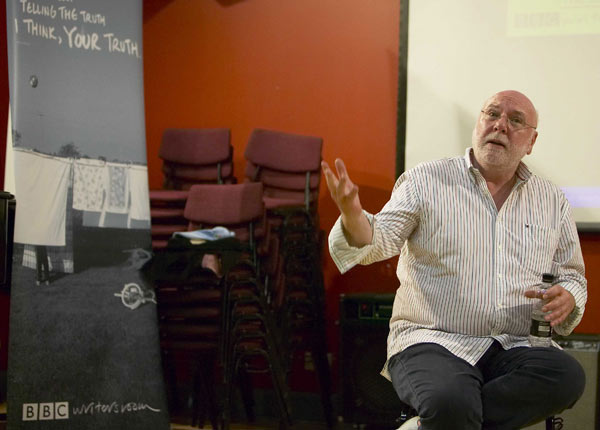
Peter FlanneryAfter the BBC's first ever TV Drama Writer's Festival in Leeds, I must admit to feeling exhausted but exhilarated. The list of great writers attending was extraordinary, a roll call of the industry's finest. The unique thing about this festival agenda was that it was created by an amazing line up of writers who brought their experiences and thoughts to the table. I had the idea four years ago and have always believed that there was a place for an event for working writers, but the timing had to be right - and this year we celebrate 10 years of BBC writersroom, the team I created to find and nurture writer talent across all BBC drama, comedy and children's programmes. 

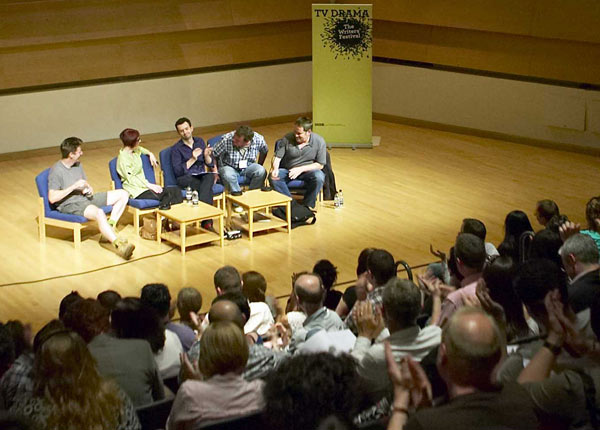
A panel at the Writers FestivalTelevision drama drives the TV schedules, bringing huge audiences and great kudos - and writers are the lifeblood, bringing new stories, worlds and perspectives to our homes. But these are also tough times for programme-makers and scriptwriters, so it was a significant time for writers to discuss and debate the challenges they face. We brought together a group of writers to kick-start the thinking process - Tony Marchant (Garrow's Law), Stephen Butchard (Five Daughters), Alice Nutter (The Street), Jack Thorne (Cast Offs) and Toby Whithouse (Being Human). They were unanimous that the festival should be an open, honest platform to explore what it means to be a writer in 2010, not a moaning session. They wanted to be inspired by great work, to appreciate how programmes are made, to understand the craft, the art and the business. They wanted to celebrate individuals. We all agreed it should be for working writers with a broadcast credit or commission. We all wanted it to feel like a big conversation that means something - or as Tony Marchant put it, a heated discussion down the pub. So it was billed as a festival 'by writers, for writers'.
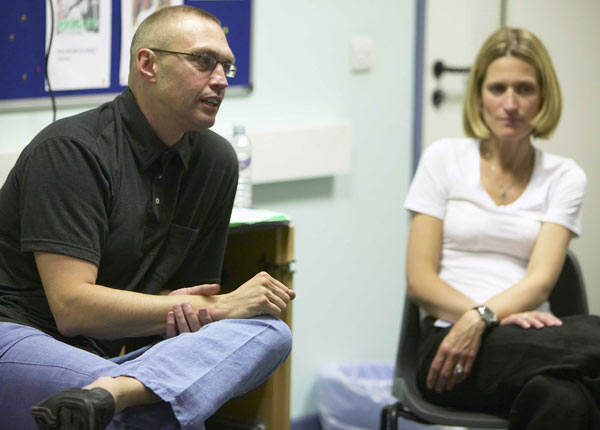
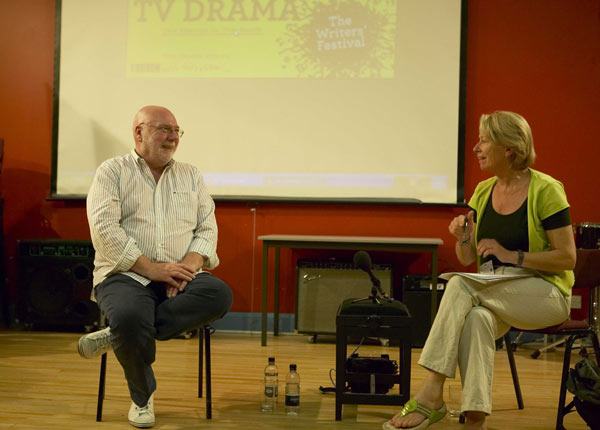
Tony Marchant and Jenny RobinsEarlier in the process I met with John Yorke, Ben Stephenson and Polly Hill who all agreed the writers should do most of the talking, but who were also absolutely committed to being involved. Having them - and various other producers and executives - there made all the difference. On Wednesday and Thursday at the Leeds College of Music there was a palpable buzz as over 240 writers gathered from all over the country. Jenny Robins and the whole writersroom team had worked their proverbial socks off to make sure that everything was ready. What we got was the highest level of debate - about the writer's voice, the politics of notes, show-running, selling ideas, new markets, commissioning, the alchemy of the first and last episodes, storytelling from a documentary perspective, writing low-budget drama, and much much more.

Peter Flannery and Kate RowlandThe festival was a fitting way to mark the writersroom commitment to being a force for change for writers. We're an open door to the BBC, dealing with 1000's of unsolicited scripts a year and working in partnership across the industry. Our role is to support the inspiring work done across BBC departments and facilitate new ways of working. Our job is to help writers to speak their voice - and the festival was a brilliant place to do just that.


Kate Rowland is the BBC's Creative Director for New Writing

The Met Office wins the BBC Weather contract

Blog comments are currently unavailable. Find out more.

Post categories:

Mark ByfordMark Byford|10:59 UK time, Tuesday, 6 July 2010

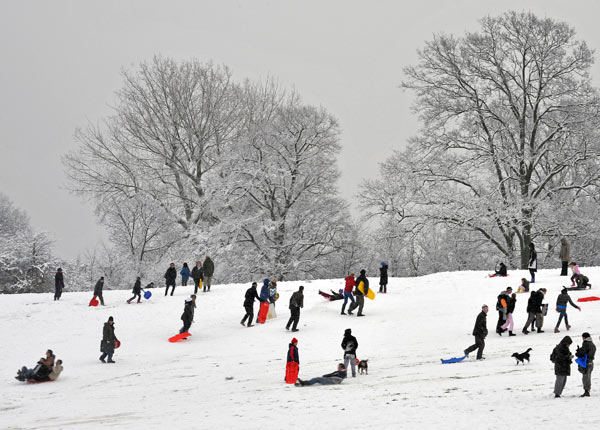
People playing in heavy snow in the parkToday's announcement concludes a rigorous and competitive tender process begun in Autumn 2009 which sees the Met Office continuing to supply the BBC with its weather services for the next five years.

Weather is a key part of the BBC's news and information services and a much loved talking point for everyone across the UK. The public turns to us in huge numbers for regular weather updates, or for accurate information and forecasts when big weather stories happen - such as the recent heavy snow or floods.

The BBC, as a public service broadcaster, is committed to offering audiences the highest quality for the best value for money and we're confident this new contract does that. The Met Office has demonstrated its ability and commitment to deliver a high quality service through accuracy, consistency of data and flexibility. Overall the new contract delivers better value for money.

The BBC has been working in partnership with the Met Office for many years, a relationship that dates back to 1922 when a script prepared by the Met Office was read out by an announcer for the first time in a radio weather forecast.

Much has been made about the decision to put the contract out to tender, with some claiming it to be because of inaccurate forecasts by the Met Office around the Barbecue Summer/mild winter. This is simply not the case.

The truth is we had recognised a significant change in the market for weather services which has become more competitive in the last few years. It is exactly because of this new context that we wanted to consider the options available to ensure we were still offering the best value for money to licence fee payers. And it made sense to do so at a time when the contract with the Met Office was about to expire.

So what does the contract mean and what are the differences you'll see going forward?

Accuracy and consistency are central to what BBC Weather does and this contract renews our commitment to produce high quality forecasts across TV, radio, online, mobile and Red Button.

The contract covers the supply of weather services, which includes weather data, on air presenters and forecast services. Our audiences won't see drastic changes in how our forecasts are being presented - the weather map will be retained and familiar faces will continue to be seen and heard regularly.

What this contract means is that the BBC will get more data for more locations and more frequently throughout the UK and around the world - which will help keep weather forecasts consistent and accurate.

It will also allow the BBC and the Met Office to organise their resources in a way which will help provide the most consistent forecasts across all our platforms.

Our responsibility is to our audiences and we will focus on our mission to make sure BBC Weather continues to deliver the authoritative, reliable, accurate and innovative forecasts on which our audiences rely.


Mark Byford is Deputy Director-General at the BBC

  • The image was taken by BBC News Photographer, Jeff Overs 

Putting Quality First Annual Report and Accounts 2009/2010

Blog comments are currently unavailable. Find out more.

Post categories:

Laura MurrayLaura Murray|15:46 UK time, Monday, 5 July 2010

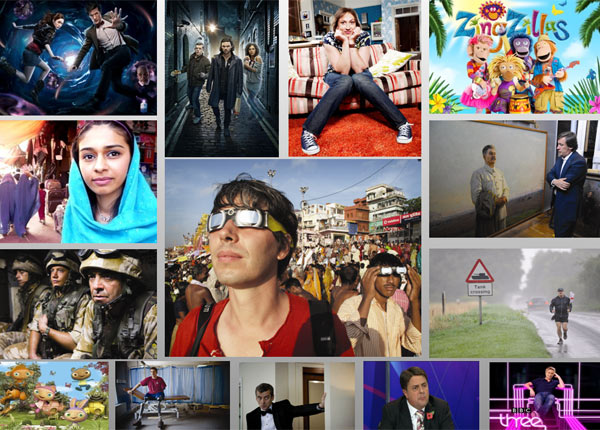
Selection of BBC programme images

Today the BBC Trust published its Annual Report and Accounts for 2009/10.

Following a short speech by the BBC Chairman Sir Michael Lyons, the BBC's Chief Financial Officer, Zarin Patel and BBC Director General, Mark Thompson took members of the press through the following presentation.

Putting Quality First Annual Report and Accounts for 2009/10.ppt


Over on the TV blog you can read Director of BBC Vision, Jana Bennett's blog about the Trust's interim findings from its service review of BBC One, BBC Two and BBC Four.

Laura Murray is the Editor of About the BBC blog

Radio 4 blog - Roger Bolton talks to Sir Michael Lyons

Post categories:

Laura MurrayLaura Murray|17:25 UK time, Friday, 2 July 2010

Sir Michael LyonsOver on the Radio 4 blog, Roger Bolton talks about interviewing Sir Michael Lyons right after he announced the new regime for executive and presenter pay at a Voice of the Listener and Viewer conference in London.


You can hear an excerpt from the speech and the interview on the Radio 4 Blog.

Backstage at Wimbledon

Blog comments are currently unavailable. Find out more.

Post categories:

Paul Davies|17:04 UK time, Friday, 2 July 2010


In order to see this content you need to have both Javascript enabled and Flash installed. Visit BBC Webwise for full instructions


The weather's been kind to us this year and it's another scorching hot day as we near the conclusion of what has been one of the outstanding Championships in recent memory.

We've already broadcast some memorable moments, the stand out being the new world record for a tennis match with Isner and Mahut's 11 hour five minute marathon in the first round. This breath-taking display of skill and human endurance also saw another record set with our very own Ron McIntosh setting a record for the longest sporting commentary, his first ever live tennis match. We also had a visit from the Queen, the first time for 33 years. The last time she was here our very own Virginia Wade won the women's singles title; what odds for Andy Murray to repeat the feat?


The sheer breadth of the coverage we offer has increased significantly in recent years, which in turn means the demand on our team's resources has also increased. Not only do we broadcast around 250 hours on BBC One, BBC Two and BBC HD during the fortnight, but we also air over 500 hours on BBC Red Button where viewers are able to choose from up to five live matches. This service is simulcast on the BBC Sport website, with a selection of matches and highlights also available on BBC iPlayer. Radio 5 live and 5 live sports extra are also on site to offer unrivaled radio coverage to listeners during the fortnight.


In order to deliver all of this, to the level of quality that our audiences expect, on time and on budget is quite an undertaking. As host as well as domestic broadcaster for the Championships, we are responsible for providing the pictures to over 150 countries around the world, this means our operation has to be even more extensive than for a usual broadcast. The set up: laying the cables; installing IT infrastructure; activating and testing all of the camera positions around the nine televised courts (18 alone on Centre Court); wiring in the studio and all of the interview points around the site; designing and testing the graphics; and putting the commentary team together; begins weeks before the first ball is hit.


Each member of the team on site is a significant cog in the overall machinery, without which the broadcast just wouldn't work; from our editors and producers through to our sound technicians and camera teams, everyone has to work without let up for the whole fortnight to ensure our biggest annual sporting event is a complete success.


As the championships progress British hopes continue to rest with Andy Murray. Will this be the year that our wait for a male Grand Slam champion at Wimbledon ends? Whatever happens we'll be here every step of the way.


Paul Davies is Sports Editor at the BBC

Building a BBC for all of the UK

Blog comments are currently unavailable. Find out more.

Post categories:

Jana BennettJana Bennett|12:28 UK time, Friday, 2 July 2010

The cast of BBC's When Romeo Met JulietFor the past 18 months the BBC has been working on moving more of its programme production out to the Nations and English Regions - a BBC for all of the UK, if you like. We've set ourselves a target of 50% of all programmes to be made out of London by 2016.


On July 5th we publish our annual report and the first full year of figures against the targets we've set. The report reveals network production from around the UK now represents 37.7% of the total BBC production spend. In Scotland, which has a target of around 9% by 2016, the nation has grown its network production spend from 3.7% of the total in 2008 to 6.1% in 2009. In Wales, where network spend is expected to increase to around 5% of the total by 2016, figures are also up on the previous year, growing from 3.5% in 2008 to 4.4% in 2009. And in Northern Ireland, where spend will represent around 3% of production spend by 2016, production doubled to 1.2% of the total.


Commissioning patterns fluctuate over time, with peaks as well as troughs, but these figures demonstrate a very encouraging picture of upward growth and demonstrate the clear impact of our Network Supply strategy. In spite of the tough economic climate, we are making good progress towards the interim 2012 targets and on course to reach those we have set for 2016.


We believe the targets and time frame we have set will allow us to establish and develop meaningful production in centres around the UK, and to allow that production base to grow organically to achieve creative excellence and deliver our strategic ambition. It ensures we are a BBC which viewers feel reflects their lives and makes the most of the talent spread across the UK.


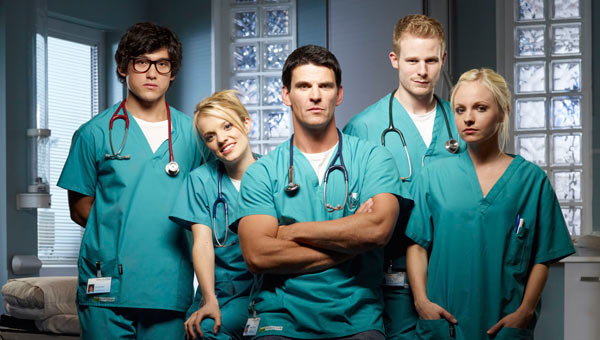
Some of the cast of BBC's CasualtyNot only have we set financial targets, we have also committed to the development of our production centres around the UK: only last week, work started on the building of the media centre in Cardiff, which will be home to major BBC series such as Doctor Who, The Sarah Jane Adventures and Casualty.


The range of programme ideas and the quality of content that has emerged during the year, from independent and in-house production teams from around the UK, is striking; a few of my own highlights of the year that have been made as a result of our Out of London strategy are Five Minutes of Heaven, Occupation, Panorama: Baby P, Timewatch: In Search of Atlantis, Nigel Slater's Simple Suppers, When Romeo Met Juliet, and Bruce Parry's Arctic.


There is a huge amount of talent who want to bring their ideas to the BBC and we want to get the best of those ideas to the audience. We are working to achieve this by helping build sustainable business across the UK. This is illustrated by the number of shows for the BBC's networks coming from independent production companies that are embedded in cities across the country. These companies understand the localities in which they work and help us more fully reflect all the audiences we serve.


Many companies look principally to the BBC for commissions out of London and we are proud to lead in this area but we hope other broadcasters will soon be joining us in commissioning even more in the nations and regions, helping to support creative growth. Having said that, it is still a hugely competitive market and if the ideas are out there we want to invest in them, the talent and the infrastructure to make them. Our XM25 networking initiative, now in its third year, also helps us work more closely with independent producers and bring to life their creative ideas.


This first phase of our strategy has been all about establishing a volume of production in centres across the UK from which it can grow. The next phase - in the run up to 2016 - is about developing the creative health of the Nations and reflecting the lives of the audiences in those areas more effectively on the screen. In this way we can really deliver 'the spirit' of Network Supply - as a lasting and creatively dynamic vehicle for delivering real value to licence fee payers.


As I look forward to the next 12 months I am heartened by the commitment and engagement from the production sector to help us achieve our financial and creative goals. We have ambitious targets, but working with the industry and listening to the audience we serve will help us achieve them to the benefit of the whole of the UK.


Jana Bennett is Director of BBC Vision


A BBC Symphony for Yorkshire

Blog comments are currently unavailable. Find out more.

Post categories:

Helen ThomasHelen Thomas|09:22 UK time, Thursday, 1 July 2010

Yorkshire Symphony logoA Symphony for Yorkshire performed by the people of Yorkshire - sounds simple doesn't it?That was the idea - a piece of music inspired by our great region - the cities the moors, the coast line and the streets - played by the very people who make Yorkshire the place that it is. It would be about nine minutes long and along with the weird and wonderful instruments would come some truly remarkable stories. Yes - quite straightforward I found myself thinking.

Today as I write my very first blog the simple idea has become one of the most ambitious and challenging (OK - stressful) projects we've ever tried to get off the ground.Let me take you back to the beginning - it was in a typical BBC meeting room - few windows, a partition and a thermos flask of weak coffee for use in an emergency - where I met the man with a mission to compose - Benjamin Till. Benjamin has worked with communities to make music before - Hampstead Heath the Musical and Coventry Market - The Musical - both were inspirational and I have always had a secret longing to tempt Benjamin to my home region of Yorkshire. Now here he was suggesting a symphony - now I have to admit a symphony wasn't my first thought - but my knowledge of music isn't as advanced as it should be (ask my children) - but why not - A Symphony for Yorkshire has a certain ring to it and a region as proud as this one deserves an ambitious piece of music to call it's own. Yes A Symphony for Yorkshire - great idea.

So Benjamin began to compose - two months later one piece of music in four movements was complete - a symphony.Now all we needed were some musicians - job done.

We held auditions in all of Yorkshire's major cities and through the doors walked drummers, a brass band (it is Yorkshire), pianists, a man with a saw and a drag act. At the end of an exhausting two weeks on the road we had signed up over two hundred musicians from all walks of life from all over Yorkshire.

As I write we are recording and it's a bit stressful - well it's a lot stressful to be honest - I've seen the Columbian drummers, the Ebor singers and a gentleman who plays the electric violin who Benjamin found busking on a street in York. Some just have a few notes to play others have more but each and every one has a critical part to play.It's important we get this right as it's something I know we are going to be proud of but the intensity is something I hadn't bargained for (poor knowledge of what it takes to make music again).

We're still recording - the deadline is Yorkshire Day on August 1. Will we make it I keep asking? Well together we're going to find out.

Helen Thomas is Head of BBC Yorkshire


About this blog

Senior staff and experts from across the organisation use this blog to talk about what's happening inside the BBC. We also highlight and link to some of the debates happening on other blogs and online spaces inside and outside the corporation.

Here are some tips for taking part.

This blog is edited by Jon Jacob.

Subscribe to this blog

You can stay up to date with About the BBC via these feeds.

If you aren't sure what RSS is you'll find our beginner's guide to RSS useful.

[an error occurred while processing this directive]

Follow this blog

Other BBC blogs

More from this blog...

Categories

These are some of the popular topics this blog covers.