
A Year of Soap
Post categories: BBC History, EastEnders, Soap operas, Year of Soap
 |13:38 UK time, Wednesday, 24 February 2010
 (The original cast of Mrs Dale's Diary, 1948)
So now 16.6 million of us know who killed Archie, alias actor Larry Lamb, in the roller-coaster soap EastEnders! We found out last Friday, on the 25th birthday of the show, as Stacey sobbed her way through the rising doof doofs of the much-loved and imitated theme tune. A live show, a fitting tribute to 25 years of great doof doof moments, and behind it a long, and occasionally chequered history of the BBC soap...
Originally, soaps came from the US - used to promote soap powders, and later a variety of domestic appliances, to American housewives in the 1930s. Being American they were, of course, immediately suspect to the British: bound to be low-brow, sure to be slushy or sensationalist. However, ironically - or perhaps rather cleverly - the first BBC soap was US-facing. Called Front Line Family, it hit the airwaves during WW2 as part of a propaganda push to bring the US into the war. It was followed by a succession of middle-class radio soaps, invariably depicting the stoic British bearing up to life's trials and tribulations. Most famously, the late Queen Mother was an avid listener of the radio soap, Mrs Dale's Diary (see pic above), stating that it was the only way of understanding what actually happened in a middle class family. An early case of royal market research, then...
 However, it's true to say that the BBC has had an ambivalent relationship with the genre. The longest running soap in the world, The Archers - soon to celebrate 60 years of life on air in Jan 2011 - was created with an information agenda: to keep farmers informed about changes in British farming. It succeeded, but also charmed and engaged its listeners with real human stories. Without this, there was merely propaganda; but without real issues and themes, there was merely gossip. Likewise EastEnders, created in 1985 as a competitor to the working class juggernaut soap that was Coronation Street, hit its pitch of melodramatic and domestic in the very first episode (the murder of Reg Cox) and continues to this very day. It takes its audiences very seriously, reflects a world they see and know, delivers a daily cliffhanger - but also grapples with things that matter. As Jean Seaton, BBC Historian, so aptly says: The BBC 'public service' soap may be naughty but nice, may want above all to be popular, but it is also, occasionally, good for you.
One unexpected but actually entirely logical outcome of this is the way that BBC soaps have transformed themselves into vehicles for development broadcasting.
The World Service Trust now uses them to promote important messages on health, civic society, family issues etc all round the world. In fact, by way of a neat connection, Felicity Finch who plays Ruth in The Archers, has worked extensively on such projects in China, Rwanda and Afghanistan. In a recent interview, she spoke proudly of their real social impact, but also underlined emphatically that if they succeed, it's because first and foremost they have great characters and great storylines.
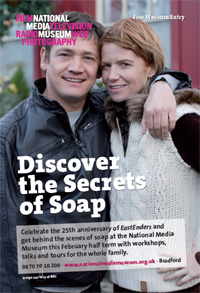
From Albert Square to Afghanistan is a long way, but soap can take us there and back again. If you want to know more about soap - its past, present and future - BBC History has teamed up with the National Media Museum in Bradford to explore all this in a Year of Soap. Check out the BBC History site.

Comment number 1.
At 12:13 8th Mar 2010, sibat0705 wrote:This comment was removed because the moderators found it broke the house rules. Explain.
Complain about this comment (Comment number 1)