
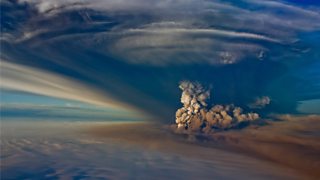
Will a new volcanic eruption in Iceland cause travel chaos for air passengers in the UK? In 2010 the eruption of Eyjafjallajökull led to flights across northern Europe being grounded for several days due to the hazard to engines from volcanic dust. Could a new eruption have the same impact? Broadcast meteorologist Simon King on how much we should worry...
The Icelandic Met Office have recorded an increase in earthquake activity around the Bardarbunga volcano over the last few days – the countries second largest volcano, which last erupted in 1903. About 300 earthquakes had been detected in the area since midnight on Tuesday.
Iceland's authorities have evacuated an area close to the country's Bardarbunga volcano over fears it could erupt. The area, which is more than 300km (190 miles) from the capital Reykjavik, has no permanent residents but sits within a national park popular with tourists.
On Monday the Icelandic Met Office upgraded the colour code used by the International Civil Aviation Organisation on the status of volcanos to orange. This means the volcano is showing ‘heightened or escalating unrest with increase potential of eruption’.
While seismic activity has increased, the current evidence does not suggest an imminent eruption but the situation is being monitored very closely.
If Bardarbunga does erupt, what happens next then depends on; the concentration of ash, how high the ash travels and crucially for us in the UK; the prevailing weather conditions.
Being an Island made up of 87 different volcanos, authorities in Iceland are constantly monitoring for any volcanic activity that could result in one of them erupting.
Prevailing weather conditions are important as this will determine where the ash cloud will go. Back in 2010, the ash from the Eyjafjallajökull volcano was transported over the UK by north-westerly winds. Any other wind direction will send the ash towards the Arctic, North America or Scandinavia.
There are therefore lots of factors and uncertainties and it would be impossible to say how this might affect the UK or even to compare to the disruption experienced in 2010 .
Follow Simon King's updates on Twitter.
