
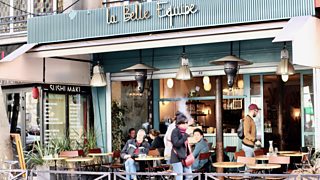
Sitting in a cafe in Paris on a crisp autumnal evening with a Grand Creme, it’s hard to imagine the horror that was meted out at La Belle Equipe, in Rue de Charonne. And it’s impossible to forget.
Twelve hours after the attack in this cafe - part of a wider, co-ordinated attack across Paris which left a total of 130 people dead and hundreds wounded - I was standing outside amid candles and flowers. There were blood stains on the floor. In a neighbouring window, two bullet holes had broken the glass. A few hours later, someone had transformed it into an image of a sad face.

Of course there is joy and laughter and happiness and romance and perhaps my mood is this way because of the people I’m here to meet - the survivors, the bereaved - but the Paris I knew is hard to find. The overt policing of last winter has gone - the rows of police vehicles in side streets, full of officers armed with rifles, have dispersed around the country again - but the people I speak to feel on edge.
Julien Pearce, 24, a reporter with Europe1 radio station, was in the Bataclan nightclub when the attack happened. He puts his survival down to the man who was shot dead next to him. His body fell on Julien and shielded him. He escaped from the concert venue 20 minutes later through a side door. Those that tried to follow him were shot.
Since November 13th 2015, he’s never walked past the scene of the attack. He gets taxis to take another route. I ask him if we should meet in a cafe but he tells me he prefers to drink at home. He doesn’t like to go on the Metro: “I see people and they are so frightened... and I am too. Every time I see a face that is strange, I get out and I take another one.”
Dr Philippe Nuss, a psychiatrist at Paris’ Saint-Antoine Hospital treated many of the injured on the night of the attack. Subsequently, he’s worked with many of the survivors, helping them cope with the guilt he describes as a common side effect amongst those who lived.
He says there is less "insouciance", less of a Gallic shrug about things, “Paris is more intimate, more people know the price of things”.
On another evening, I realise I can wander into almost any bistro and get a street-side seat. No queues, no waiting. Service is preposterously quick and efficient. Tourism is down - a million fewer visitors in the first six months of the year compared to the same period in 2015.
When I tell people at home I’m heading back to Paris they say two things: firstly, they can't believe it’s so long since the attacks happened, that it feels like yesterday. Then they always ask, “is it safe?”.
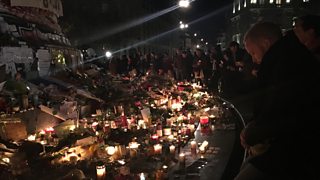
One night, I walk through the Place de la Republique where so many flowers and tributes to the dead were laid. In one corner of the huge square lies a brass plaque in tribute to those who died in the Charlie Hebdo and November 13th terror attacks.
I hear music and wander over to where half a dozen couples are dancing to Cab Calloway’s Minnie the Moocher. As the jazz classic rings out, they dance in darkness, the music turned up as loud as they’re allowed without attracting too much attention.
A regular event, from what I can gather, to chase the cold away. As the song ends, the couples wander off home, arm in arm. One man carries two glasses and a bottle of Champagne.
Paris may have changed, but romance in the city has a way of surviving and flourishing.
All photos copyright Nick Garnett.
