Archives for November 2009

Victoria Derbyshire in Harare

Blog comments are currently unavailable. Find out more.

Post categories:

Louisa Compton|13:35 UK time, Sunday, 29 November 2009

zimbabwe_children_600x296.jpg


On Wednesday 2nd December, Victoria's programme will be broadcasting from Harare, the Zimbabwean capital. It's the first full BBC programme to come from Zimbabwe since the ban on reporting from the country in 2001.

At the beginning of this year Zimbabwe's opposition leader Morgan Tsvangirai agreed to join a unity government with Zanu-PF President Robert Mugabe. Since then inflation has been tamed (it was 231,000,000% in February, it's now 3%), a few goods have reappeared in the shops and a little more food is available.

But in recent months, the Movement for Democratic Change has reported "increased violent" attacks on its party members. In October its leader, Morgan Tsvangirai, walked out of the coalition government in protest at the detention of a senior MDC figure and over Mr Mugabe's failure to implement political agreements. Mr Tsvangari has since called off the boycott, giving Zanu-PF 30 days to implement the power-sharing agreement. That 30 days runs out on December the 6th.

So with that background, on Wednesday we'll try and find out exactly what life is like for ordinary Zimbabweans right now. How optimistic, or otherwise, are they for the future? Victoria will speak to residents in Harare, trade unionists and human rights groups - as well as interviewing senior figures from MDC and Zanu-PF.

Then on Friday December 4th, Victoria will present two programmes from Cape Town for the World Cup Draw. Between 10:00 and 13:00 she'll look at how ready South Africa is to host the tournament and what sort of welcome fans can expect. And at 17.30 she'll be presenting a special programme around the World Cup draw and afterwards we'll open the phone lines for listeners to react.

Louisa Compton is the editor of the Victoria Derbyshire programme.


  • The picture shows children gathering to celebrate children's rights in Harare earlier this month (copyright Associated Press).


A duck island and a postal primary

Blog comments are currently unavailable. Find out more.

Post categories:

Chris MasonChris Mason|14:45 UK time, Wednesday, 25 November 2009

Gosport hustings

Democracy by humiliation. The people of Gosport, near Portsmouth in Hampshire, knew how to get rid of their current MP Sir Peter Viggers when his expense claims became the very icon of the scandal at Westminster.

Yes, it was Sir Peter who attempted to claim £1,645 for a floating duck island for his garden. And it was Sir Peter's constituents who then took it upon themselves to paint yellow ducks on the side of the Gosport ferry. Plonk duck islands on Gosport's roundabouts. And even drop a giant inflatable duck in Gosport's harbour.

Public ridicule on this scale doesn't do much for an MP's standing, even when they've represented their home town since 1974. Neither, come to think of it, does a less than gentle word from your party leader that retirement might be your best option. Sir Peter took the hint.

But for Gosport, that was only half the job. With Sir Peter Viggers saying he'll stand down at the general election, the duck island constituency needs a new MP - and a new Conservative candidate to replace Sir Peter. With the stench of the expenses scandal as strong here as anywhere else - and believe you me the whiff is unmistakable - the Tories need a political deodorant. Make no mistake, the newspapers might not have as many stories about MPs' expenses now as a few months ago. The news bulletins on radio and TV might be focusing on other issues. But the depth of the anger about the expenses scandal here is very, very clear, whoever you talk to.

It's impossible to get even half way through the first sentence of a chat about politics without the subject of waterborne homes for mallards cropping up. Yes, there's a funny side to it, and the sense of humour of people in Gosport arguably contributed to Sir Peter Viggers' demise. But beyond humour there's anger, and anger fuels cynicism. On several occasions when I was speaking to people out and about on the street, they would passionately grab my microphone straight out of my hand and tell me exactly what they thought. Often in unbroadcastable Anglo-Saxon.

So the Conservatives are holding what's called a 'postal primary.' It means everyone in the constituency gets a vote on who their Tory candidate should be - not just paid up members of the party.

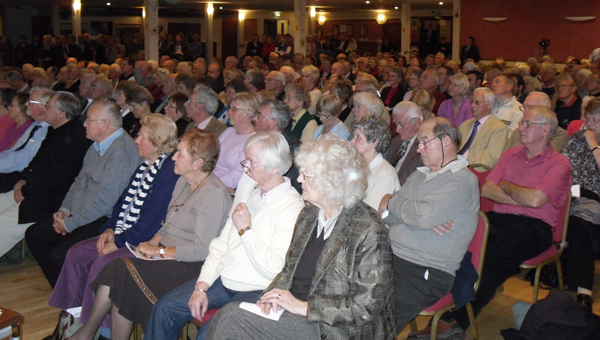
Several hundred people turned up at the Thorngate Halls in Gosport to listen to the four hopefuls. The candidates - two men and two women - are all in their thirties or early forties. And all are keen to secure the nomination for what is a pretty safe Conservative seat.

For many, the hustings achieved their purpose. Many people I spoke to arrived undecided, but left knowing who they would vote for. But what is arguably more intriguing is what other voters will make of this experiment. Will they vote at all? And if they do, what will motivate how they vote, if they wouldn't normally vote Conservative? And how should other political parties here react to what the Tories are doing? It's very difficult for Labour, the Liberal Democrats and others to criticise the principle of enfranchising the local population, but they are taking issue with the practicalities of it. There's been a delay, for instance, in some people receiving their postal vote.

Councillor Peter Chegwyn, a prominent local Liberal Democrat and former council leader, summed up the dilemma for other parties and the mood in Gosport:

"I think it is a good move to have an open selection. I credit the Conservatives for that. I just find it sad from the viewpoint of someone who has lived in this town for 30 odd years that a local choice wasn't put up and all the candidates actually seem much the same," he told me.

"But I don't think the Conservatives had any choice but to have a contest like this because the feeling in Gosport against the retiring MP Peter Viggers over the duck house scandal. There is such a feeling of real anger in the town from people who voted for him for all the time he has been an MP but would never do so now. The Conservatives had to draw a line under that."

The result of the postal primary will be announced on Friday 4th December.

The expenses scandal continues to make waves here. And if the voters in this part of Hampshire are anything to go by, it'll still be making waves come polling day at the general election.

Chris Mason is a politics reporter for BBC News

Adrian Van Klaveren in conversation

Blog comments are currently unavailable. Find out more.

Post categories:

Steve BowbrickSteve Bowbrick|16:18 UK time, Friday, 20 November 2009

Matt Wells and Adrian Van Klaveren

In order to see this content you need to have both Javascript enabled and Flash installed. Visit BBC Webwise for full instructions

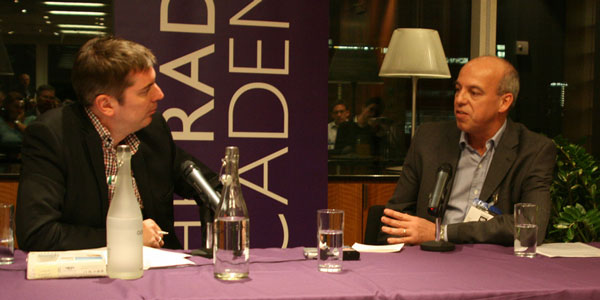
Industry body The Radio Academy organised an event in London on 18 November called Adrian Van Klaveren in Conversation. Matt Wells, Head of Audio at The Guardian and presenter of the paper's weekly Media Talk podcast, grilled the 5 live Controller for nearly an hour. His questions cover many of the points raised in comments here on the blog recently so I asked the Radio Academy if I might publish their recording of the event. Some of the questions from the floor are inaudible but it should be pretty clear what they're about from Adrian's answers.

Steve Bowbrick is editor of the Radio 4 blog

  • According to its web site, The Radio Academy is 'dedicated to the encouragement, recognition and promotion of excellence in UK broadcasting and audio production'. Among other things, the Radio Academy organises the annual Sony Awards for radio.
  • Here are the Radio Academy's pictures from the event.
  • Thank you to Trevor Dann and Heather Davies at The Radio Academy for the use of the audio and to The Guardian for recording it.
  • The picture shows Matt Wells, left, and Adrian Van Klaveren.

Breakfast with the leader of the 'Turnip Taleban'

Blog comments are currently unavailable. Find out more.

Post categories:

Chris MasonChris Mason|14:57 UK time, Friday, 20 November 2009

Editor's note: Chris Mason was in East Anglia for the big Conservative Party dispute over their candidate for the south west Norfolk constituency. He covered the story for 5 live and wrote this reflection specially for the blog - SB.

Stradsett-Hall.jpg

Living at the end of a driveway deep in rural Norfolk that is as grandiose as it is gravelly is a man who has been giving David Cameron something of a headache.

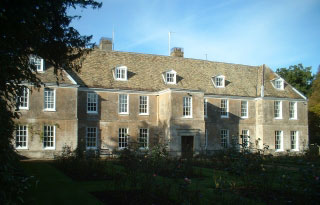
The Stradsett Estate is quite a pad. A drive on lawn mower is being industriously but methodically manoeuvred amongst the towering, mature range of deciduous trees that separate me from the estate's lake, which is home to pike, roach, bream, tench and carp. Sir Jeremy Bagge is a 7th Baronet. He's a former High Sheriff of Norfolk. And he's been involved in quite a spat with David Cameron.

In Sir Jeremy's office, the radio is on and newspaper cuttings are scattered on desks. The Eastern Daily Press sits on top of a computer keyboard. The Sunday Telegraph too. Souvenirs from the political battlefield that give an insight into a tension in Conservative circles beyond Norfolk. Sir Jeremy Bagge has just failed in his attempt to persuade fellow Conservatives in south west Norfolk to deselect Elizabeth Truss as their prospective parliamentary candidate, after they weren't made aware of her affair four years ago with the Conservative MP Mark Field.

But this row is about much more than just sex. It's about country versus city, local versus national - and the extent to which the Conservative grassroots will let David Cameron mould the party in his own image. The primary weapon in this political battle has been the caricature. Those against Elizabeth Truss have been labelled the 'Turnip Taleban.' In return, they have lampooned what they see as the trendy, arrogant, metropolitan Notting Hill set surrounding David Cameron desperate to portray them as a bunch of bone-headed Neanderthals.

And yes, Sir Jeremy might have lost his case to see Elizabeth Truss deselected. But he hasn't lost the appetite for a fight.

I went to meet Sir Jeremy so he could speak to Nicky and Shelagh. What he had to say certainly got you going on the texts. "I have had tremendous support from constituencies around the country. I have been totally deceived and betrayed - and so has Elizabeth Truss - because Central Office never brought to our notice that there was something in there that could embarrass us," he said.

He also admitted getting some stick from his family for comments he made in the Sunday Telegraph about his wife "I have got absolutely nothing against women. Who cooks my lunch? Who cooks my dinner? How did my wonderful three children appear? Women, you can't do without them. My God, take my wife," he told the paper.

When Nicky asked Sir Jeremy if being portrayed as a dinosaur by Conservative Central Office would actually help David Cameron, he remained defiant. "Well good luck to them. I stand here and I am prepared to fight. My great, great grandfather was an MP for 35 years. This is in my veins. I am not worried about them at all. I vote Conservative although I am not proud to be one."

And he might not be the only one. Local associations elsewhere are bristling for a fight too. Just down the road from here, the constituency of Central Suffolk and North Ipswich is another safe Conservative seat. And it's another seat where some local Tories feel bruised. None of the shortlisted candidates are local, and a number of local councillors have made their frustrations public in the East Anglian Daily Times.

So, boisterous, independent-minded local Conservative associations causing David Cameron a bit of headache has the potential to become something of a recurring theme. Mr Cameron will want to define himself against those he can portray as dusty old crusties, whilst not putting too many of them off knocking on doors on his behalf as the general election campaign gets under way.

Chris Mason is a politics reporter for BBC News

  • Chris took the picture himself.

Answering your questions about 5 live

Blog comments are currently unavailable. Find out more.

Post categories:

Adrian Van-KlaverenAdrian Van-Klaveren|16:32 UK time, Thursday, 19 November 2009

question mark block

Editor's note: last week's 'open post' has received 38 comments so far and many good questions and opinions have emerged but a comment from nayrsllew on an earlier post by Adrian Van Klaveren stands out as a nicely-organised summary of many people's concerns so I've asked Adrian to respond directly to nayrsllew's questions here - SB

1. Why does Stephen Nolan fly to Manchester when there are studios in Northern Ireland? And doesn't his abrasive style grate?

Stephen's programme has been produced from Manchester for the last few years - that's where the production team are based and we've set things up there technically to be able to deal with all of 5 live's requirements, especially for breaking news. We're expanding our Manchester operation in the New Year so that late night programmes seven-days-a-week come from the city. This is more efficient for us in terms of how we organise both producers and studio managers. Presenting Stephen's programme from Belfast would work out to be more expensive because of the need to take the production team to him three nights a week as well as the additional technical investment we'd need to make.

As for Stephen's style, it certainly doesn't grate with lots of people who really value his programmes and have been listening in increasing numbers since he joined 5 live. Last year he was once again nominated for a Sony Radio award, recognising the quality of his programmes.

2. Why can't shows be networked from studios from around the country (like weekend evenings from Manchester) rather then spending licensee fee money on moving everyone north?

In the end I think a radio station like 5 live needs a clear base. It helps makes the station as a whole sound more coherent, it improves the flow of information between programmes, it makes staffing and resourcing the station more efficient and it's crucial in our ability to cope with very unpredictable events such as major news stories. We are doing more and more outside broadcasts and we're totally committed to being all over the UK - but it's much better to do this starting from a place which is the heart of the station.

3. Will presenters cutting their on-air hours also have their salaries cut?

All presenters' contracts are negotiated individually and I won't go into any of those details. We work within an overall budget for presenters and I can assure you we have not had to increase that budget as a result of the schedule changes.

4. Does 5Live do any tracking research on listener preferences? Do you pay any attention?

We do lots of research into listener preferences, ranging from the actual listening figures through to more detailed work on individual programmes and focus groups where people tell us what they think. We pay a great deal of attention to all of this though it's always going to be a case of applying judgement and it's very unlikely that any one set of research or figures would be decisive.

5. Why does 5Live need two comedy shows on the weekend? Fighting Talk and the Christian O'Connell mistake?

Fighting Talk is well established as very successful sports-based comedy show. It seemed to me there was an opportunity also to develop a news-based comedy show which can help us build our audience and give 5 live another distinctive programme in its weekend line-up - that what we're aiming to do with Christian's programme this autumn.

6. How and when will the new line-up be judged a success?

It will take time. Changes to radio schedules always take time to bed in because programmes develop organically and it does take time for people to get used to the changes. We will look at listening figures, audience appreciation and at what people are telling us in forums like this and many other places. But instant judgements and reactions are something to be very wary of - it's always worth remembering how Simon Mayo's arrival at 5 live was initially greeted.

7. Was the Livesey appointment made on geographical grounds? While Aasmah Mir and Phil Williams were overlooked?

The appointment was certainly not on geographical grounds. I'm certain Tony will be an excellent presenter of our new late night show whilst Phil and Aasmah, also both excellent presenters, have important roles with the station and are very much part of the team.

8. Is 5Live a serious news and current affairs station or a lightweight tabloid news and entertainment station?

5 live is a station committed to bringing its audience live news and live sport in a way which is accessible, intelligent, informal and involves our audience. We cover a huge range of subjects and we aim to be in touch with how people live and the things they care. I honestly don't think the serious versus tabloid distinction is very helpful in defining what we actually do.

9. Why were Lovejoy, Issy Clarke et. al. dumped?

Neither Tim Lovejoy nor Issy Clarke have been "dumped". You can hear Tim Lovejoy regularly on Friday evenings and Issy Clarke joins Danny Baker on Saturday mornings. We have concentrated 6-0-6 at weekends and a different company is producing the programme and refreshed the format. But Tim and Issy are very much still with us.

10. Will 5Live management engage its audience more often and change? BBC Four's controller was on 5Live a few months ago. Adrian needs to front up on Mayo's show (safer as he's leaving the station) and hear from listeners live.

This blog is clearly a way of hearing from listeners and in posts such as this responding directly to listeners. I have appeared on both Simon and Victoria's programmes in the past as well as on Feedback and the Radio Talk podcast. I'm planning to do a question-and-answer session on this blog early in the New Year, which should be another chance to put points to me directly.

Adrian Van Klaveren is Controller of BBC Radio 5 live

With Harriet Harman's redjackets in Glasgow North-east

Blog comments are currently unavailable. Find out more.

Post categories:

Chris MasonChris Mason|12:06 UK time, Tuesday, 10 November 2009

doorbell

Red bomber-jacketed flunkies make a dash up towards a Glaswegian doorstep. Clearly a senior member of the Cabinet out on the stump doesn't actually knock on doors herself.

A couple of primary school kids on BMX bikes look bemused at the commotion in a cul-de-sac in Balornock in the north east of the city - and ask, entirely reasonably, what on earth is going on.

"Harriet Harman's here!" gushes one of the red-attired Labour Party workers excitedly, as if he was introducing the final acts on the X-Factor. "You what? Who?" comes the entirely predictable response to the fleeting appearance of the Leader of the Commons and the Deputy Leader of the Labour Party.

So, the by-election circus has arrived in Glasgow. Beaming candidates. Gleaming rosettes. Screaming babies. All competing for space on the same pavement. Messrs Brown, Cameron and Salmond have already been; so too have assorted ministers and their shadows - and plenty of others to boot.

This is a poor part of Glasgow - and there's a welter of statistics to prove it. Almost one in three adults here are on benefits. Almost half have no educational qualifications.

Rob is standing outside Coia's Cafe on Duke Street. He's unemployed - and uninterested in the by-election. I ask him how long he's been looking for work. A pause. "20 year" he says matter of factly.

Nearby, Margaret Thomson, pinny on, dashes purposefully between tables at the Sighthill Community One Stop Shop. The shop stands in the shadow of 1960s towerblocks thrown up cheaply and now condemned as damp, dilapidated, dangerous and due for demolition.

It's two quid for fish and chips. It's 60p for a cup of tea. It's free to ask for advice on filling in forms, jobs and health. Margaret brought her family up in a tower block that's recently been pulled down. She cried as the concrete collapsed. The emotional wrench of regeneration; her family home gone. But she was glad it had. She insists people here deserve better homes than tower blocks that became landmarks of deprivation.

Outside North Glasgow College, students chat and smoke in front of a very polished symbol of change here. It's a new campus. So new, the carpets have that still-new smell. Ronnie Knox, the Principal, is energetic, enthusiastic and fiercely proud of his college and this area. Education is north east Glasgow's passport to a better future, he believes. And he'll tell anyone who'll listen.

Give it a few years and memories of this by election will be fading. The beaming candidates and gleaming rosettes will have gone. The screaming babies will be at school. And, I suspect, Margaret and Ronnie will still be here. Doggedly fighting for an area they love.

Chris Mason is a politics reporter for BBC News

An open post - what would you like to see on the blog?

Blog comments are currently unavailable. Find out more.

Post categories:

Steve BowbrickSteve Bowbrick|12:20 UK time, Monday, 9 November 2009

Sorry Open

The blog has been live for just over two months. Since we launched, there have been 36 posts and they've attracted 437 comments (that's an average of just over 12 comments per post). The most commented-on post was Controller Adrian Van Klaveren's announcement of changes to the schedule (102 comments).

We want this blog to be the natural place for 5 live's managers and editors to talk about their big decisions and for listeners to tell us what they think of them.

So tell us what you'd like us to be talking about here on the blog. Which 5 live issues would you like to hear about? Who would like to hear from and what would you like to ask them? Leave a comment here.

Steve Bowbrick is editor of the 5 live blog

The rules of chat

Blog comments are currently unavailable. Find out more.

Post categories:

Jonathan WallJonathan Wall|14:15 UK time, Monday, 2 November 2009

You may have seen our latest TV trail for 5 live featuring Gabby Logan, Colin Murray and Richard Bacon. All three have something in common: You will struggle to get a word in with them!

We set them the task of debating the rules of good conversation on the radio.

As you'd expect with these three well-endowed-in-the-chat-department presenters; the rules weren't too serious and we certainly didn't want them to restrict in any way.

They are more of a gentle prod in the right direction. In fact one of the rules was so trivial it was invented by the panel purely to limit Richard's intake of food while on air. Nevertheless, the rules were hotly debated and we expect they will continue to be so.

You can see what Colin, Gabby and Richard thought were the most important rules of chat by clicking below to watch our new set of TV trails.

In order to see this content you need to have both Javascript enabled and Flash installed. Visit BBC Webwise for full instructions

Watch more of 5 live's rules of chat

The trails let you know what to expect from 5 live but they also lay down a challenge to all of our listeners.


What have we missed? What have we got wrong? What are your rules of chat?


Here's a flavour of some of the rules from Colin, Gabby and Richard:


  • Don't use the word literally unless you really mean it.
  • Always be true to yourself when interviewing or being interviewed
  • Only name-drop when that name is relevant to the conversation in hand.
  • You must feel comfortable when you are talking to people - don't wear something to impress that make you conscious of it.
  • Don't text or read when you are in conversation with someone.
  • Don't eat food on air!
  • Any opinion is valid - unless it is factually wrong.
  • When talking to someone famous, it's OK to ask for an autograph.
  • You should not say deliberately controversial things just for the sake of it.
  • You can call Darts a sport.
  • Flirting on air is OK.
  • You can start a conversation about the weather - but only if it is distinctive weather.
  • Treat everyone you talk to as you would like to be treated yourself.
  • Don't use innuendo. Ever.
  • You can speak with any accent you like.

If you have any to add or comment on we want to hear about it. Post yours as a comment below to expand the list of chat rules.

Jonathan Wall is Commissioning Editor for BBC Radio 5 live

Your new identity

Blog comments are currently unavailable. Find out more.

Post categories:

Steve BowbrickSteve Bowbrick|12:58 UK time, Monday, 2 November 2009

BBCID.jpg

The engineers who look after the BBC web site have upgraded their log-in system. This will only affect you if you've ever logged in to leave a comment on a BBC blog or messageboard. If you have, the next time you log in you'll be asked to 'upgrade' your user account to BBC ID, the new system. This will happen only once and it's a pretty easy process. It's all explained here on the BBC Internet blog.

Steve Bowbrick is editor of the 5 live blog

More from this blog...

Categories

These are some of the popular topics this blog covers.