Watch to find out how to make bread
A two-minute video showing you how to make bread.
You’ll need, flour, sugar, salt, yeast, and water.
Each serves a chemical purpose.
Oh, and some kitchen equipment.
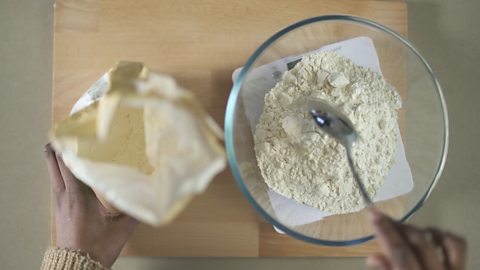
First, put 500g of flour in a bowl.
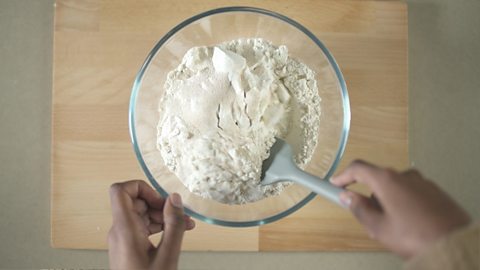
Then add two teaspoons of salt, one teaspoon of sugar, and most importantly, 7g of yeast.
Yeast is a living fungus that will make the bread rise.
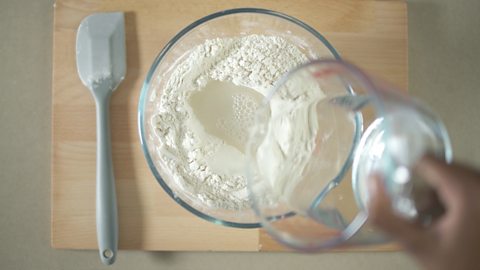
Now make a well in your dry mixture and add 350ml of lukewarm water.
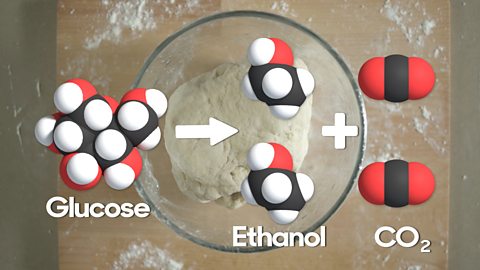
The warm water activates the yeast. The yeast starts consuming the glucose in the mixture and produces carbon dioxide gas and ethanol.
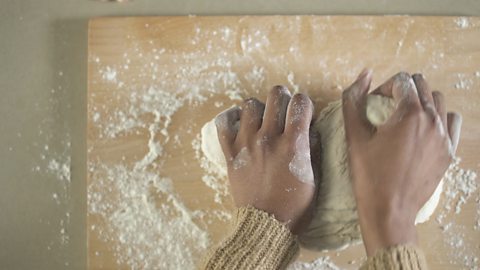
Now, dust your board with some extra flour, remove your mixture and begin to knead it.
You’ll see the dough becomes firmer, smoother and stronger.
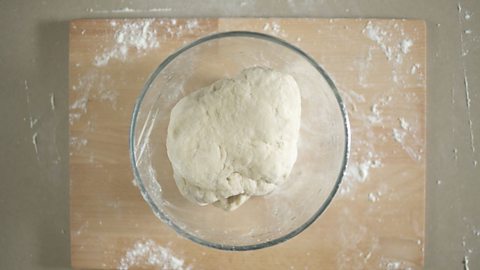
Oil the bowl, put the dough in, and cover it to keep it moist.
Then, leave it for about an hour so the yeast can do its work.
You’ll notice that it nearly doubles in size from all the gas bubbles the yeast is making.
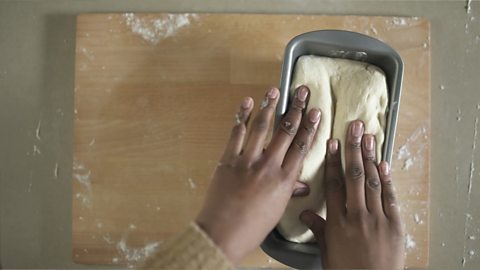
Shape the dough however you like, or pop it in a bread tin.
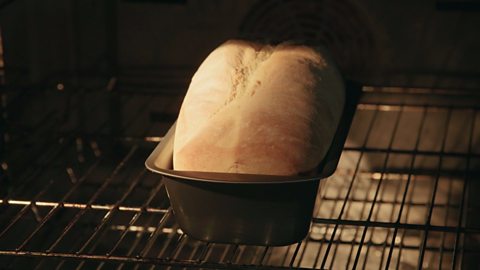
With adult supervision, put it in the oven at 190°C for 30 minutes.
The heat of the oven causes the gas bubbles to expand and makes the bread rise even more.
Using oven gloves, carefully remove the hot tin of bread from the oven and place it on a tray.
Cut through this crust and you’ll see all the little gas pockets created by the chemical reactions.
Have a go
A step-by-step slideshow on how to make bread
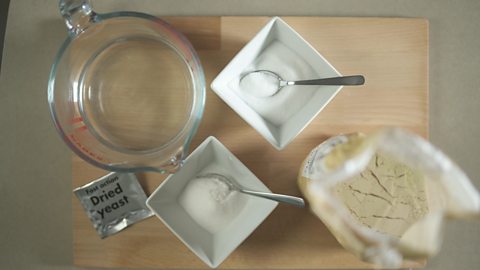
Image caption, WHAT YOU NEED: 500 g of flour, 2 teaspoons of salt, 1 teaspoon of sugar, 7 g of yeast, 350 ml of lukewarm water and kitchen equipment.
1 of 9
How to bake bread
Play the Atomic Labs game! game
Try out practical experiments in this KS3 science game.

More on Chemical reactions
Find out more by working through a topic
- count1 of 12
- count2 of 12
- count3 of 12
- count4 of 12