What is reproduction?
Reproduction means to have babies or offspring.
Just like animals, plants need to be able to reproduce. The offspring of plants are called seeds or bulbs.
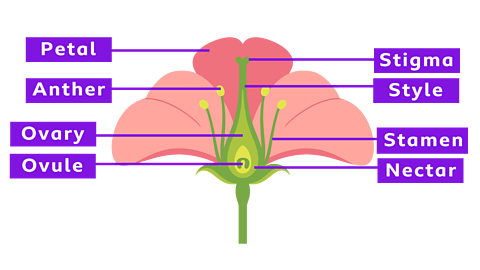
Plant sexual organ diagram
What is an anther?
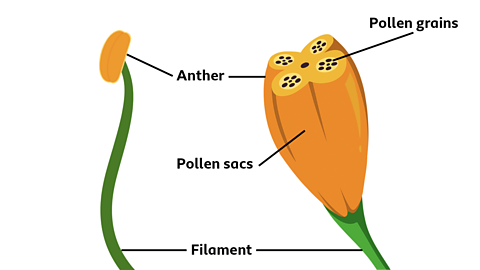
The anther is the part of the stamen in a flower where pollen is produced.
An anther can be found at the tip of a long slender stalk known as a filament.
Each anther has two lobes which both house a pair of pollen sacs.
The plant's pollen grains are produced in these sacs before being released.
Watch: Reproduction in flowering plants
Unlike animals, plants don’t need a male and a female to reproduce because their flowers have both male parts and female parts.
Fran: Flowers are colourful and they smell really nice, but that is not an accident.
It's all part of helping plants make more plants and this is a process called reproduction.
So, let's take a closer look.
Reproduction in plants can either be asexual, where they make clones of themselves or sexual, and that's where flowering plants have male parts and plants have female parts and together they can make reproduction possible.
Now, the male part is called the stamen: the filament and the anther. And the female part is called the carpel: the stigma, the style and the ovary.
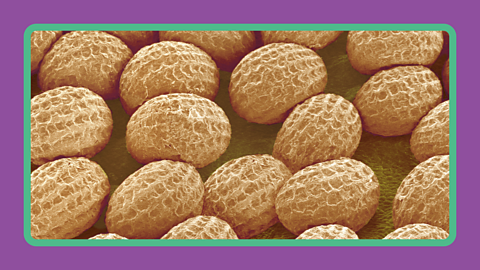
The anther is covered in a powder called pollen.
The pollen has to get to the ovary but it's a bit far to travel without help.
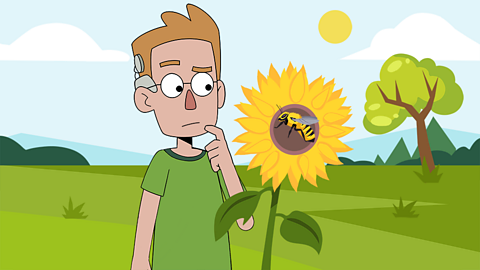
Bees and butterflies come to the flower to drink its sweet-smelling nectar and some of the pollen actually gets stuck onto their backs.
This then rubs off onto the stigma, that's the female part and either they do this on the same plant or even a different plant altogether.
And this process is called pollination. Once the pollen is on the stigma of a compatible female, it travels down the style to the ovary and fertilisation happens.
And that is what makes new seeds grow.
So let's find out what my investigator is learning about seeds.
Child: Seeds need their own space to grow, away from their parent plants, like these trees they each need their own space to grow.
They've found lots of ways to disperse themselves.
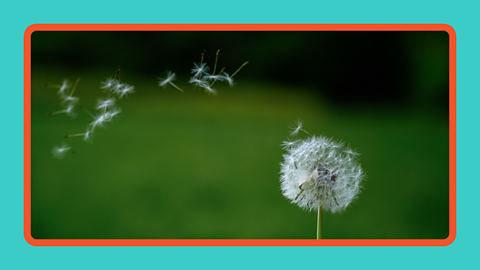
They can be carried by the wind.
They can stick to animal's coats.
Sometimes they get eaten by animals.
Later the seed comes out in their poo,
Nice!
This horse chestnut has hooks to protect it from being eaten by animals and they could also attach to animals fur.
These sycamore seeds have wings to help them glide on the wind.
It's pretty cool!
Fran: Once the seed has found its space, the seed might germinate and grow into a new flowering plant so the process can begin all over again.
Watch this clip to learn how flowering plants reproduce.
Narrator: A flower isn’t just a pretty thing you give to someone special. It’s actually a complicated part of a plant. It produces seeds through a process called pollination.
The flower’s stamen produces powdery stuff called pollen in its anther and the stigma has a bit that can turn pollen into seeds, the ovule.
The flower makes nectar, which some insects and birds just love. As the bee heads towards the nectar, it gets covered in pollen from the stamen.
Not put off it heads down past the flower's stigma where the pollen rubs off. This means the ovule can turn the pollen into seeds.
Insects like this will visit as many flowers as possible. This spreads pollen from one separate flower to another. Producing seeds this way is called cross-pollination.
Wind can help cross pollination too. This gives some people achoo… hay fever!
Fascinating facts
Poor pollination levels can cause low fruit harvests across large areas of land.
Seeds are living organisms. They only have a limited lifespan and will die under the wrong conditions.
Pollen is usually dispersed by either insects, such as bees, or on the wind.
Our ecosystem would collapse without pollinators, such as bees and other insects.
Some plants, such as ferns, mosses, fungi and algae reproduce using spores.
Other plants such as conifers reproduce using seeds kept in cones, we call these gymnosperms.
There are around 300,000 species of flowering plant on the Earth. This makes up almost 90% of the whole plant kingdom.
Unlike animals, plants can't travel around to reproduce. That's why their seeds, pollen and spores are carried by other animals, insects and the wind.
How do plants reproduce?
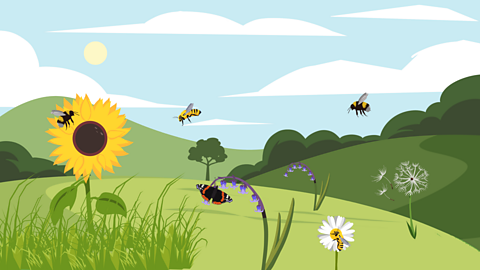
These are the steps in reproduction in flowering plants:
- Pollen is moved from the male part of a flower to the female part of a flower by the wind or insects. This is called pollination. If pollen is moved to the female part of another flower, this is called cross pollination.
- When pollen reaches the female part of a flower, it travels to the ovary where it joins the egg cells (ovule) to make a seed. This is called fertilisation.
- The seeds are scattered by animals or the wind. This process is called dispersal.
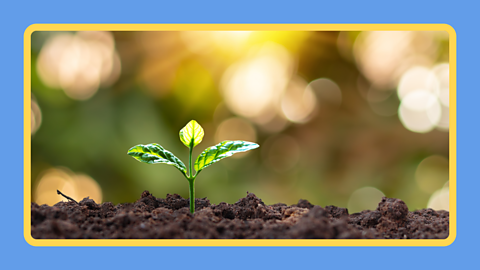
- Some of the seeds will germinate and grow into new plants.
Slideshow: Reproduction in flowering plants
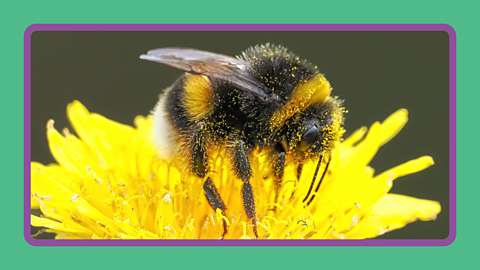
Image caption, Bees
Bees help in the reproduction of flowers by using pollen. Pollen is moved from one flower to another by bees, enabling fertilisation.
1 of 4
Did you know?
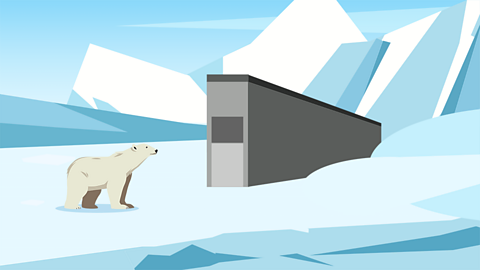
The Svalbard Global Seed Vault is the world's largest seed bank. It has seeds in storage from millions of plant species, and some extinct ones too.
The vault is buried deep inside a mountain in the remote Arctic islands of Svalbard. There are no earthquake zones or volcanoes nearby and the area has natural low humidity and temperature, which is perfect for the storage of seeds.
Having seeds in a safe stored environment means that we have a back up if any species die off, including essential plants used for foods. They could potentially solve a world food crisis!
Watch: Pollination and how it works
Understanding how pollination works.
INTRO MUSIC
MYSTICAL MUSIC
BONG
Stop it Ivy
What? These pests are
bothering my… Lovely Flowers
They're pollinating them… It's important.
You sure?
It looks like they're just headbutting them.
That's because the flowers are attracting the insects as they are an important part of making new plants.
The smell from the nectaries and the prettiness of the petals draws the insects in towards them as they dig for the sweet nectar, the pollen rubs off onto their bodies from the stamen.
The nectaries are right at the bottom to make sure this happens. Once the little bee has had her fill, she'll fly off to find more nectar.
Greedy.
When the bee digs into the next flower… the pollen on her body, rubs off onto the stigma of the new flower. This is called pollination.
When the pollen lands on the stigma it travels down the style towards the ovary.
Once they reach the ovary all the pollen finds an ovule to attach to. This is called fertilisation. This is the beginning of a new seed.
It is absorbed into the receptacle and fruits start to form from the new seed. This is called sexual reproduction.
When the fruit is ready the plant releases the seeds, which get moved into the soil.
How does that happen?
In a few different ways. Seeds can be blown by the wind, or eaten by animals and pooped out in different places.
Pooped?
They can explode and scatter themselves. They can float in water. They can fall from flowers and trees and also, they can stick to animal's fur… and be moved.
Once they are dispersed into the soil they can create new plants.
So, what were all the ways?
Blow,
Eat,
Explode,
Fall,
Float,
and stick.
B E E F F S
See, I do listen,
Well, If you've really been listening. How does pollination work?
I will tell you, through the medium of song.
“Climbing to the flower
To get the sweet nectar
Rub pass the pollen
On the way out
To another flower to get the sweet nectar
Rub it on the stigma
That's what it's about
Busy bees doing their thing
Busy bees
Pollinating
Pollen travels down the style, gets to an ovule
Makes a seed that's fertilizing
Seed gets moved away and is replanted
Makes a new plant and it happens again
Busy bees doing their thing
Busy bees
Pollinating”
What are you doing?
That was amazing.
Ha!
Can I put it on YouTube?
YouTube? Yeah, put it on my channel.
Aunt Ivy there are some plants which can reproduce.
Reproduce?
Make baby plants on their own. This is called: asexual reproduction For example, strawberry plants can reproduce when their stems, called runners, are replanted in new soil.
This starts a new plant! So, it can create new plants on its own.
Did you know?
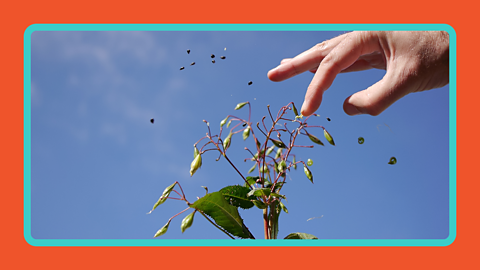
Some plants, such as Himalayan balsam, are ballistic plants which means they release their seeds using natural explosions.
These can be triggered by passing animals, the wind or from other plants brushing against them!
Asexual reproduction
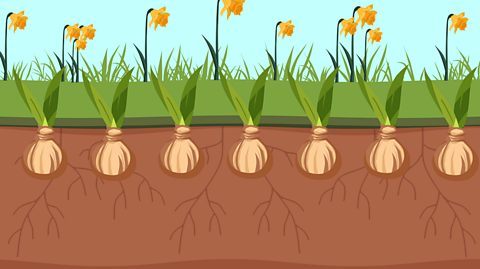
Some plants can also reproduce without an egg cell being fertilised to produce a seed. Instead, these plants produce an identical copy of themselves. This type of reproduction is known as asexual reproduction.
Plants can reproduce asexually in a number of different ways. Some plants produce bulbs, such as daffodils and snowdrops. Others, like potatoes, produce tubers.
These sit under the soil and develop into new plants the next year.
Important words
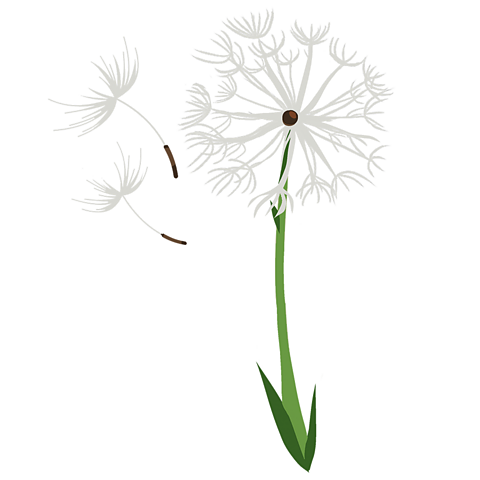
Anthers – Anthers produce male gametes in pollen grains.
Asexual reproduction – Some plants can reproduce without an egg cell being fertilised to produce a seed. These plants produce an identical copy of themselves.
Cross pollination – When pollen is moved to the female part of another flower.
Dispersal – The process of seeds being scattered by animals or the wind.
Ecosystem - An ecosystem is a group of animals, plants and microorganisms that live together in one place.
Fertilisation – The process when pollen reaches the female part of a flower. It travels to the ovary where it joins the egg cells (ovule) to make a seed.
Germinate – When a fertilised seed or bulb starts to grow.
Offspring – The new version of a plant grown, the offspring of plants are called seeds or bulbs.
Ovule – The ovule contains the female reproductive cells of a plant.
Pollen – A powdery substance created by plants for reproduction.
Pollination – The transfer of pollen to a stigma or ovule to allow fertilisation.
Reproduction – When an animal or plant has babies or offspring.
Stigma – The top of the female part of the flower which collects pollen grains
Stamen – The male part of the flower consisting of the anther held up on the filament.
Activities
Activity 1 – Tap and find
Activity 2 – Flowering plant quiz
Activity 3 – Steps of flowering reproduction
Draw and label diagrams explaining the four main stages of reproduction in flowering plants.
Can you remember the four steps of reproduction in flowering plants?
The four steps of reproduction in a flowering plant are:
- Pollination
- Fertilisation
- Dispersal
- Germination
Activity 4 – Label the sexual organs of a flowering plant
New game! Horrible Science: Stinky Space. game
Join Pipette on her epic mission and learn some revolting facts about space along the way.
More on Plants
Find out more by working through a topic
- count6 of 6
- count1 of 6
- count2 of 6
- count3 of 6