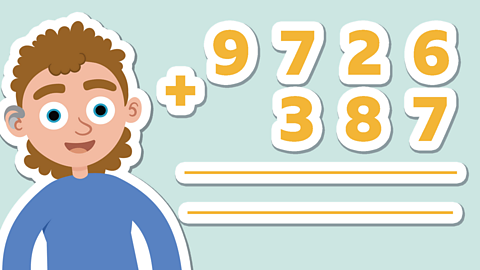
What is column subtraction?
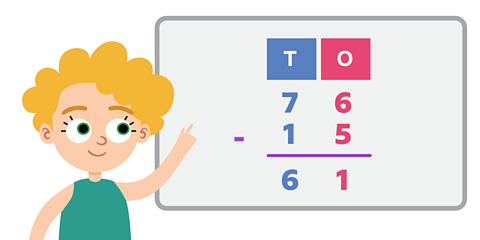
Column subtraction is a way of subtracting larger numbers.
It is called column subtraction, because you write one number underneath the other, using place value to sort the tens and ones in separate columns.
You then subtract the digits, starting from the ones column on the right-hand side.
Activity: Using column subtraction
Complete this interactive activity to learn more about subtracting numbers using column subtraction and then put your knowledge to the test with a quiz.
Column subtraction
Let's look at how you can use column subtraction to solve subtraction problems.
When using column subtraction you write one number above the other.
You line up the digits of each number in columns according to their place value.
You then start working out the answer starting with the digits with the smallest place value.
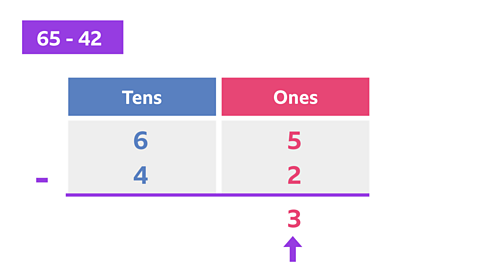
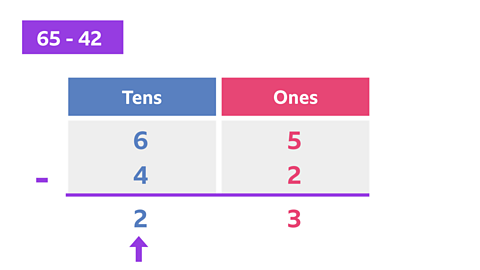
1 of 2
You can do column subtraction using objects, counters and pictures too.
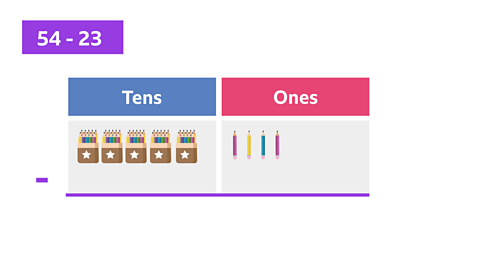
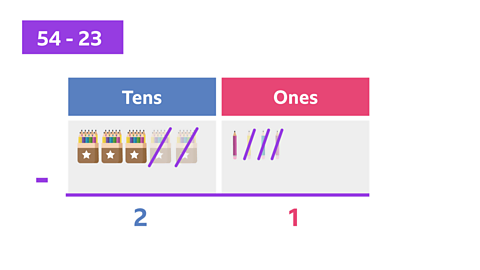
1 of 2
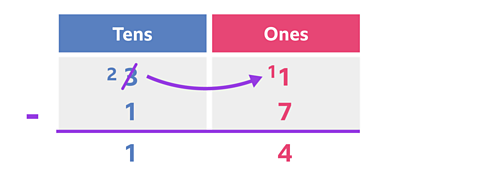
Sometimes you have to re-arrange the first number in the calculation.
To do this, you take a group of ten from the tens column and put it in the ones column.
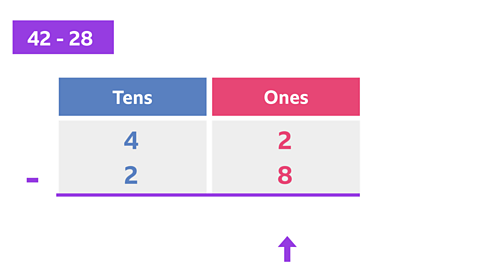
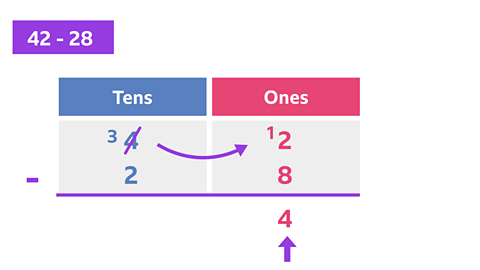
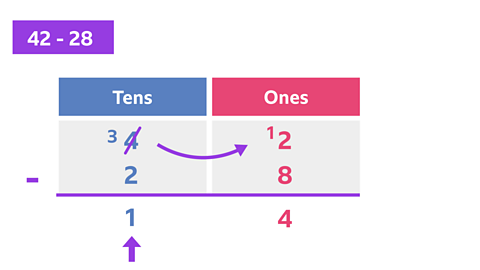
1 of 3
Example 1

Can you work out the answer to this calculation?
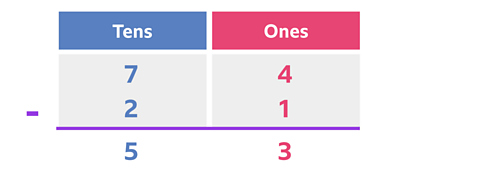
74 - 21 = ?
✓ The answer is 53.
You begin with the ones.
4 - 1 = 3
Then move to the tens column.
7 - 2 = 5
Example 2
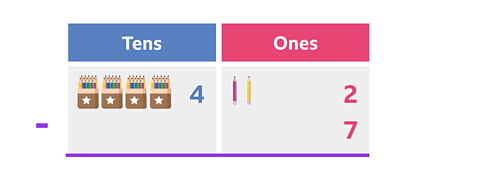
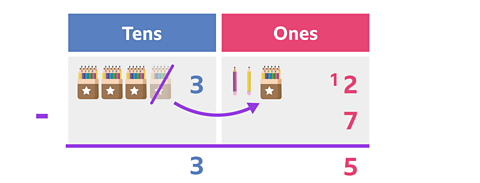
Here are 42 pencils. Can you complete this calculation by re-arranging and moving one packet of ten pencils from the tens column into the ones?
How many ones will we have after re-arranging?
✓ You will have 12 ones.
You had 2 to begin with and then 10 more that moved from the tens column into the ones.
Example 3

Can you use column subtraction to work out this calculation.
31 - 17 = ?
✓ The answer is 14.
You need to do some re-arranging to work it out.
More on Adding and subtracting
Find out more by working through a topic
- count6 of 14
- count7 of 14

- count8 of 14

- count9 of 14