Causes of climate change
There is evidence that human activity such as burning fossil fuels has led to climate change. But what are we doing about it?
(TAPE PLAYING)
VOICE ON TAPE: Climate change is the long-term alteration of temperature and typical weather patterns. It is connected with an increase in the frequency and severity of damaging weather events such as hurricanes, floods and winter storms.
Climate change is happening at a more rapid pace now than ever before. This is due to human activity, such as burning fossil fuels; for example, natural gas, oil and coal.
NARRATOR: Or, to put it a slightly different way: what are we doing? We have this amazing, beautiful, wonderful planet to live on and we're messing it up.
In case you're unaware of the facts, here are a few of the highlights:
- The 20 warmest years on record have been in the past 22 years.
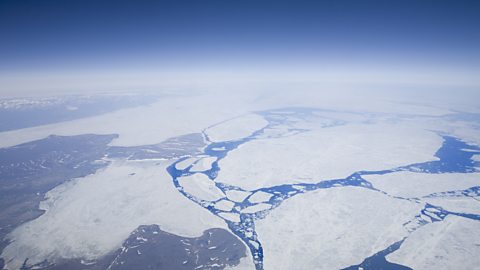
- Ice caps are melting and sea levels are rising faster than ever.
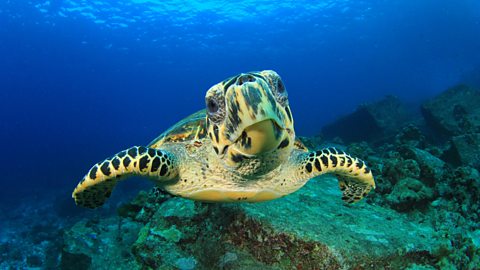
- More than one million species are at risk of extinction.
The worst impacts of climate change could be irreversible by 2030 and guess what? Many world leaders still aren't taking it seriously enough.
Carbon emissions are still increasing, the world's resources are running out, natural disasters are becoming more common and people are dying from food shortages and disease.
OK, we know there are lots of things that need attention and that counteracting climate change isn't simple, but surely someone out there can do something.
Hello? Hello?
(PHONE RINGING)
Anyone out there?
The world is on its way out. It's time to act.
Climate or weather?
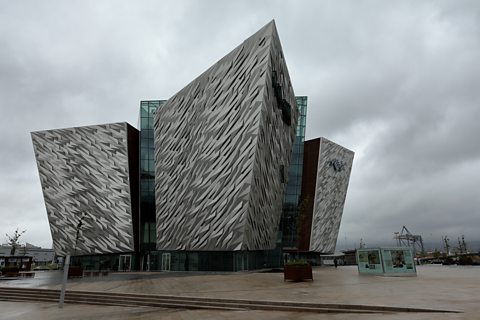
While weather describes state of the atmosphere over a short time, climate describes the wider conditions that are expected in an area over a much longer period of time.
For example, when describing the average temperature of Belfast during July, you are talking about the climate - when describing the temperature right now in Belfast, you are talking about the weather. One month of hot temperatures in Belfast wouldn’t change the fact that it normally has a rainy climate.
What is climate change?
Climate change refers to changes in the Earth's average temperature over a long period of time. If you were to look at a graph of the annual global temperature change, you can clearly see that since 1880 the temperature in a very short period time, relative to millions of years has increased dramatically. Recently, the rate of this change has been speeding up.
These changes can occur naturally over time, but most scientists think that human behaviour is increasing the amount of greenhouse gases in the atmosphere, which is causing these more rapid changes to the climate.
A lot of people consider climate change the most important crisis facing the world today, and use terms like climate emergency or climate crisis to remind us of the gravity of the situation.
What are the causes?
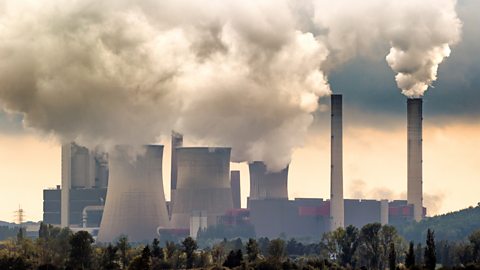
The major cause of climate change is the burning of fossil fuels. Burning fossil fuels releases carbon dioxide (and other Greenhouse gases) into the atmosphere, which traps heat radiating from Earth toward space. We call this the greenhouse effect. Too much fossil fuel has been burnt in the last 80 years and therefore too much carbon dioxide has been released into the atmosphere.
In 1750, 280 parts per million of carbon dioxide was in the atmosphere, in May 2020, scientists found that had increased to 417 parts per million.
Although the burning of fossil fuels is the main cause of climate change there are other contributing factors:
Deforestation: During photosynthesis trees absorb carbon dioxide. However, cutting them down means there is more carbon dioxide released into the atmosphere as the trees are no longer there to store and remove the carbon dioxide, furthermore, burning them releases the carbon they had stored.
Agriculture: Farming practices are responsible for releasing greenhouse gases into the air. In Northern Ireland, the large amounts of grazing animals (cows and sheep) are responsible for nearly 30% of all our carbon emissions.
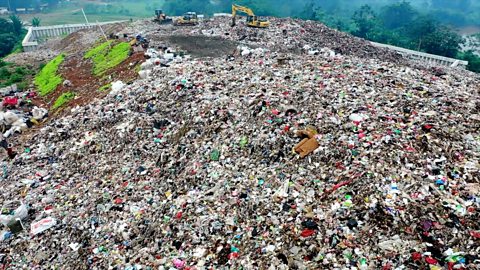
Landfill: When biodegradable waste such as food, paper and card is sent to landfill sites - it releases methane gas into the atmosphere.
What are the consequences?
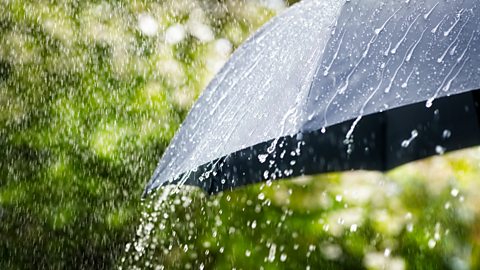
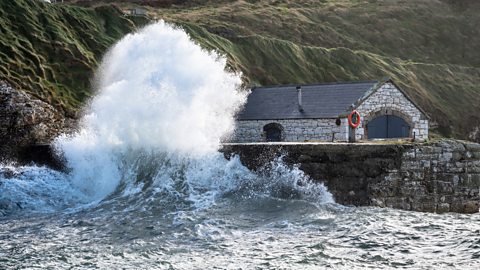
Image caption, Extreme weather
Weather patterns and seasons could change. Heavy rainfall can lead to floods and decreasing water quality while droughts and heatwaves can put pressure on water supplies. People will experience a different climate and weather to what they have become used to.

1 of 5
What can be done?
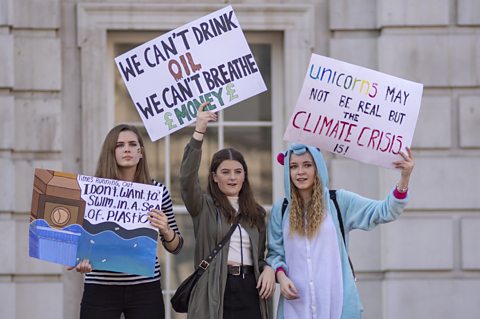
We can all make changes to reduce our carbon footprint and personal impact on the environment. Here are some of the ways we can do that:
- Food consumption: eat less meat and more food that’s produced locally.
- Fly less: if it’s the only option pick a destination close by, fly economy and choose to carbon offset.
- Reduce car journeys: where possible cycle, walk or use public transport to get to school.
- Get involved: find out about organisations that campaign for environmental change.
- Green spaces: protect them and if possible, plant trees or introduce plants into your household.
- Change your buying habits: avoid single-use items and only purchase clothes you really need.
- Recycle your unwanted clothes: donate to clothing banks and charity shops or sell them on.
- Use less energy: at home switch off lights and appliances when you’re not using them.
Test yourself
More on Weather and Climate Change
Find out more by working through a topic
- count4 of 9

- count5 of 9
- count6 of 9
- count7 of 9