Train travel and tourism
Tourism is a big industry in Scotland. Visitors from other parts of the UK, Europe and the rest of the world come on holiday here. And when you live here already, it can be lots of fun travelling and exploring places you have never visited!
In this article you can learn about:
- travelling in Scotland by train and bicycle
- the tourism and food industries in the West Highlands
- how travel and tourism support each other
This article is suitable for learning about People, Place and Environment topics in primary school.
Video - The West Highland Line
Join Isla and Connor as they go on an adventure on the West Highland Line. They learn about train travel and the tourism and food industries in the West Highlands.
CONNOR: Glasgow Queen Street. One of Scotland's busiest stations.
ISLA: And where we can catch a train on the West Highland Line to Oban.
Got your ticket? Let's go.
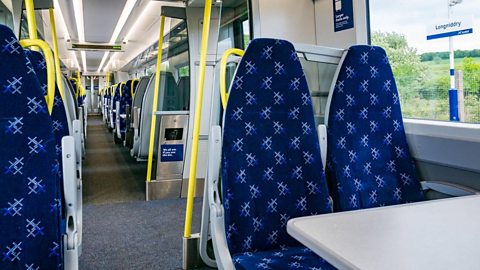
Trains are amazing, aren't they? We can carry our bikes with us on these Highland Explorer carriages.
CONNOR: You know. I always think of trains as carrying people. But the first trains in Scotland carried coal between the big cities.
Today they're doing a much better job for the environment, reducing traffic on the roads and helping people get between towns andcities or are getting us out of the city to explore new places with our bikes.
This is the route the railway takes from Glasgow.
The West Highland line splits here at Crianalrich.
One route continues north to Fort William and Mallaig, but we're heading West on this route to the end of the line in Oban.
Then we can hop onto our bikes and really get out in the open.
ISLA: So, where to the bikes come into it?
CONNOR: The Cycle Network has a route called The Caledonia Way
ISLA: Ah. I see. So when we get off the train in Oban, we can cycle all the way up to Fort William and then get a train right back towhere we started in Glasgow!
CONNOR: Isn't it beautiful when a plan comes together!
ISLA: Look, there's Loch Awe!
CONNOR: And the Falls of Cruachan, spectacular!
We can hop off here and take a look at…
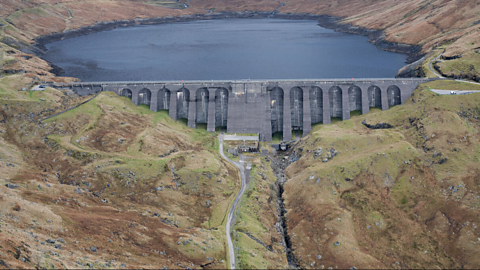
Cruachan Hollow Mountain, a power station.
ISLA: Wow. They've built a power station inside a mountain? What a feat of engineering.
CONNOR: Yep. They drilled and blasted a huge tunnel through the granite rock to build it.
Up on top of the mountain, Ben Cruachan, a dam holds the water in the Cruachan reservoir.
From here, water flows down pipes into the power station, turning turbines that generate electricity.
It's all green energy. Hydroelectric power.
And it's a tourist attraction too.
The visitor centre gets 50,000 visitors a year.
ISLA: Renewable energy and green tourism two industries supporting each other in an environmentally friendly way. Fascinating!
But now, let's get on to Oban?
The Hollow mountain has got me thinking about how a place built for one purpose ends up as a tourist site.
Scotland has a lot of historic tourism - buildings and places from the past that end up as tourist hotspot.
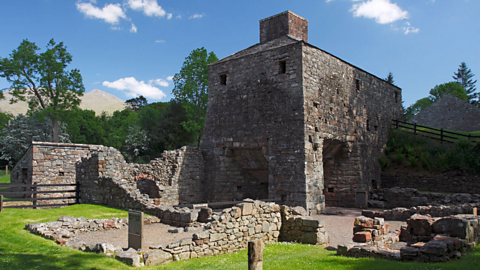
CONNOR: Like Dunollie Castle near Oban. Once the stronghold of the powerful Clan MacDougall, today it's a tourist site andmuseum.
ISLA: Wow, so much history and I bet there's loads more to see.
Finally in Oban!
I'm dying to have a look around before we get on the cycle route.
Mmm! That was delicious. I guess the port as another kind of industry that has now become a tourist attraction.
The fishing boats leave and return from here, bringing back their catch.
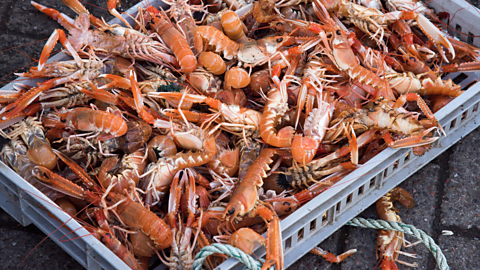
People come from all over to eat it, which is why Oban is called the 'Seafood Capital of Scotland'.
CONNOR: And not only seafood, Oban is often called the gateway to the Isles.
You can catch the train here from Glasgow, then hop on the ferry to the islands like Lismore, Mull or the Outer Hebrides, keepingislanders connected to the mainland and great for tourists, but originally the port transported whisky from the distillery here, along with slate and kelp down the coast to Glasgow and Liverpool.
ISLA: We could spend the whole day here, but are you ready to get your blood pumping and feel the wind on your face now?
CONNOR: Oh, yes to Fort William!
Train travel
Train travel is an essential part of the transport The parts of the built environment needed for a country to function such as roads, water pipes and ports. in Scotland.
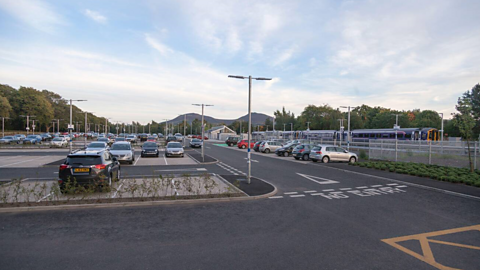
The train network supports the road network, connects to cycle paths and ferry ports, and provides onward travel for tourists arriving at our airports.
It allows people to Travelling between home and a place of work to work or school in the larger towns and cities from suburbs and smaller settlements where they live. It is also a more sustainable way of transporting freight, or goods, longer distances. It is estimated that one freight train can carry the load of 76 lorries, while emitting only a quarter of the carbon.
Here are some examples of facilities on the railway to encourage more passengers:

Image caption, Cycle racks
Cycle racks allow people who live and work further away from the railway station to cycle to and from their train. Many train carriages now also provide racks for bicycles for those who wish to cycle before and after their train journey. (Elizabeth Leyden/Alamy Stock Photos)
1 of 3
Advantages and disadvantages of train travel
Advantages
- Travelling longer distances by train, especially electric train, can be much more environmentally friendly than travelling by car or plane. This is because planes and petrol or diesel cars release more carbon emissions. Planes are faster at covering long journeys, but burn more fuel. Cars produce the most emissions of any transport because there are so many of them and they are used so often.
- People can choose to work or relax on the train, rather than concentrating on driving over the same distance.
- For cyclists, you can take your bike on the train, and cycle to your final destination (just like Isla and Connor!) or use bike racks to store them securely at a station.
Disadvantages
- Trains follow a strict timetable which might not always be convenient.
- A lot of places in Scotland are not directly accessible by train. This can mean you need another form of transport to take you to and from your nearest station.
- It can be costly to travel by train. There are usually ways to find cheaper tickets, but this can involve travelling at 'off-peak' times only, which might not suit.
Tourism in the West Highlands
The Highlands and Islands of Scotland are a popular tourist destination. People come here from all over the world to enjoy the natural beauty and hospitality of the region. Lots of tourists means there can be more businesses catering for visitors, such as hotels, restaurants and shops, as well as tourist attractions and activities to encourage them to spend more time there. All of these can bring money and jobs to the area.
Oban
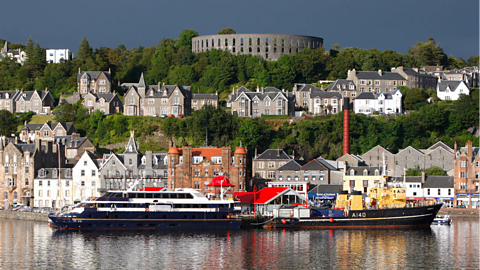
Oban is known as the 'Gateway to the Isles' because of its ferry links to the Inner Hebrides including Mull, Rum and Iona, and the Western Isles. It is also known for its delicious seafood.
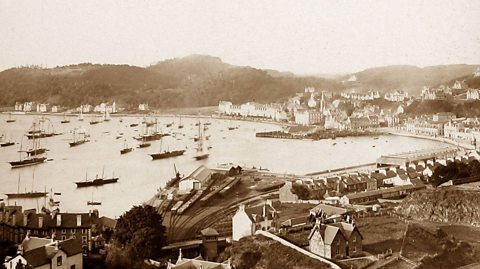
Oban has been a popular tourist destination since the 1820s. The opening of the Crinan Canal in 1801 and the Caledonian Canal in 1822 created new transport links to the towns of Glasgow, Fort William and Inverness. The canals allows transport of passengers as well as goods. The opening of the railway in 1880 meant that many more people could travel to Oban quickly and easily.
There are many reasons why tourists enjoy visiting a particular town or area. Let's look at some examples of why Oban remains a popular place to visit.
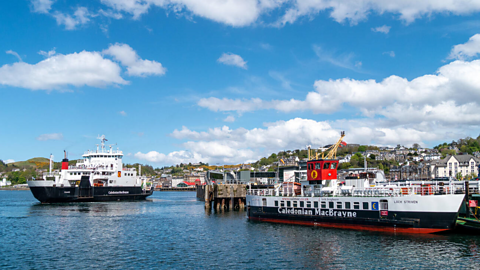
Image caption, Gateway to the Isles
Oban is often called the 'Gateway to the Isles' as ferries sail from its port to many of the islands off the west coast of Scotland. This makes it a good first stop for any tourists travelling to the islands, but also a vital harbour for people who live and work in the Inner Hebrides and the Western Isless (Photimageon / Alamy Stock Photo)
1 of 5
West Highland Line
The West Highland Line is often listed as one of the most scenic train journeys in the world. It allows visitors travelling by train to explore towns such as Oban, Fort William and Mallaig, as well as Rannoch Moor, Loch Long and Loch Lomond. These are popular places to visit for cyclists, walkers and people who enjoy watersports.
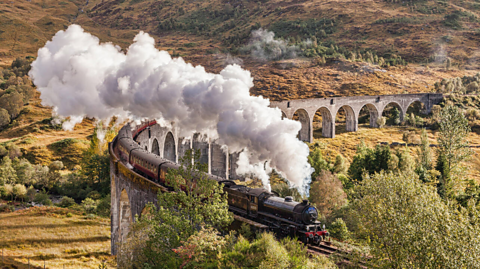
The part of the journey from Fort William to Mallaig can also be taken on a steam train. This journey is a rare opportunity for visitors to travel by steam train, as most steam trains are no longer in use. The train passes over the Glenfinnan Viaduct, where you can get a great view of Loch Shiel. The A type of bridge that uses arches, piers or columns to support an elevated railway or road over low lying ground. was made famous in the Harry Potter film series, as the Hogwarts Express would travel on it on its journey from London Kings' Cross to Hogwarts every year!

Key words about train travel
Check your connection, refresh the page and try again. - goods transported in bulk, often over long distances, by trains, trucks, boats and planes.
Check your connection, refresh the page and try again. - the release of carbon in to the earth’s atmosphere which contributes to climate change.
Check your connection, refresh the page and try again. - the structures and services needed to provide basic services, such as transport, electricity or water.
Check your connection, refresh the page and try again. - travelling between home and a place of work.
Check your connection, refresh the page and try again. - a type of bridge that uses arches, piers or columns to support an elevated railway or road over low lying ground.
Test your knowledge
Quiz
Challenge

Design a train carriage
Design and draw a train carriage suitable for all kinds of people who might travel on the train - families, workers, visitors. Think about:
- how accessible the train is
- what facilities might make people more likely to use the train
but also…
- what would make a train journey really special?
Use your imagination! Who knows, you might just invent a train of the future!
More to learn about train travel and tourism
Transport and Sustainability
Learn more about sustainable transport

How have our railways changed?
Learn more about the history of the railways
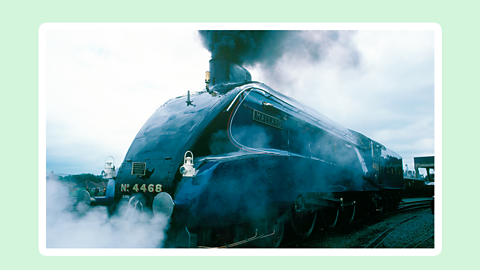
Holidays and leisure in Victorian Scotland
Learn more about how the Victorians made holidays popular.
More on Landscapes
Find out more by working through a topic
- count10 of 25
- count11 of 25
- count12 of 25
- count13 of 25

