Is transport sustainable?
For thousands of years, people have found clever ways to make travel quicker and easier.
But some of these ways of travelling are damaging our planet.
In this article you can learn:
- Why some forms of transport damage the environment
- What we can do to make a positive change
- What the benefits and challenges ahead are
This resource is suitable for transport and sustainability topics for primary school learners.
Video - Are all kinds of transport sustainable?
In this video, you can learn about different kinds of transport and how sustainable they are.
From bicycles to hot air balloons, and kayaks to camels, humans are very clever at finding different ways to travel.
Take cars. They’re reliable, quick and can go wherever you want, whenever you want.
But most cars run on petrol or diesel.
Exhaust fumes from these cars are bad for your health, and they produce carbon dioxide.
Carbon dioxide is a greenhouse gas. It traps heat from the sun and warms up the planet.
That’s why more and more people are switching to electric cars.
Electric cars charge from a plug socket, kind of like your phone. So when they’re on the road, they don’t give out exhaust fumes.
The downside is, the electricity they use may have been generated by burning fossil fuels.
Plus, if you live in a block of flats, or a busy area, it isn’t so easy to plug your car in.
And the more electric cars there are, the more demand for electricity there will be.
Buses and trains are better for the environment than petrol or diesel cars because even though they often run on the same type of fuel, they produce less carbon dioxide per-passenger.
But the greenest forms of transport are the ones you power yourself.
People run on food - not petrol. So we only give out a tiny amount of carbon dioxide.
And the more you exercise, the better it is for your health!
Now, if you’re going to another country, the fastest option is an aeroplane.
The problem is, planes use a lot of fuel.
In fact, they give out more carbon dioxide than any other form of transport.
That’s why, more and more, people are staying in the UK.
You might not want to scoot to Blackpool…
…but you can get the train or the bus.
And it’s not just people who travel long distances: the clothes we wear, the food we eat, and the things we play with all have to get to the shops.
Most of it is transported by boat, plane and lorry.
We could save loads of energy if we bought less stuff and what we did buy was made closer to home.
So although petrol cars and planes are convenient and quick, they produce lots of carbon dioxide.
Wherever you can, use public transport or, even better – people-power!
It might be a wee bit slower…
…but it’s better for the planet – and your health!
What is the problem with transport?
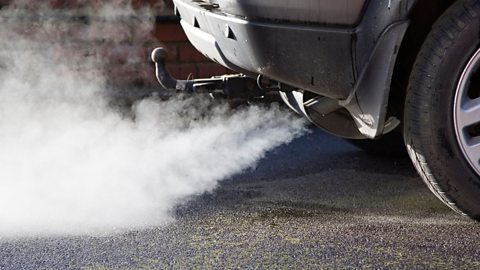
We have invented bikes, cars, boats, planes, helicopters, trains and lots of other ways to move us from one place to another quickly. While they make life more convenient, many of these are fuelled by petrol or diesel, which come from non-renewable fossil fuels.
This is a problem because fossil fuels release carbon dioxide into the atmosphere, which contributes to global heating and climate change. Burning them also causes pollution that is bad for our health.
Learn more about fossil fuels and what we use them for here: Fossil fuels
Are all forms of transport equally bad for the environment?
No. Not all forms of transport are equally bad for the environment.
Planes and petrol or diesel cars release the most carbon emissions. Planes allow you to travel long distances quickly but use a lot of fuel. Cars produce the most emissions of any transport because there are so many of them and they are used so often. Between cars, lorries, buses and motorbikes, road transport is responsible for nearly 75% of all transport emissions.
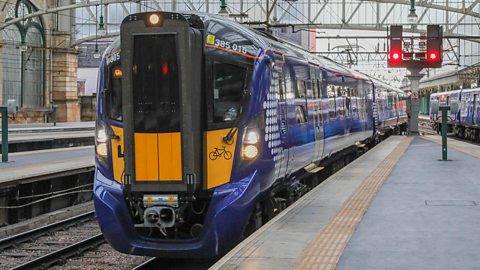
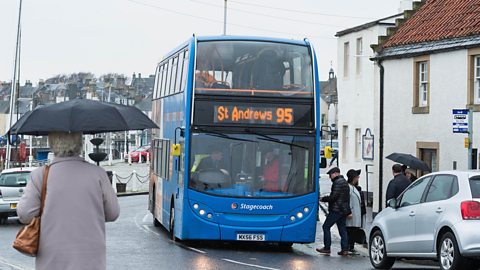
Public transport is a more environmentally-friendly way of travelling. Most buses run on fossil fuels but when they carry more passengers in one go, they produce less emissions per person. Trains produce less carbon per person too. Some run on electricity, which can be generated from renewable energy without releasing carbon emission.
Bikes and scooters are powered by people. We get our energy from food, not fossil fuels. These ways of travelling (as well as walking) are the least harmful for the environment because they produce the least carbon dioxide. They're also good for you because they are exercise.
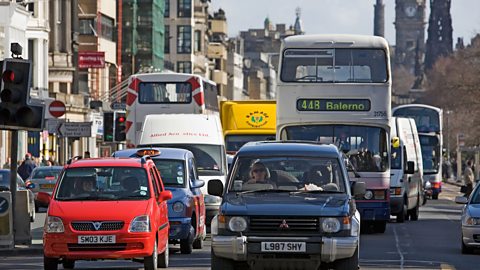
Image caption, Cars are the most common form of transport. Most are fuelled by petrol or diesel, which comes from non-renewable fossil fuels
Cars emit a lot of carbon dioxide, which is bad for the environment and leads to global heating. Pollution from cars causes local air pollution that damages our health. (Jon Bower Pollution / Alamy Stock Photo)

1 of 4
Can we reduce the impact of cars on the environment?
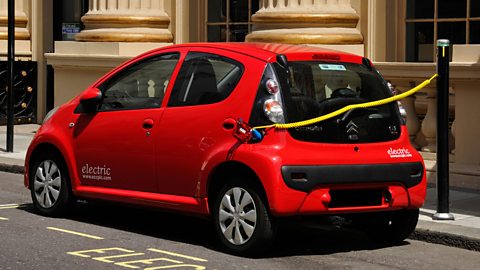
Car owners can cut down their impact in lots of ways.
- Leave the car at home - Making shorter journeys by foot, bus or bike will reduce your impact on the planet and cut local air pollution.
- Car share - Lots of people travel alone in their car, or with only one passenger. Sharing the drive with someone who is going to the same place can cut emissions by half. One car on the road is better than two!
- Switch to an electric car - Electric cars don't produce carbon emissions or local air pollution themselves. If they are charged with electricity from renewable sources, that cuts down on emissions too. Electric cars can be expensive to buy but they are cheaper to run. Charging them at home might not be easy if you live in a busy area or a flat.
Travelling isn’t just for people, though!
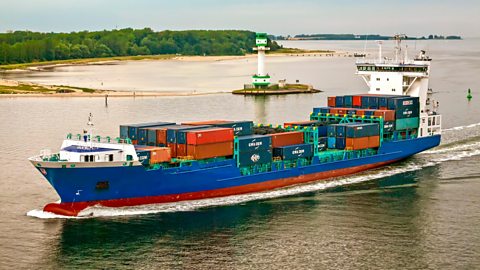
Some of the things we buy have to travel a long way by boat or plane to get to us, producing a lot of carbon emissions.
When you buy food, toys or clothes, look out for locally produced items that haven't had to travel across the world to get to you. This will reduce your impact on the environment.
Learn about food miles and how our food travels around to get on our plate: Sustainable food
Benefits and challenges of transport
Benefits of transport
- Most forms of transport are quick and easy and take us where we want to go.
- Different types of transport are needed to take people long distances where walking and other modes of transport would not work.
- Large passenger vehicles such as buses and trains can carry larger numbers of passengers reducing the amount of cars on the road.
- Some modes of transport, such as cycling and scooting have no impact on the environment and a physical activity that is good for our health.
- New technologies have meant that electric cars are now more available and impact less on the environment.
Challenges of transport
- Most vehicles are fuelled by non-renewable sources of energy that harm the environment.
- Cars and other vehicles emit harmful carbon emissions that lead to global warming.
- Electric cars are more expensive to buy than cars that run on petrol and diesel.
- Public transport is more environmentally-friendly than cars but your travel needs to fit with a timetable and bus stops and train stations might not be close to where you want to go.

Key words about transport
Check your connection, refresh the page and try again. - Coal, oil and gas are the three fossil fuels – these are our non-renewable energy sources. They are called fossil fuels because they are made from dead animals and plants. These animals and plants are compressed underground over millions of years and they eventually turn into fossil fuels.
Check your connection, refresh the page and try again. - Natural energy resources that cannot be replaced after they are used. There is a fixed amount of them on Earth. Fossil fuels such as coal, oil and gas are all non-renewable resources.
Check your connection, refresh the page and try again. - Gases in the atmosphere that trap heat. Although they are needed to keep Earth warm enough for life to exist, there is now too much of them, contributing to climate change. Carbon Dioxide is one of the greenhouse gases.
Check your connection, refresh the page and try again. - A natural gas that is all around us. It is essential for life on Earth. For example, animals (including humans) breathe in oxygen and breathe out carbon dioxide, while plants do the opposite. But carbon dioxide is also created when fossil fuels are burned. This is a problem because there is now too much of it in the atmosphere. As a greenhouse gas, carbon dioxide is the main cause of global heating and therefore climate change.
Check your connection, refresh the page and try again. - The increase in the Earth's average temperature, largely due to the greenhouse gases released into the environment when people burn fossil fuels.
Check your connection, refresh the page and try again. - This is the long-term change in weather patterns (temperature, wind, rainfall etc.) on Earth, including its side-effects, for example increased drought and flooding.
Check your connection, refresh the page and try again. - A source of energy that does not run out and is sustainable. The power of the sun, wind and water can be harnessed and used to generate energy through a wide range of technologies such as solar panels, wind turbines and wave and tidal machines.
Check your connection, refresh the page and try again. - The release of carbon in to the earth’s atmosphere which contributes to climate change.
Test your knowledge
Quiz
Challenge

Track your travel
- Make a table to keep note of your different types of transport used in a week. Note how many times you use a car, bus, train, bike, scooter or walking.
- Talk to your adults to see whether you can swap out any short car journeys you make for walking, scooting or cycling. For example, your journey to school, dance club or football training.
More on Living sustainably
Find out more by working through a topic
- count5 of 5

- count1 of 5
- count2 of 5
- count3 of 5