Key points
- Manufacture a prototype that meets your design specifications.
- Choose a range of appropriate materials.
- Demonstrate manufacturing skills and attention to detail.
- Test your prototype and write a reflective evaluation of its effectiveness.
- Evaluate your prototype against your specification.
- Suggest how to modify or improve the prototype.
This section is relevant for students embarking on their design and manufacturing project and who are pursuing either Option A: Electronic and Microelectronic Control Systems; or Option B: Mechanical and Pneumatic Control Systems. Typically referred to as the Systems pathway.
Manufacturing your design
Manufacture involves creating a prototype of your design that meets all the specifications you set earlier. You will need to choose the right materials that suit your product, whether it is something sturdy, lightweight or easy to work with. When building your prototype it is important to show off your manufacturing skills, paying attention to accuracy, quality and finish. This part of the project shows your ability to turn your design ideas into a real, functional product while maintaining high standards.
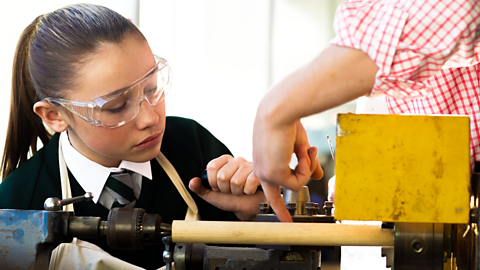
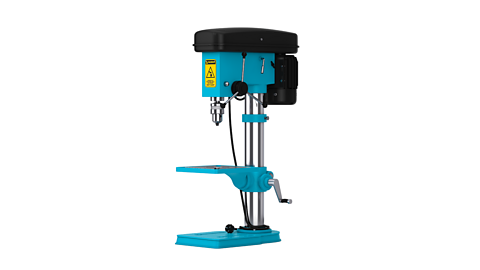
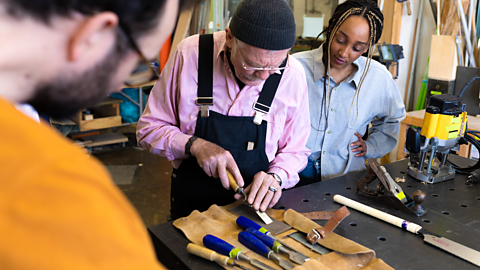
When building your prototype, you'll have access to a wide range of tools and machinery in the school workshop. Machines like the pillar drill, band facer, polisher, milling machine, and centre lathe will be useful, along with the full range of hand tools. You might also have access to more advanced equipment like CNC milling machines, laser cutters, and 3D printers.
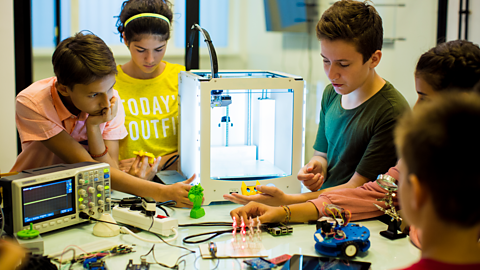
Image caption, Students using a 3D printer

1 of 5
How to evaluate your work
Creating a prototype isn't the end of the design journey; it's just another step! Now it's time to evaluate how well your prototype solves the initial problem or fulfils the opportunity you identified. Testing your product in its intended environment (in situ) is crucial to see how it performs in real-world conditions. Gather feedback from a target user to understand its strengths and weaknesses from their perspective.
Next, evaluate your prototype against the original design specification. This helps you determine if the final product meets the goals you set out to achieve. Consider evaluating aspects like:
- Function: does it work as intended?
- Aesthetics: does it look appealing?
- Ergonomics: is it comfortable and easy to use?
- Size and dimensions: does it meet the required size specifications?
- Durability: is it strong and long-lasting?
- Safety: does it meet safety standards?
- Sustainability: does it minimize environmental impact?
- Cost: could it be manufactured within budget?
Finally, consider potential modifications to enhance your product further. Use freehand sketches or CAD models to present your ideas for improvements. This iterative design process ensures your product is the best it can be!
Evaluation is part of the iterative design process, a circular design process that models, evaluates and improves designs based on the results of testing.
The iterative design process works by analysing the feedback received and evaluating against the specification criteria to determine the effectiveness of the product and consequently to redevelop the product. Further improvements can be made and then more feedback can be gathered until both the client and the target market are happy with the outcome.
Without the iterative cycle of evaluation and improvement from both the client and the target market, the product may not be the best on the market. This will allow another manufacturer to produce a better product that will be more successful.

You must complete:
- Testing in situ
- Evaluation against the original design specification
- Future modifications
Test yourself
Further study
How to develop and generate your ideas. revision-guide
Brush up on freehand sketching

Manufacturing practices. revision-guide
Brush up on manufacturing and planning
What is the design process? revision-guide
Find out more about the design process.

More on Systems pathway
Find out more by working through a topic
- count2 of 3