Why is taste important?
Exploring the taste of different foods helps us to decide which foods we like or dislike.
Certain foods can have different flavours and textures when they are raw to when they are cooked.
For example, carrots are hard and crunchy when they are raw and they tend to be softer and sweeter when they are cooked.
Taste and smell can also help us to detect if something is safe to eat. Some food or drink can taste more sour or bitter if it is too old to eat or drink.
Video: What does a chef do?
Watch this video to learn more about how a chef uses their knowledge of taste and flavours to make a healthy dish.
So, you’re working in the kitchen? You’re a chef!
Who are you cooking a meal for? Me? Oh…! Thank you!
I like all sorts of food, as long as it's not too spicy.
And your robot’s choosing the ingredients?
Alright then…
Are you sure your robot knows how to cook?
It’s ready! And the dish is… noodles, with mashed potato… and bread?
Ummmm…
But those are all starchy carbohydrates! So, it’s not a very balanced meal.
You’re going to take over? Yes, that might be better.
You want to make something that tastes good…
And looks good…
And it needs to be balanced - to have the right amount of ingredients from different food groups.
So, you’ll only want one starchy carbohydrate.
Pasta? Right.
What will go well with that?
Onion and tomato. They’ll make a sauce that’s tangy and healthy.
Good choices!
Looks good!
But how does it taste?
That’s the real skill of being a chef, understanding what flavours go well together.
You think it needs a little more flavour?
Ooh… a little fresh basil and some cheese. Lovely!
Wait a moment though! I don't like spicy food, remember?
Just in time!
Mmm, delicious. Thank you!
Chefs and taste
Chefs prepare and cook food to try and meet the needs of different customers.
Choosing the right combination of flavours is important so the customer enjoys their food.
To do this, the chef would need to consider factors like:
- the quantities of ingredients.
- the balance of different food groups.
- the different textures of foods.
- whether the dish is healthy.
- whether the dish looks appealing.
The five basic tastes

There are five basic tastes we can detect with our tongue. These are:
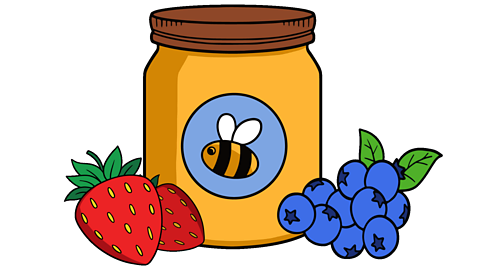
- sweet: like with bananas, honey and strawberries.
- salty: like with crackers, breadsticks and bacon.
- bitter: like with grapefruit, dark chocolate and coffee.
- sour: like with rhubarb, vinegar and lemons.
- Umami is a pleasant savoury taste, found in foods such as mushrooms and some cheeses. like with mushrooms, soy sauce and some cheeses.
Using our senses to taste food
When we taste food, we use a combination of our senses. The five senses are taste, smell, sight, hearing and touch.
When eating food, the tongue and nose work together to help us to recognise flavours and determine how the dish tastes.
Look at this slideshow to find out how our senses can help us explore food.
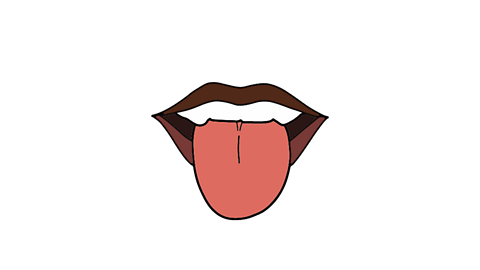
Image caption, Taste
The tongue, roof of the mouth and back of the throat are covered in lots of tiny taste buds that help us detect the five basic tastes. This taste information gets turned into signals that are sent to the brain, telling it whether the food is safe to eat. Some words to describe taste are 'sweet', 'bitter' or 'sour'.
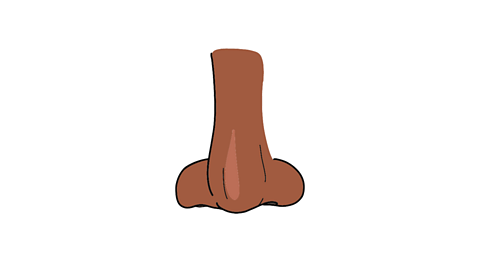
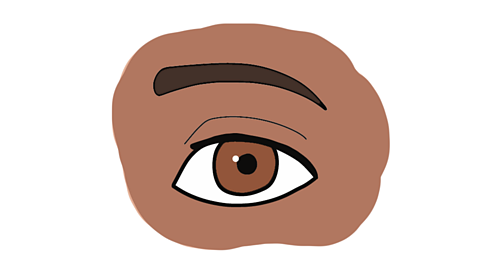
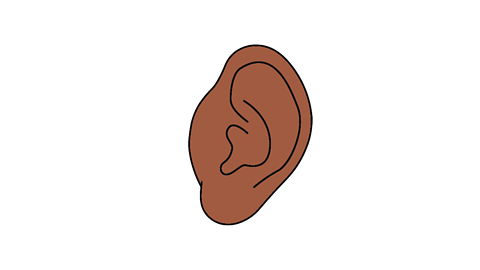
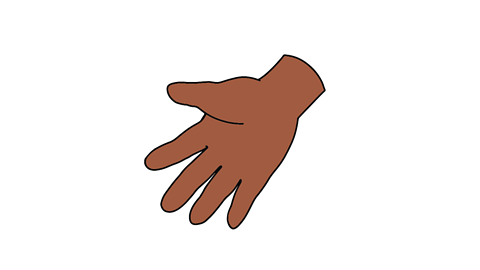
1 of 5
Let's experiment!
Our sense of smell is powerful when it comes to tasting food. We use our sense of smell to identify around 80 per cent of the food we taste.
Sometimes if you have a cold or feel unwell, you might lose your sense of smell and it can be hard to taste food.
You can see how important your smell is by trying this experiment:
- Find a small piece of food with lots of flavour. A leaf of a herb like mint, parsley or basil will work well.
- Hold your nose with one hand.
- Put the food in your mouth with the other hand.
- Let go of your nose and find out what happens!
Did you know?
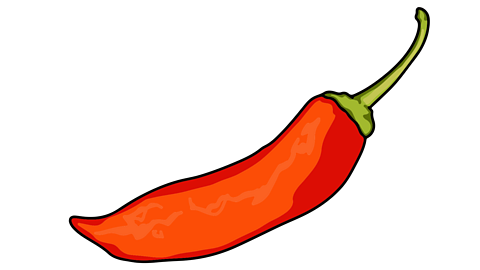
Another thing you may not know is that spicy isn’t a taste!
When you taste food that is spicy, this is actually using your sense of touch.
You might feel a hot or tingling sensation on your skin, lips, tongue and in your mouth.
Key words
| Taste buds | Taste buds are a group of cells on the tongue, roof of the mouth and back of the throat that detect taste. |
| Umami | Umami is a pleasant savoury taste, found in foods such as mushrooms and some cheeses. |
Quiz: How does food taste?
Can you tell the difference between sweet and salty, or bitter and sour? Have a go at this quiz to find out.
Race Across the Continents game - new update! game
Help this team of adventurers race their way to victory. Explore the globe in this exciting game update to discover new audio voiced by Ade Adepitan and fun animations. Challenge yourself with brand-new achievements and become a high-flyer!

More on Cooking and nutrition
Find out more by working through a topic
- count5 of 7

- count6 of 7
- count7 of 7
- count1 of 7