Key points about Bohemian Rhapsody
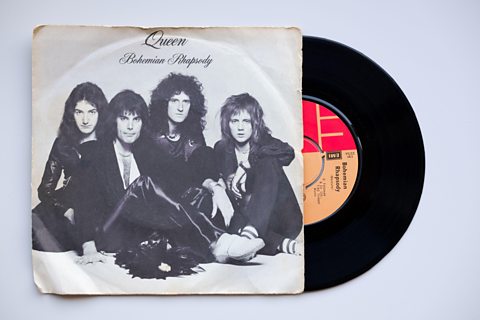
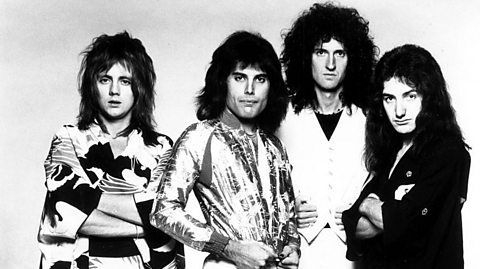
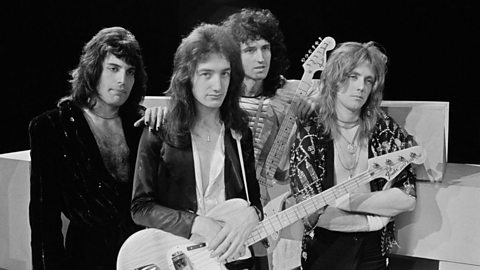
Queen were a well-known British rock band known for their close-harmony singing and guitar solos.
Bohemian Rhapsody is the lead single from Queen’s fourth studio album A Night at the Opera. It was written by their lead singer Freddie Mercury, who was known for his exceptional four octave vocal range.
It is a six-minute through-composed song with no repeating chorus. It uses contrasting styles, including rock, ballad and a parody of operatic styles and voices.
The meaning behind the lyrics is ambiguous with Mercury only revealing that the song is about relationships. This leaves any further interpretation to the listener.

Bohemian Rhapsody is one of the three songs which are the study pieces for Area of Study 2 for your AQA GCSE listening exam.
The other two are:
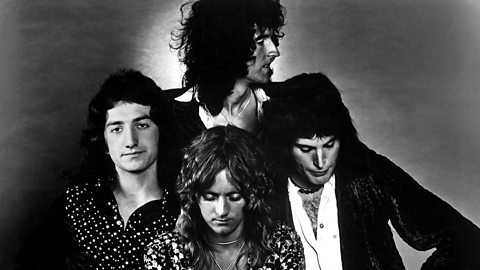
Who were the band members in Queen?
Freddie Mercury - lead vocals, piano
Brian May - lead guitar, vocals
Roger Taylor - drums, vocals
John Deacon - bass guitar
Video
Watch the video below to find out more about the structure, vocal, instrumental and other musical features of Queen's Bohemian Rhapsody.
Group singing: Is this the real life? Is this just fantasy.
Presenter: Queen or one of the most successful British rock bands of all time. Their hits included this epic track Bohemian Rhapsody.
Group singing: Open Your eyes, look up to the skies and see.
Presenter: Written by Freddie Mercury, Bohemian Rhapsody is the lead single from the album A Night at the Opera, released in 1975. It's unusual because it doesn't have a chorus. Instead, it works through four contrasting sections and ends with a coda or outro. The song opens in B-flat major and a slow 4/4, with the occasional 5/4 bars extending the vocal melody. The opening section features unaccompanied or a capella vocals, singing in a homophonic chordal texture. The melody is stepwise or conjunct.
Have a listen to the piano in bar 10 with a chromatic chord progression.
Group singing: Cause I'm easy come, easy go, little high, little low.
Presenter: Section two adds bass guitar and drum kit. The conjunct vocal melody is enhanced with backing vocals and transitions to an electric guitar solo. The solo features bends, slides, and vibrato.
Let's hear it!
Section three is an A major and the tempo doubles. It features a chromatic vocal melody line followed by disjunct loops on the words Scaramouche.
Listen out for the call and response. And the vocals and the word Galileo.
Group singing: Scaramouche, will you do the fandango?
Thunderbolt and lightning. Very, very frightening.
Singer 1: Galileo.
Singer 2: Galileo.
Singer 1: Galileo.
Group singing Galileo.
Presenter: The key changes to E-flat major. Listen to this chromatic melody. It's unusual for the drums to echo the vocal line.
Group singing: He's just a poor boy from a poor family. Spare his life from this monstrosity.
Presenter: Queen, experimented with new musical technology, and panning the mix from left to right was groundbreaking. Like this.
Group singing: We will not let you go (let him go).We will not let you go (let me go).We will not let you go (let me go).Let me go go go go.
Presenter: Section four starts in E-flat with an instrumental solo of classic rock drums. The vocal melody uses triplets.
Group singing: So you think you can stone me and spit in my time?
Presenter: Finally the coda slows, the texture thins to an instrumental solo, and then to just Freddy's voice and piano.
Singer 3: Nothing really matters to me.
Presenter: The music moves from C minor to finally end on F major to close.
Structure
The structure of this song is different from a typical rock song of the 1970s. Instead of a verse-chorus structure, this is through-composed, ie no repeating sections. There are four contrasting sections with a coda, or outro, at the end.
Section 1 - A cappella
This is in B flat major and opens with a cappella, unaccompanied close harmony vocals, which is sung in a homophonic texture.
Section 2 - Pop ballad
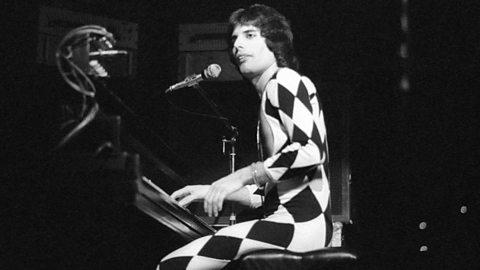
This is also in B flat major in a pop ballad style, with a solo voice accompanied by a piano and then a guitar solo.
Section 3 - Operatic
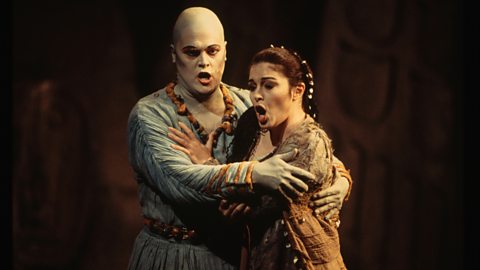
This begins in A major and is a parody of operatic styles. It is faster and includes more of the chromatic movement heard at the start of the song.
Section 4 - Rock
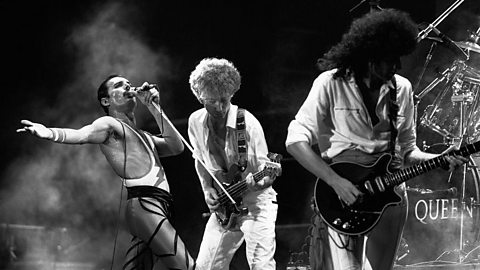
This is a rock section based in E flat major. The guitar and drums drive the music forward here.
Coda
The song finishes with voice and piano on an F major chord. This is the dominant of the opening key - B flat major - and makes it feel unfinished.

Question and answer
Which section of Bohemian Rhapsody does this musical notation show?
This chromatic movement is from section 1 and is one of the few repeating ideas in the song. We also hear it at the start of the operatic section, and a suggestion of it in the penultimate bar. This also demonstrates the homophonic texture, where all the parts move in the same rhythm.
Vocal features
Different combinations of the band's vocals are used to reflect the sentiment behind the lyrics at different points of the song.
Bohemian Rhapsody makes use of Freddie Mercury’s unusual voice - he was capable of virtuosic singing. There are occasions when he sings incredibly high A singing method used by males (usually tenors) to achieve notes higher than those that are in the ‘normal’ range., whereas other times he belts high in his chest voice - which can sound a bit like shouting.
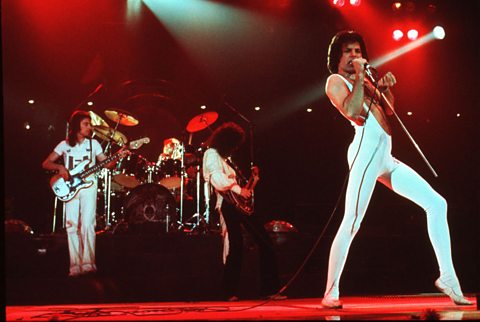
The backing vocals play a number of roles in the song. For example:
At the start we hear a cappella, unaccompanied, close harmony and homophonic/chordal singing.
As well as accompanying the solo voice, there are occasions when they interact with the singer.
Sometimes the backing vocals are “ooohs” and “aaahs”, but there are moments where we hear some call and response – this is when phrases are sung in a question and answer fashion by different singers (or groups of singers).
Most pop and rock songs of the 1970s had a verse-chorus structure, so this When a piece of music or song has no repeated sections, with new melodies and lyrics for each section. structure is unique.
Question and answer
Which musical styles can be found in Queen’s Bohemian Rhapsody?
- rock
- ballad
- opera
Instrumental features
Bohemian Rhapsody includes some important instrumental features. For example:
In the ballad section, the piano accompanies the vocals with arpeggios. The guitar and bass join in later in this section, something which is typical for ballads.
The staccato crotchet opening to the operatic section can be found in opera Songs for a solo voice accompanied by an orchestra. In an opera, it is usually used when a character reflects on their emotions with catchy repetitive melodies., especially for comedic characters.
At the end of the ballad section, Brian May’s guitar solo is virtuosic, with fast scalic passages. He uses techniques including slides, bends and vibrato. There is also a When the audio signal waveform of an electric musical instrument is altered or deformed. This produces a fuzzy or growling sound..
The drums feature in the operatic section by playing the same rhythms as the vocals as opposed to a steady beat. The drums drive the rock section with a rock beat.
Question and answer
Name three guitar techniques used by Brian May in his guitar solos.
- slides
- bends
- vibrato
Other musical features
There are plenty more features which make Bohemian Rhapsody unique for its genre:
Tonality - the music passes through a number of unrelated keys ending in a different one to which it started, which is very unusual for a pop song.
Harmony - the use of the added 6th at the start is unusual, along with some chromatic chords.
Tempo - there is more than one tempo, including the slow ballad sections and faster operatic and rock sections.
New music technologies - Queen explored new technologies in this song, eg overdubbing, which means repeatedly recording over their own vocal parts and panning, moving the music from left to right speakers.
Remember
The song has an unusual key structure, starting and ending in different ones. Moving to A major comes as a surprise to the listener as it is unrelated to any of the other keys.
Question and answer
What is the range of Freddie Mercury's vocals in Bohemian Rhapsody?
Freddie Mercury's vocal range in Bohemian Rhapsody was three octaves but his full vocal range was actually four octaves.
Bohemian Rhapsody quiz
More on Popular music
Find out more by working through a topic