What is Passover?
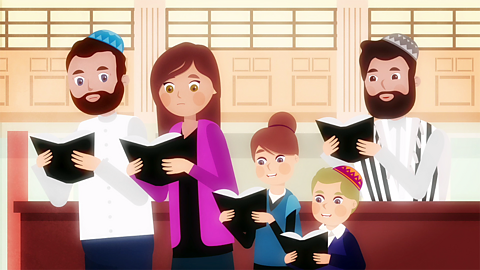
REBECCA'S FATHER: Can you two tell us why we celebrate Pesach, or Passover?
YA'EL: Okay. A long time ago the Jewish people were slaves in Egypt. God had the prophet, Moses, tell the Pharaoh to free them, but Pharaoh said “No.”
REBECCA: So God sent 10 plagues, each worse than the one before, the last was the death of first-born sons. Yeah, but God told Jewish people to put lamb’s blood on their front door so the Angel of Death would pass over their houses. That’s why we call it Passover.
REBECCA'S FATHER: Very good. And then Pharaoh changed his mind and let our people go.
YA'EL: That’s right, and what do we do to remember this?
REBECCA: We have a Seder, or Passover meal.
YA'EL: And read the Haggadah, which tells the Passover story and guides us through the meal. It also says which six things go on a Seder plate and what part of the story they represent.
REBECCA: And how Jewish people made bread for the journey but had to leave so quickly, they didn’t have time to let it rise. So now we only eat Matzah, or flat unleavened bread, during Passover.
REBECCA'S FATHER: Well you two are very clever. Hands up, who wants to start reading?
BOTH: Me!
Passover is a celebration of the story of Exodus. During Passover, Jews remember how their ancestors left slavery behind them when they were led out of Egypt by Moses. Passover is celebrated with a series of rituals. Each ritual symbolises a different part of the story.
When is Passover?
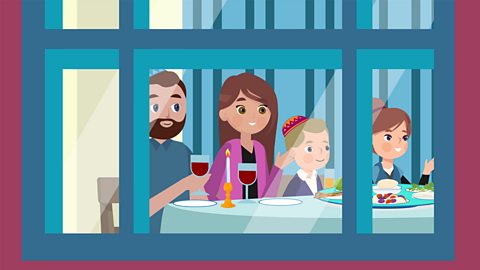
Passover (or Pesach in Hebrew) is one of the most important festivals in the Jewish year.
It is a Spring festival that begins on the 15th day of Nisan, the first month of the Jewish calendar.
The celebrations last for seven or eight days, depending on where you live.
In 2025 Passover begins on the evening of Saturday 12 April.
What is the story of Passover?
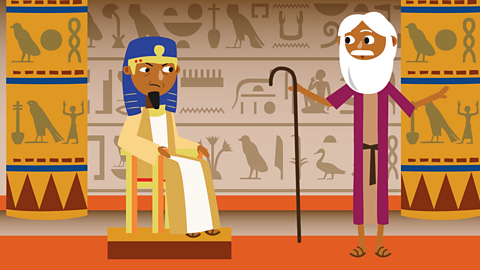
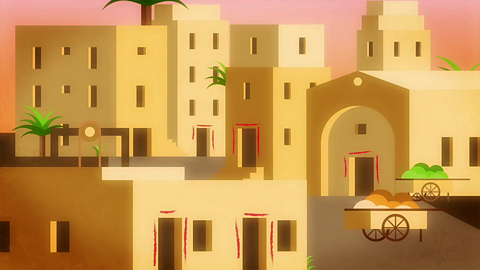
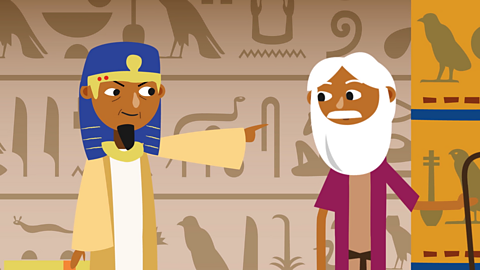
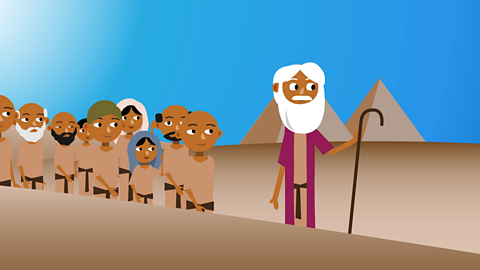
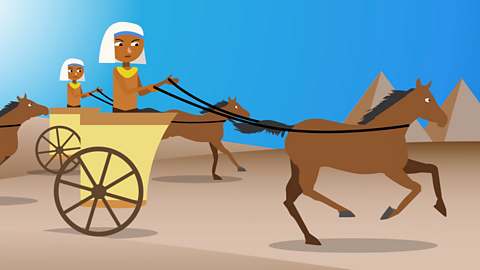
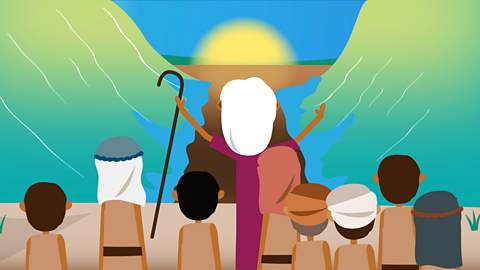
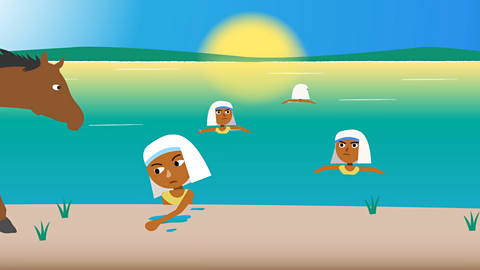
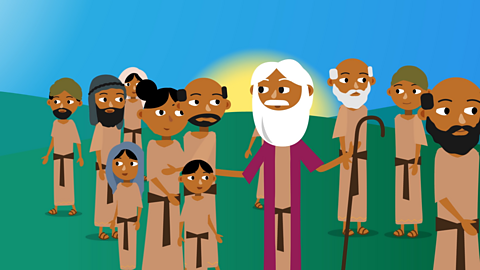
Image caption, Moses lived in Egypt. He saw that the Israelites were being persecuted so he went to see the pharaoh. Moses asked the pharaoh to set the Jewish people free, but the pharaoh refused.
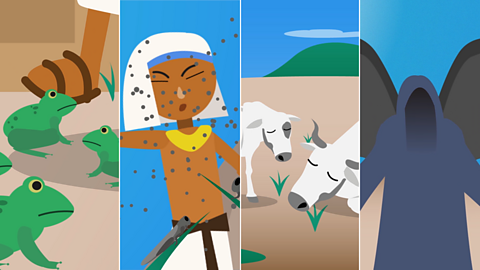
1 of 9
Click on the picture to learn about the ten plagues
How is Passover celebrated?
On the evening before Passover starts, Jews have a special service called a Seder (Order). This takes place over a meal with family and friends at home.
During the meal, the story of Exodus is told from a book called the Haggadah (Narration). Everybody takes part in reading from the Haggadah. Some parts are read in Hebrew and some parts are read in English.
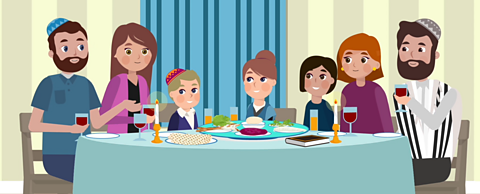
Everyone at the Seder has a cushion to lean on. This reminds them that they are now free people and no longer enslaved. They also sing lots of songs.
The Seder plate
Click on the Seder plate to learn the significance of the six items.
Matzah
On the table there are three Matzah (bread that is flat because it has not risen). At the start of the Seder, the middle Matzah is broken and the largest piece is hidden. During the Seder the children hunt for it. The one who finds it receives a small prize.
Wine
Four small glasses of wine remind Jews of the four times God promised freedom to the Israelites. An extra cup of wine is placed on the table and the door is left open for the prophet Elijah. Jews believe that one day, Elijah will reappear and he will announce the coming of the Messiah.
Activity: Thinking points

Have a look at the thinking points below. You can discuss them with somebody else if you want to. There are no right or wrong answers so remember to be respectful if somebody else has a different thought or opinion.
- Why do you think it was so hard for the Israelites to leave Egypt? What kind of challenges do you think they faced during their journey to freedom?
- Why do you think Jewish people use symbolic foods in the Seder? How can food help us remember important events and lessons? Use the Seder plate to help you.
- Do all families have ways of remembering together? Would you like to share a time when your family had fun remembering?
Activity: Passover Quiz
Resources for teachers
Looking for more resources about Passover? In this series of short videos, 11-year-old Charlie explains his religion of Judaism, it's Bat Mitzvah year for 13-year-old Me-Me and 10-year-old Solly celebrates Passover.
BBC Bitesize for Teachers has thousands of free, curriculum-linked resources to help deliver lessons - all arranged by subject and age group.
Where next?
Play BBC Bitesize educational games! game
Fun, interactive games for children aged 4-11, with maths, English, science, history and many more subjects.

More on Judaism
Find out more by working through a topic
- count3 of 4
- count4 of 4
- count1 of 4