Weather and climate
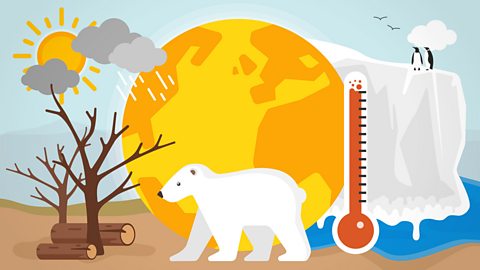
Weather is the day-to-day conditions of the atmosphere.
Climate is a long-term pattern of weather which happens over many years in a specific area.
Watch: Learn how weather and climate affect UK cities
Find out how flooding affects North Yorkshire.
The UK has what’s called a temperate climate, which means we have warm summers – well, some might argue with that – and we have cold winters, like today. And it’s usually during winters that weather and climate can cause some major problems…
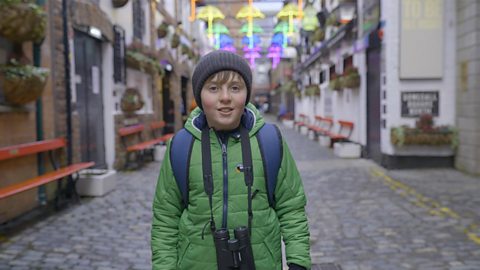
Hi, I’m Tianna and I’m in Hebden Bridge in West Yorkshire. You might be wondering what the difference between weather and climate is. Basically, it’s time.
Weather refers to short term or daily changes. Climate is the weather pattern over a long period of time. So, although the weather can be hot and sunny one day in Hebden Bridge, the climate is mild and wet - and that can cause flooding.
Hebden Bridge is at risk of flooding, not just because of its climate… but also because of its location. It is in a narrow, steep-sided valley where a canal and three rivers meet.
The rivers sometimes contain so much water that they burst their banks and flood the town. That can destroy people’s businesses and homes.
It rains often here, sometimes so much that the town and nearby fields that farmers use for crops and animals get flooded. And that can cause food shortages for a lot of people.
Because the world is heating up, the climate here is changing and creating more storms, more rain and so… more flooding. But Hebden Bridge is receiving help from the government to raise and strengthen river walls.
And to improve protection to riverside properties, drainage, canal overflow, and pump houses, which is where water is pumped off the streets.
Some people have suggested making the rivers all bendy, shaped like an 'S', so that they slow the flow of water. That’s how they used to meander naturally.
A lot of our rivers, like the Calder, were straightened out when we built towns or farms, but now that’s having a negative effect. Also, by removing trees and soil for buildings, the water doesn’t get soaked up like it should and stays on the surface.
Water from rivers, canals and rain that runs off hillsides and roads is called ‘surface water’. But some places are affected by water under the surface, called ‘ground water’.
Ripon in North Yorkshire is one of the most common areas in the UK for sinkholes. The city sits above a layer of gypsum, which is a water-soluble rock.
That means water can soak into and dissolve it. Ripon has ground water that comes from underground streams, and that eventually destroys the gypsum rock. Surface water also trickles down into the gypsum over time.
Large underground caves form that can collapse and create big holes in the surface - sinkholes. A whole house fell into one not long ago.
Does weather and climate affect where you live?
Location and climate
Each of the world’s regions has a specific climate and it depends on:
how far away it is from the coasts and oceans
its altitude - how high it is above sea level
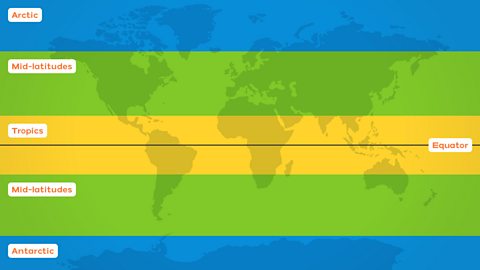
its latitude - how far away a region is from the Equator. In other words how far north or south somewhere is.
This affects climate because the Equator gets much more heat from the Sun than the North Pole and South Pole, because of the shape of the Earth. The Equator is closer to the Sun, which means that the rays from the Sun don't fall evenly on Earth.
The UK climate
The UK is in a temperate climate zone, which means that there are four seasons.
The winters are cool and wet, and the summers are warm and wet; temperatures usually stay mild with rare extremes.
The climate of the UK is mainly influenced by:
• ocean currents of different temperatures
• cold air travelling from the polar regions
• western wind that brings moisture.
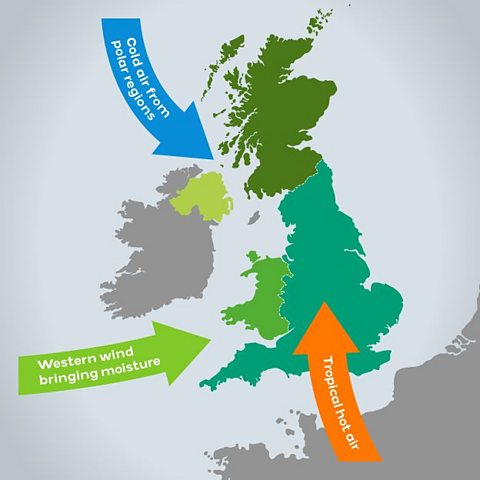
The mountains in the north and west of the UK force the wind to rise and cool, which results in more clouds and rain. That is why Northern Ireland, Wales and the western parts of England and Scotland are the regions with the most wind and rain.
This is because of the altitude, which is how high somewhere is above sea level. When an area has high altitude, there is lower air pressure which creates cooler temperatures.
In the summer, hot air from Africa often reaches the south-east of England, which is generally a warmer region.
Extreme weather and its effect on people
Sometimes, there can be extreme weather events, which can have a great impact on people’s lives and the ecosystem in the area. Some of them are:
Droughts
When do droughts happen?
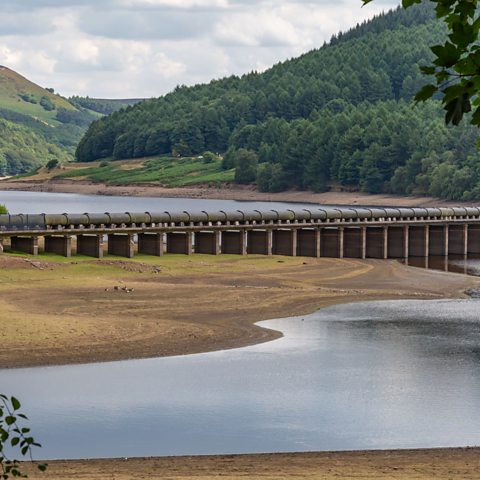
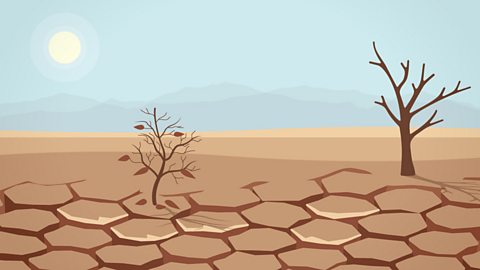
Droughts happen when there is little or no rain or snow for a long period of time.
This can happen because of changes in the winds that bring the rain or ocean currents, which affects the temperature and moisture of the air.
What are the effects?
Plants and animals can die because of lack of water
The land is dry and more in danger of wildfires
Crops in the fields can die, which affects the food supply
Rivers shrink and sometimes completely dry out
Reservoir levels are low, which means that they cannot be used to provide water to homes.
Heatwaves
When do they happen?
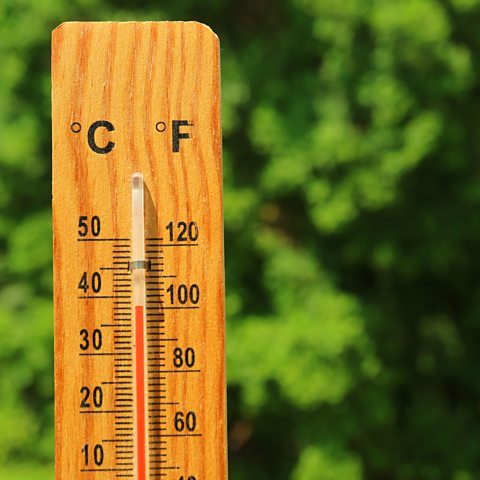
Heatwaves are when a location has periods of at least three days with higher temperatures than usual. They happen because of changes in air pressure. There is more A gas produced when humans and animals breathe out. It stops the energy from the Sun leaving the atmosphere, which warms the Earth's surface. It is also produced when burning fossil fuels such as coal and oil. in the atmosphere which makes heatwaves more likely to happen.
What are the effects?
People and animals’ lives can be in danger
The heat can damage roads and railways, used to transport water, food and even energy
Heatwaves can start wildfires and droughts.
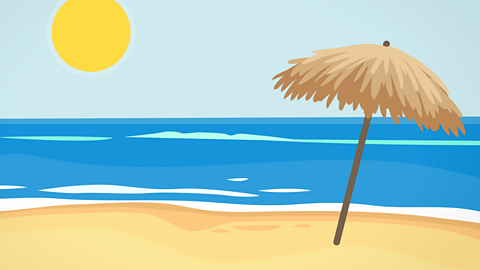
Floods
When do they happen?
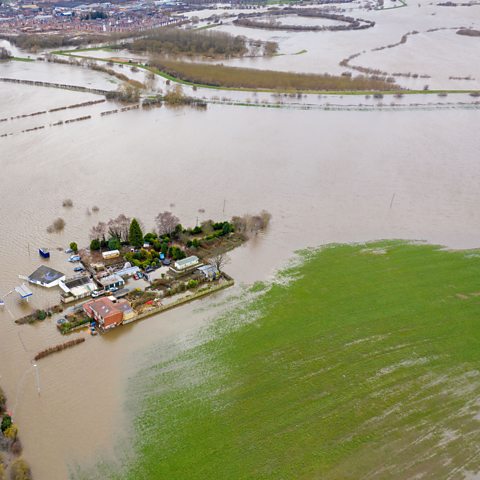
Floods happen when water overflows onto land. This can be because of a long period of heavy rain, sudden heavy rain or even by a broken dam. Sometimes, floods are also caused by earthquakes or tsunamis.
What are the effects?
People and animals can die
Homes and buildings are destroyed
The floods can bring pollution and debris with them, which then affects the environment
The habitats of animals can be destroyed.
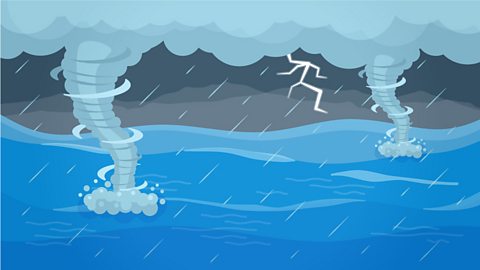
Human activity and how it impacts weather and climate
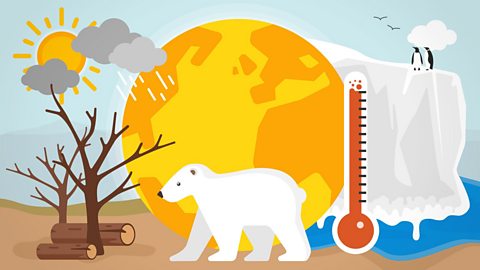
Extreme weather, such as floods, hurricanes and heatwaves, are becoming more frequent in the UK.
One of the reasons is climate change and the rising temperature of the Earth.
Climate change is caused by both nature and humans.
Greenhouse gases play a big part in global warming as they stop the heat leaving the Earth.
Greenhouse gases are released:
during the burning of fossil fuels to power cars and make electricity
from fridges and aerosol cans
from A placed used for storing waste. and waste
Activity
Quiz: Weather and climate
Game - Climate Detectives
THE REGENERATORS

Race Across the Continents game - new update! game
Help this team of adventurers race their way to victory. Explore the globe in this exciting game update to discover new audio voiced by Ade Adepitan and fun animations. Challenge yourself with brand-new achievements and become a high-flyer!

More on Geography of the UK
Find out more by working through a topic
- count8 of 17
- count9 of 17

- count10 of 17
- count11 of 17