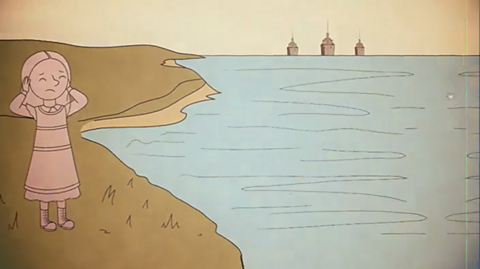
What is propaganda?
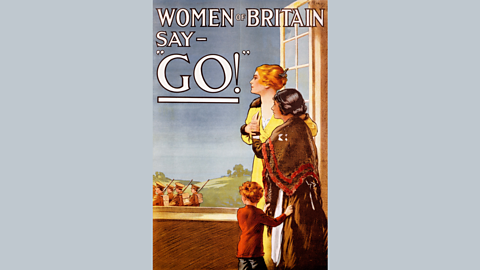
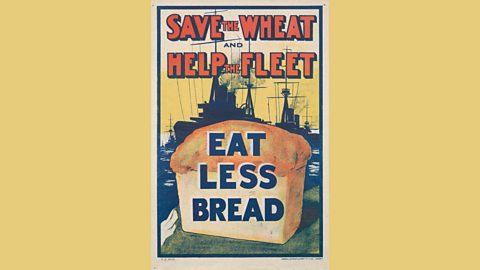
Propaganda is used to try to make people think a certain way.
Stories about bad things the Germans had done were told to make people want Britain to beat them in the war.
Germany told similar stories about Britain.
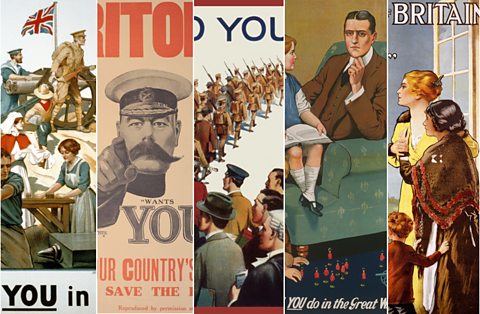
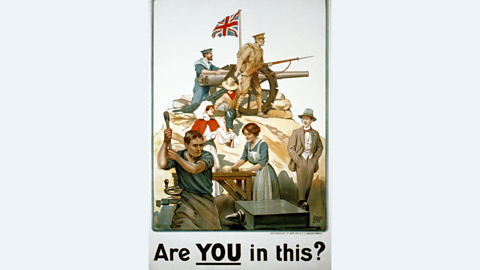
The Government needed lots of soldiers. They designed posters to make men want to join the army.
How were posters used?
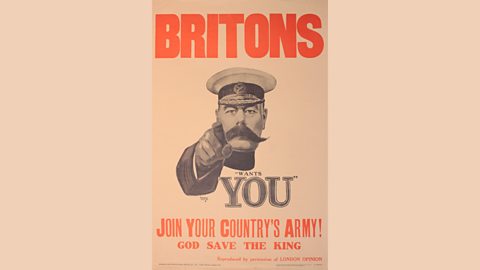
Image caption, This famous poster used the face of Lord Kitchener to persuade men to join the army. Kitchener died when his ship hit a German mine.
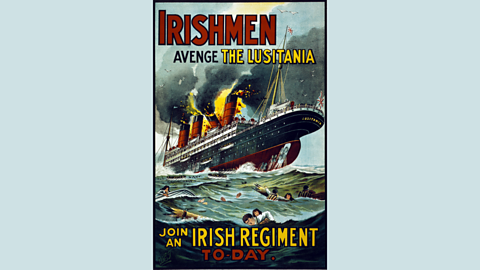
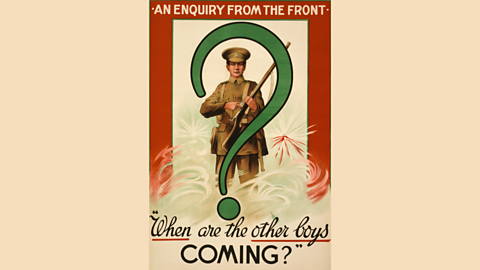
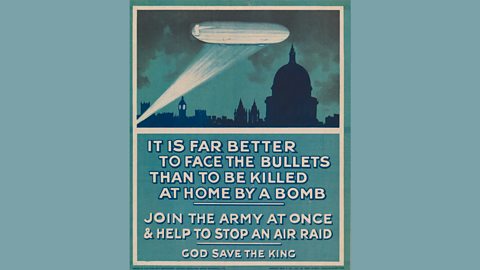
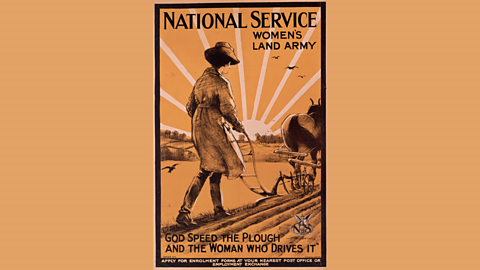
1 of 8
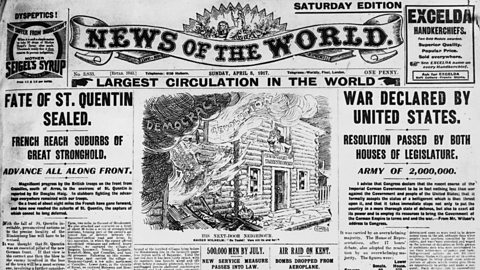
What did newspapers report?
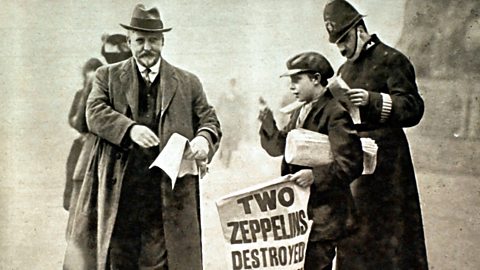
Image caption, People in Britain wanted to know what was happening
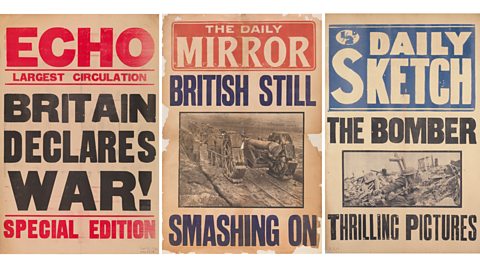
But the Government knew spies might read the papers. A law was passed to stop newspapers from printing information which could help the enemy or make British people feel unhappy about the war.
1 of 3
How did reporting change?
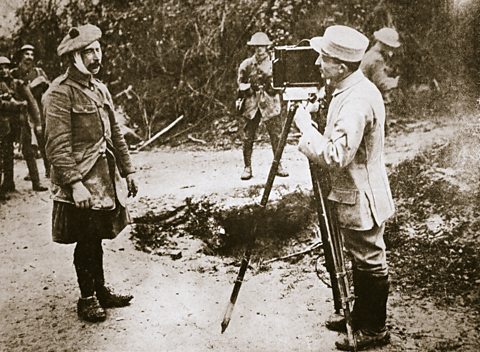
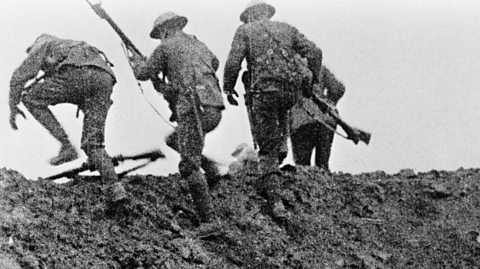
In August 1916, a famous British film was shown in cinemas about The Battle of the Somme.
It was the first time people at home could see soldiers in the trenches, guns firing and wounded men.
Filming and reporting from the Front let people find out what was really happening in the war.
Although it was sad, people were glad that they could finally see it.
Activities
Activity 1: Explore these posters
Posters were very carefully designed with words and images which had a special effect on the viewer.
There are three famous posters below.
Click on the posters to find out how they were used for propaganda.
Activity 2: Quiz - World War One Propaganda
Activity 3: History Explorer game
Play this game to test your knowledge and learn even more facts about World War One.
History Explorer: Secrets through time
History Explorer: Secrets through time: KS2 History
Horrible Histories: Raid and Trade game! game
Play Horrible Histories: Raid and Trade KS2 History
More on World War One
Find out more by working through a topic
- count34 of 43

- count35 of 43
- count36 of 43
- count37 of 43