Why were animals useful in World War One?
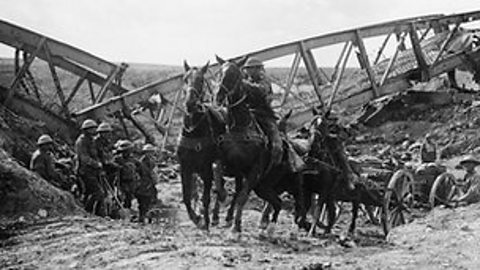
- Before 1914 wars had mainly been fought by cavalries (soldiers who fought on horseback).
- Now millions of horses were used to carry people and supplies.
- Many other animals played a big part in the war as workers and mascots.
Watch: How animals helped soldiers
Watch our video to find out more about animals in war.
[SNARE DRUM]
DOG: Did members of your family fight or help in World War One?
Well guess what? Mine did.
WARTIME DOG: [PANTING] Sorry, I can’t stop now! I’m on an urgent mission.
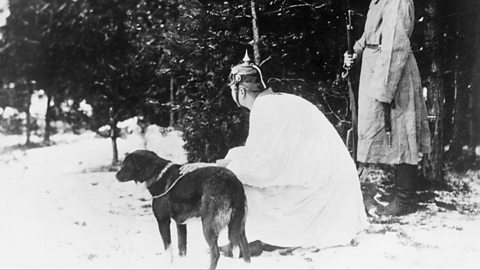
And it’s not just me. There are thousands of dogs here on the battlefront.
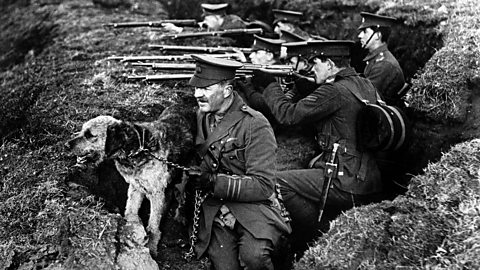
Take my pal Bully. He’s a mascot for a Batallion. It really cheers them up ‘aving him around.
LIGHTENING: [PANTING] Coming through, make way!
WARTIME DOG: That’s Lightening.
She carries urgent messages. Fast as a bullet.
She’s great at running across these difficult battlefields and she’s very brave.
SNIFFER DOG: Psst! Yesterday I got a whiff of a spy over a thousand metres away.
WARTIME DOG: It’s true! Some of us can sniff out the enemy.
Others are trained to keep watch for them and we’re not the only animals out here.
HORSE: These battlefields are too tough for vehicles but horses are strong and we can get through the mud.
Before the war I worked on a farm.
HORSE 2: I was a family pet. We needed to walk for days and days carrying equipment, carrying food, carrying wounded men. But we keep going!
WARTIME DOG: By the end of the war millions of them will have died but they keep going.
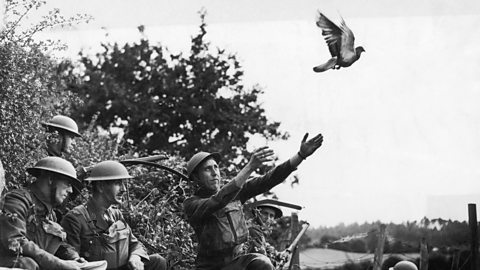
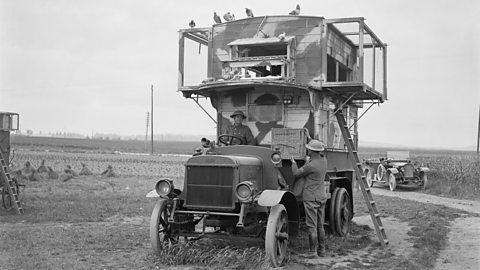
PIGEON: So do we! Do you wanna get an urgent message from the front line to HQ?
Then use a pigeon!
We’re fast, hard to shoot down and we can always find our way home.
That’s why there are 100,000 of us out here.
WARTIME DOG: Even the smallest animals can help out.
These glow worms give off a natural light so they are very useful for soldiers in the dark trenches.
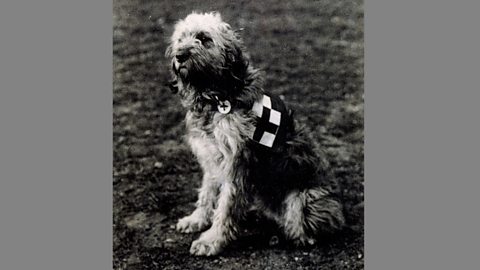
In my job to find and help wounded and dying soldiers I carry medical supplies with me.
DOG: I’m proud of the job my family did on the battlefield.
And maybe, when you next see a pigeon fly past or a horse galloping in a field or when you throw me one of those great crunchy sticks, you’ll remember all the animals that helped in the war.
CHILD: Good boy!
What jobs did animals do?
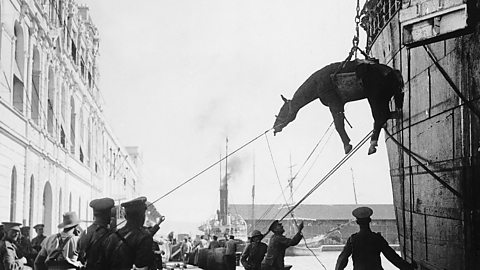
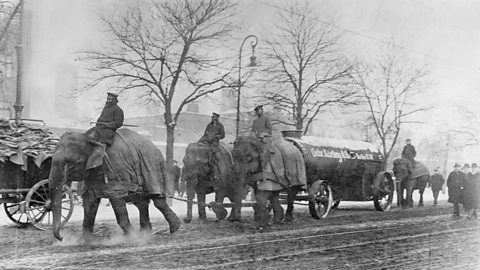
Image caption, Horses carried wounded soldiers or weaponry
They had to be strong as fully armed and equipped soldiers were heavy. In total, around 8 million horses from all sides died during the war.
1 of 7
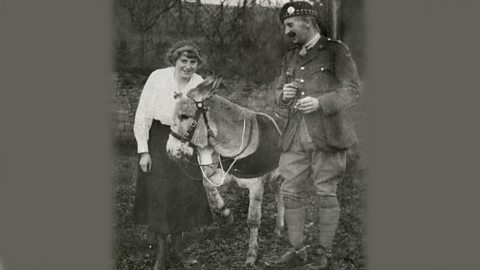
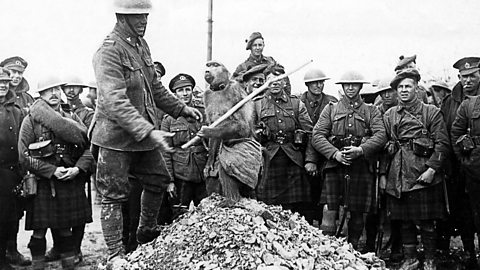
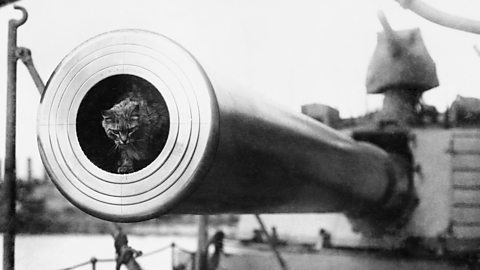
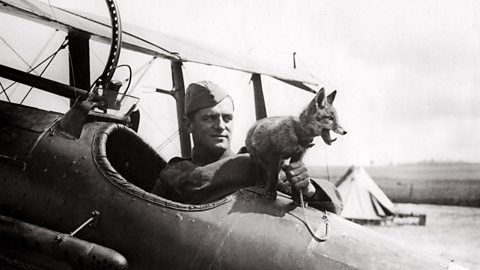
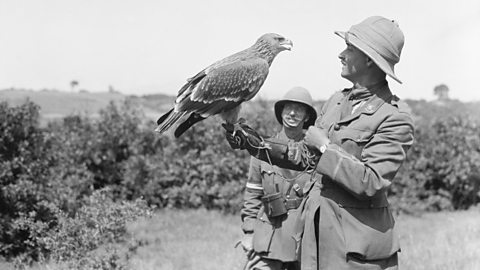
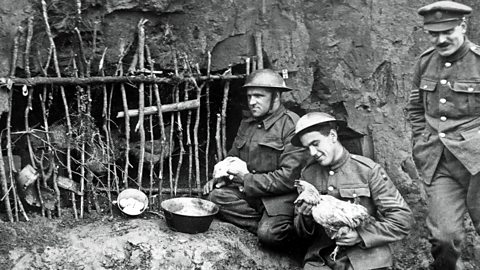
Which animals were pets and mascots?
- Image source, © IWM Q 12166
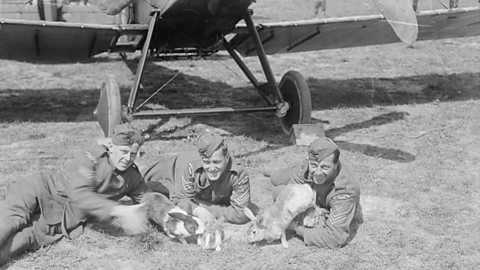
Image caption, Men of No. 59 Squadron RAF with their pet rabbits at Vert Galland Aerodrome, 15 May 1918.
1 of 8
Rats
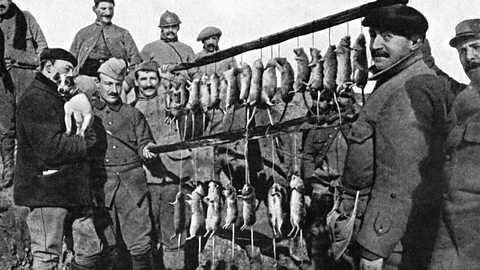
Soldiers hated rats as they were smelly and spread diseases. They tried to get rid of them using clubs, bayonets and even guns.
Activity 1: Quiz – Animals during World War One
Horrible Histories: Raid and Trade game! game
Play Horrible Histories: Raid and Trade KS2 History
More on World War One
Find out more by working through a topic
- count36 of 43

- count37 of 43
- count38 of 43
- count39 of 43