Choosing materials

When we need to choose a material for a particular job, we conduct experiments to find out which material will have the best properties.
If we are testing different materials to find out which would be the best for the job, this is called a comparative test, as we are comparing different materials.
The job that we want the material to do will determine which properties we want the material to have. This will be the property that we will need to test each material for.
It is important to make our experiments fair. This usually means keeping things the same when comparing the different materials, so that it is a fair comparison.
Watch: Testing materials
Learn about everyday uses of materials.
Good morning! Lovely day outside. Hmm.
Windows are made of transparent materials like glass or clear plastic because if they were made of opaque materials such as wood, well it wouldn't work would it?
Skateboards are made of strong, rigid materials such as wood because if they were made of flexible materials such as rubber that wouldn't work either.
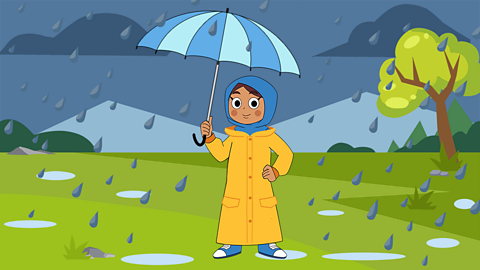
Umbrellas are made of waterproof fabric or flexible plastic because if they were made of absorbent materials such as wool it wouldn't work.
Chairs they're made from strong materials such as wood, plastic or metal because if they were made from weak materials such as paper. Yeah you've guessed it.
Teacups are made from heat resistant materials such as china or glass because if they were made of materials that absorb heat such as chocolate. Well I think you get it by now.
Maybe you should have stayed in bed?
Fascinating facts
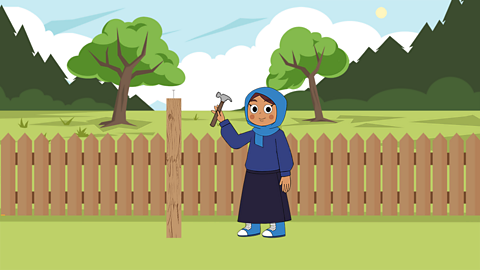
Materials can be natural, like wood, or man-made like plastic.
Glass is made from sand, heated up to over 1700°C.
Graphene is one of the strongest materials on Earth. It was developed at the University of Manchester and is made from a single layer of carbon atoms.
Wool comes from sheep and some other animals such as alpacas and goats. Wool is warm, hard-wearing and absorbent, making it perfect for the jumpers, scarves and hats we wear when it's cold outside.
Most metals are solid and strong but some metals like mercury are liquids.
Seawater contains microscopic traces of gold, a metal which can be used to make jewellery.
Most medieval castles in the UK are made from stone. Stone was plentiful and strong for defence.
Slideshow: Using the right materials

Image caption, A tent
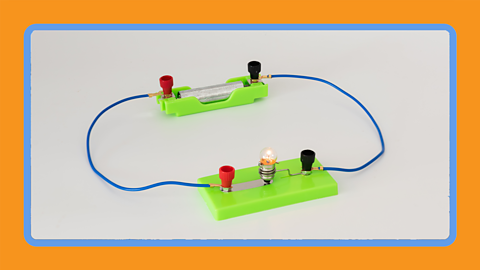
If we are trying to build a tent to protect us from the rain, we will want to find the material that is the most waterproof.



1 of 5
Scientific investigation for testing materials
Here is an experiment that you could try to answer the following question:
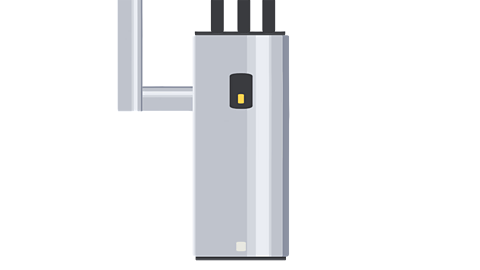
Which material would be best for insulating a hot water tank?
To find out which material would be best for insulating a hot water tank (keeping it warm), we could do this experiment.
- Take four empty aluminium drinks cans.
- Wrap a possible insulating material around each can, eg sheets of newspaper, a sheet of cotton wool, some fleece fabric, some aluminium foil.
- Ask an adult to pour some hot tap water carefully into each of the cans. Take the temperature of the water in each can using a thermometer. Write this into a results table.
- After 10 minutes, take the temperature again in each can and write it down.
- Work out which can has cooled the least. This can has the best insulation.
Your results table might look like this:
| Insulating material | Starting temperature of the hot water (°C) | Temperature of the water after 10 minutes (°C) | Change in temperature (°C) |
|---|---|---|---|
| Sheets of newspaper | 55 | 40 | 15 |
| Cotton Wool | 52 | 38 | ? |
| Fleece fabric | ? | 45 | 8 |
| Layers of aluminium foil | 56 | ? | 26 |
Can you work out the missing values from the table?
| Insulating material | Starting temperature of the hot water (°C) | Temperature of the water after 10 minutes (°C) | Change in temperature (°C) |
|---|---|---|---|
| Sheets of newspaper | 55 | 40 | 15 |
| Cotton Wool | 52 | 38 | 14 |
| Fleece fabric | 53 | 45 | 8 |
| Layers of aluminium foil | 56 | 45 | 26 |
From these results, what material would you chose for insulating a hot water tank?
If you had collected these results, you would choose fleece as the best insulating material for a hot water tank, because it kept the water the hottest.
Collecting evidence
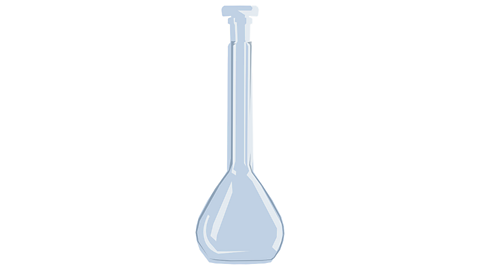
When we are carrying out experiments we are collecting evidence to find the answer to the question.
To make sure that our evidence is reliable, it is important to make our experiments fair.
This usually means keeping everything else in the experiment the same (these are called variables) and only changing the materials that are being compared, so it is a fair comparison.
As long as the experiment is fair we can use the evidence collected to find out the answer to the question, and give reasons as to why one material is better for a job than another material.
Comparative tests
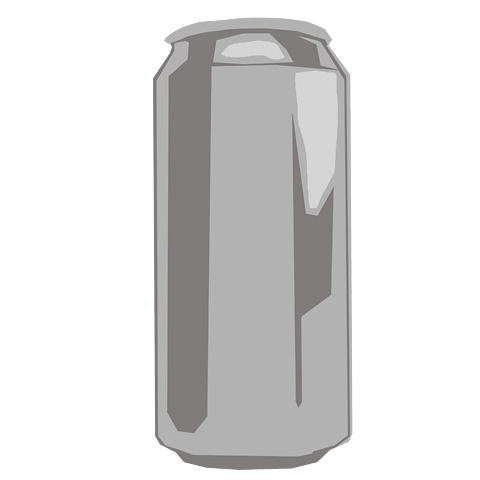
What makes our hot water tank experiment a comparative and fair test?
Think about what you need to keep the same in this experiment. What else might affect how much the water cools down? This experiment will only be a comparative test if you keep these things the same for all four cans:
- same size can
- same amount of water in each can
- same starting temperature of the water
- same length of time
- same thickness of insulating material
Keeping the thickness the same in this kind of experiment is very hard to do! You would probably need to wrap 50 or more turns of foil or paper around the can to make the insulation the same thickness as the cotton wool or fleece. Sometimes it is very hard (or impossible) to make an experiment a totally fair test.
Did you know?
Comparative and fair testing isn’t the only way that you can find out the answers to questions. You could also gather results over time, by carrying out the same investigation every hour through a day, or every day in a week.
You could also carry out investigations and look for patterns in your results to see if that will answer your question. Different types of investigation are useful in different ways – you just need to work out which one is best for the question you are trying to answer!
Important words
Comparative test – When different materials are tested to find out which would be the best one for a job.
Evidence – Scientific proof of a theory collected from an experiment.
Fair test – Keeping the variables the same for each tested material.
Experiment – A way of testing a scientific theory or prediction.
Insulating – Keeping something warm.
Material – What an object is made from.
Properties – The strengths and weaknesses of a material.
Reliable – Any information or evidence that we can trust or rely on.
Variables – The part of an experiment that is changed, for example the material.
Activities
Activity 1 – Testing materials
Activity 2 – Investigating materials
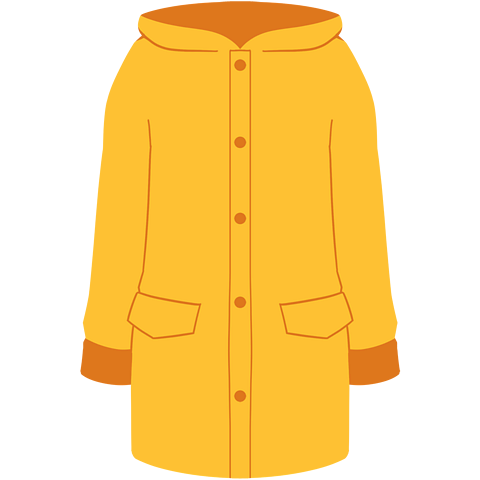
Investigate which material would be best for making a waterproof jacket
Think about which materials you could use such as:
- cling film
- paper towel
- cotton
- fleece
- kitchen foil
Before you start your investigation, make a prediction:
I predict that ____________ will be best for making a waterproof jacket because ___________.
How are you going to carry out your investigation?
- You could use a bowl, some large elastic bands to secure the different materials you are testing over the top of the bowl, and a jug with some water in.
Remember to:
- make it as fair a test as possible
- record your results clearly
- write a conclusion
Activity 3 – Design a car

New game! Horrible Science: Stinky Space. game
Join Pipette on her epic mission and learn some revolting facts about space along the way.

More on Properties and change of materials
Find out more by working through a topic
- count1 of 5
- count2 of 5
- count3 of 5
- count4 of 5