What is the government's role in social equality and justice?
Communication
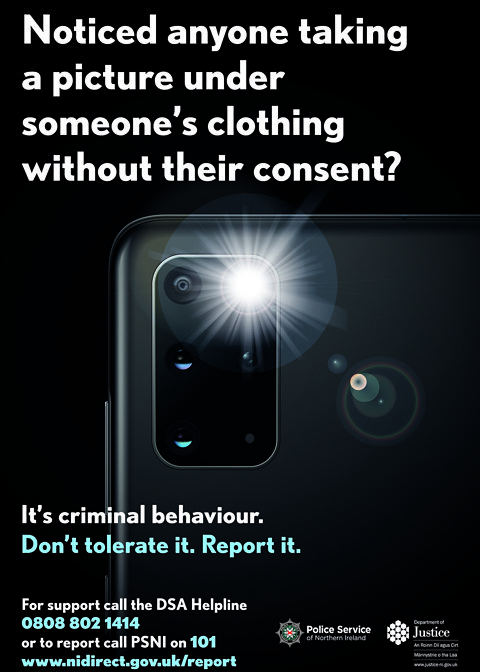
Communication with the public is one of the major tools the government can utilise to show the population how to behave responsibly and to give them information about its policies and legislation that promote social justice and social equality.
The government, in particular the Department of Justice, often run campaigns and use the following methods of communication to inform the public about relevant legislation:
- TV advertisements
- digital displays and panel advertising at bus stops and targeted places and venues
- billboards
- posters
- leaflets and flyers
Education
Through subjects such as Learning for Life and Work the government can ensure information is covered in the school curriculum.
The government can also ensure that groups that work to promote social equality and social justice are given funding to produce educational resources and have an education programme as part of the work they do. These programmes help to raise awareness of these important issues among young people.
Legislation
The government must ensure that laws protect social equality and social justice. An example of this is Section 75 of the Northern Ireland Act 1998.
The government works with key agencies to ensure laws promote good relations between all sections of the community. The justice system (police, courts and the prison service) can support legislation by ensuring people are punished for breaking the law.
Why is Section 75 of the Northern Ireland Act so important?
Section 75 is so important for a number of reasons.
- It requires public authorities to promote equality of opportunity for everyone. It ensures that individuals in its nine equality categories, which include age, race, gender and sexual orientation, have equality of opportunity.
- It requires public authorities to promote good relations between people of different religious beliefs, political opinions and racial groups. This helps to reduce tension between different groups in the workplace and society.
- It places a duty on public authorities to produce an equality scheme which outlines how they propose to meet their duties under Section 75. It encourages public authorities to actively promote equality.
- It safeguards individual rights in law and this helps to promote equality and to ensure people within the equality categories are not discriminated against.
- It helps to address social inequalities between different groups in society. This helps to reduce the impact of social inequalities on people’s lives and makes a fairer society.
Policy
Policy outlines the actions that a government take. These actions will be outlined in the programme for government, which:
- sets out targets and actions to build good community relations
- investigates areas where there may not be equality of opportunity
- ensures the causes and consequences of social injustice and social inequality issues are tackled
The actions taken should be regularly monitored, evaluated and reviewed to measure how effective they are.
What is the role of the Equality Commission for Northern Ireland?
Key facts about the Equality Commission for Northern Ireland (ECNI):
- responsible for ensuring that Northern Ireland is a fair place to work and live
- its duties were outlined in the Northern Ireland Act 1998
- working towards ending discrimination
- promoting equal opportunities
- promoting 'affirmative action', also known as positive discrimination
- promoting good relations between people of different racial groups
- makes sure that the government acts fairly to everyone
- reviews new laws to make sure they are not discriminatory.
How does the ECNI promote social justice and social equality?
Some of the Equality Commission for Northern Ireland's (ECNI) main roles are to prevent discrimination and social inequality and they do this in a variety of different ways.
- Promoting and raising awareness about equality by holding events, seminars, conferences and campaigns. Encouraging good relations and challenging discrimination through promotion, advice and enforcement of equality legislation.
- Working to reduce discrimination by promoting equality, good practice and educating people about their rights. People can learn to be more understanding and respect others who are different.
- Promoting good relations between people of different racial groups. This can help people from minority racial groups and the local community to better understand each other and reduce tension and discrimination.
- Monitoring and reviewing legislation and public policies to ensure that they do not breech equality legislation and make recommendations including equality law reform.
- Conducting research and evaluations on equality, discrimination and related areas. The research is used to inform approaches to equality policy and practice. This helps to safeguard the rights of individuals and minority groups and prevent discrimination.
- Providing advice, support and training for employers and service providers on equality legislation and their statutory obligations and also providing codes of good practice.
- Overseeing the effectiveness of Section 75 equality, good relations duties and disability duties on public authorities. Helping employers ensure they comply with equality legislation and good practice.
- The ECNI has investigative and enforcement powers and can investigate complaints and ensure that employers comply with equality legislation.
What is the NI Human Rights Commission?
Key facts about the NIHRC
The NIHRC is an independent public agency whose main purpose is to promote awareness of the importance of human rights in NI.
It reviews existing law and examines proposed laws to ensure they are in line with international human rights standards. Other work includes:
- conducting research into human rights issues
- promoting human rights
- providing resources for schools to promote human rights education
- providing training in human rights
What is the role of the NI Human Rights Commission?
- To advise government on its obligation to uphold human rights. This also involves lobbying government when changes need to be made to services.
- Bill of Rights – the NIHRC is specifically charged with drafting a Bill of Rights to supplement the European Convention on Human Rights.
- To educate society by promoting an awareness of human rights in places like schools or the police service. The NIHRC also produce educational resources.
- To protect human rights ensuring that the Government and other bodies uphold peoples’ human rights.
- To litigate - the Commission has the power to conduct investigations, to assist individuals when they are bringing court proceedings and to bring court proceedings itself.
- Reviewing human rights – the NIHRC is involved in debating and discussing the way that government and public bodies treat us to ensure that new or existing laws meet our needs and are in line with international human rights standards.
What is civil society's role in promoting equality and social justice?
Civil society is the name given to all the groups in society who represent citizens’ interests. It is distinct from government and business. Non-government organisations (NGOs) are prominent parts of civil society.
The following groups are considered part of civil society:
- family
- Non-Governmental Organisations (NGOs)
- voluntary groups
- community groups
- charities
- clubs and societies
- social media groups
- trade unions
- religious groups/church
How can NGOs promote equality and social justice?
Watch: Government and civil society video
More on Government and civil society
Find out more by working through a topic
- count3 of 3

- count1 of 3