Key points about social activities
The An irregular verb does not follow a set pattern. verb aller (to go) is one of the most used verbs in French.
Aller is useful to talk about travel and transport in the present, past and future The tense of a verb shows when the action took place. Present, future and perfect are all tenses..
Time phrases help to determine what tense the action takes place in.
There are four different ways of asking questions in French.
This guide contains a video as well as listening and reading practice.
Video - Describing personal and social activities
Watch the video of Adnane describing the personal and social activities he enjoys doing.
Adnane describes the activities he enjoys doing using verbs in the present tense
Que fais-tu pendant ton temps libre ?
Je pense qu’avoir un passe-temps est très important, même après avoir quitté le collège. C’est vrai que après une journée de travail ou une journée de cours, il faut prendre le temps de faire quelque chose qu’on aime, pour se relaxer. C’est ça, avoir une bonne vie bien équilibrée !
J’aime être actif, parce que pendant ma journée au travail, je ne bouge pas beaucoup, et ça, ce n’est pas bien pour la santé.
Ce qui me plaît le plus, c’est la danse. J’essaie de danser le plus souvent possible. Quand je danse, ça m’aide à m'exprimer et je me sens libre. Apprendre à danser m’aide aussi à apprendre de nouvelles choses. Par exemple, récemment, j’ai commencé à jouer au foot. Le mois dernier, je suis devenu membre d’un club de foot pour la première fois. J’aime bien y aller pendant la semaine, après le travail. J’aime aussi jouer avec mes amis.
Ouais, ouais !
J'aime aussi la boxe et jouer au basket. Le week-end prochain, je joue au basket. Je m’amuse bien, ça me détend et je me fais des nouveaux amis. C'est top !
Ça, c'est une dinguerie ce truc.
Quand je ne fais pas de sport, je mange du chocolat. Eh oui, mon petit plaisir, c'est le chocolat. Mon chocolat préféré, c'est le chocolat au caramel-beurre salé. Il faut absolument y goûter !
Par contre, il y a une chose que les Belges adorent mais que moi, je n'aime pas du tout, c'est le nougat. Mes amis aiment ça, mais pas moi.
Translation
What do you do in your free time?
I think that having a hobby is really important, even after leaving school. It’s true that after a day of work or a day of classes, you need to take the time to do something you love, to relax.
That’s what having a good, balanced life is all about!
I like to be active because during my day at work, I don't move much and that's not good for my health.
The thing I enjoy the most is dancing. I try and dance as much as possible. When I dance I can express myself and I feel free.
Learning to dance also helps me learn new things. For example, recently, I started playing football. Last month I became a member of a football club for the first time. I like to go there during the week, after work.I also enjoy playing with my friends.
Yeah, yeah!
I also like boxing and playing basketball. Next weekend, I'm going to play basketball. I have fun, release stress, and it’s a great way to make new friends. It’s great!
This thing is crazy good.
When I’ve stopped playing sports, I eat chocolate. Yeah, my simple pleasure is chocolate. My favourite chocolate is salted caramel chocolate. You must try it!
However, there’s one thing that Belgians love that I don’t like at all, nougat. My friends love it, but not me.
Vocabulary - Going out, eating out and going shopping
Useful verbs to describe going out, eating out and going shopping include:
| French | English | French | English |
|---|---|---|---|
| Check your connection, refresh the page and try again. | to buy | Check your connection, refresh the page and try again. | to watch a film |
| Check your connection, refresh the page and try again. | to go to the cinema | Check your connection, refresh the page and try again. | to relax |
| Check your connection, refresh the page and try again. | to go to town | Check your connection, refresh the page and try again. | to meet friends |
| Check your connection, refresh the page and try again. | to celebrate | Check your connection, refresh the page and try again. | to reserve a table |
| Check your connection, refresh the page and try again./Check your connection, refresh the page and try again. | to chat | Check your connection, refresh the page and try again. | to laugh |
| Check your connection, refresh the page and try again. | to try on clothes | Check your connection, refresh the page and try again. | to go out |
| Check your connection, refresh the page and try again. / Check your connection, refresh the page and try again. | to go to town | Check your connection, refresh the page and try again. | to visit sites |
| Check your connection, refresh the page and try again. | to eat |
Grammar - The verb 'aller' (to go) in the present, past and future
One of the most commonly used verbs in French is the verb aller (to go). It is irregular, which means it does not follow the regular pattern of other verbs. It has to be learned separately.
Click on Show more below to see how to A verb that has changed from the infinitive to show which person or people are doing the action or the tense the verb is in. aller in the three most common tenses:
present
perfect (past)
immediate future
The A verb that describes an action that is happening now or that happens regularly, eg I eat breakfast every day. of aller (to go)
| French | English |
|---|---|
| Check your connection, refresh the page and try again. | I go |
| Check your connection, refresh the page and try again. | I go |
| Check your connection, refresh the page and try again. | I go |
| Check your connection, refresh the page and try again. | I go |
| Check your connection, refresh the page and try again. / Check your connection, refresh the page and try again. | we go |
| Check your connection, refresh the page and try again. | you (plural infomal, singular formal go) |
| Check your connection, refresh the page and try again. | they (masculine) go |
| Check your connection, refresh the page and try again. | they (feminine) go |
For example:
Je vais en ville le week-end. - I go to town at the weekend.
Nous allons à un match de foot. - We go to a football match.
Tu vas au parc cet après-midi ? - Are you going to the park this afternoon?
The perfect (past) tense
| French | English |
|---|---|
| Check your connection, refresh the page and try again. | I went |
| Check your connection, refresh the page and try again. | you (singular, informal) went |
| Check your connection, refresh the page and try again. | he went |
| Check your connection, refresh the page and try again. | she went |
| Check your connection, refresh the page and try again.(e)(s) | we went |
| Check your connection, refresh the page and try again.(e)(s) | you (plural informal, singular formal) went |
| Check your connection, refresh the page and try again. | they went |
| Check your connection, refresh the page and try again. | they (feminine) went |
For example:
Hier soir je suis allé au cinéma. – Last night I went to the cinema.
Le week-end dernier nous sommes allés en ville pour faire du shopping. – Last weekend we went to town to go shopping.
La semaine dernière mes amies sont allées dans un restaurant. – Last week my (female) friends went to a restaurant.
The immediate future tense
The immediate future tense is the most common way of talking about future plans. It is formed with the present tense of aller (to go), followed by the infinitive.
| French | English |
|---|---|
| Check your connection, refresh the page and try again. | I'm going to go |
| Check your connection, refresh the page and try again. | you (singular, informal) are going to go |
| Check your connection, refresh the page and try again. | he is going to go |
| Check your connection, refresh the page and try again. | she is going to go |
| Check your connection, refresh the page and try again. / Check your connection, refresh the page and try again. | we're going to go |
| Check your connection, refresh the page and try again. | you (plural informal, singular formal) are going to go |
| Check your connection, refresh the page and try again. | they are going to go |
| Check your connection, refresh the page and try again. | they are (feminine) going to go |
For example:
Demain je vais aller en ville pour rencontrer des amis. – Tomorrow I’m going to go to town to meet some friends.
Le week-end prochain nous allons aller à la piscine. – Next weekend we’re going to go to the swimming pool.
Tu vas aller au restaurant ce week-end ? – Are you going to go to the restaurant this weekend?
Past, present and future - Mini quiz
Complete the following sentences:
______ ______ à la piscine.
We’re going to the pool.
Nous allons/on va
Nous allons or on va is the present tense ‘we’ form of aller (to go).
____ _____ au match de basket ?
Are you (singular informal) going to the basketball match?
Tu vas
Tu vas is the present tense ‘you' (singular informal) form of aller (to go).
Hier ____ ____ ______ au centre commercial.
Yesterday they (masculine) went to the shopping centre.
Ils sont allés is the perfect tense ‘they’ masculine form of aller (to go).
Le week-end prochain _____ _____ _____ au cinéma avec mes amis.
Next weekend I’m going to go to the cinema will my friends.
Je vais aller is the immediate future tense, which is formed with the present tense of the ‘I’ form of aller (to go) followed the verb in the infinitive, which in this case is also aller.
Listening practice
You hear a radio programme in which young people are discussing what they do in their free time. Listen to each extract and choose the answers to the questions below.
1. What does Evan like to do at the weekend?
| A | Watch football |
| B | Play football |
| C | Watch and play football |
The answer is A.
The text says J’adore regarder les matchs à la télé et au stade le week-end.
Translation - I love to watch matches on TV and at the stadium at weekends.
2. What does Evan Evan find difficult about balancing school and sport? ?
| A | He is too tired |
| B | He doesn't have enough time |
| C | His school work is suffering |
The answer is B.
The text says Avec les devoirs, je n’ai pas suffisamment de temps.
Translation - With homework, I do not have enough time.
Click on the Show more button to read the transcript and the translation of what Evan says.
Bonjour, ici c’est Evan. Mon sport préféré, c’est le foot et j’adore regarder les matchs à la télé et au stade le week-end. Je veux être footballeur plus tard et je joue pour mon club local le mercredi et le vendredi soir. Le problème, c’est l’école. Avec les devoirs, je n’ai pas suffisamment de temps.
My favourite sport is football and I love to watch matches on TV and at the stadium at weekends. I want to be a footballer and I play every Wednesday and Friday night for my local club. The problem is school. With homework, I do not have enough time.
1. What does Jade like to do in her free time?
| A | Do online shopping |
| B | Sell clothes online |
| C | Go shopping in town |
The answer is C.
The text says J’adore aller en ville pour faire du shopping avec mes copines.
Translation - I love going into town to go shopping with my friends.
2. What do Jade and her friends do to relax?
| A | They go to the cinema |
| B | They have something to eat |
| C | They try on clothes |
The answer is B.
The text says nous aimons aller manger quelque chose ensemble pour tchatter et se relaxer un peu.
Translation - we like to go eat something together to chat and relax a little.
Click on the Show more button to read the transcript and the translation of what Jade says.
Salut, ici c’est Jade. J’adore aller en ville pour faire du shopping avec mes copines. Nous rions beaucoup en essayant les vêtements. Je connais des personnes qui préfèrent le shopping en ligne mais, moi, je trouve ça ennuyeux et en plus, après le shopping nous aimons aller manger quelque chose ensemble pour tchatter et se relaxer un peu.
Hi, I’m Jade. I love going into town to go shopping with my friends. We laugh a lot while trying on the clothes. I know people who prefer online shopping but I find it boring, plus, after shopping we like to go and eat something together to chat and relax a little.
1. What does Sacha do at the weekend?
| A | Go to the park with friends |
| B | Visit interesting sites |
| C | Go to restaurants |
The answer is B.
The text says ce que nous faisons le week-end c’est de visiter les sites intéressants avec ma famille.
Translation - what we do at the weekend is visit interesting sites with my family.
2. What does Sacha say about the cost of doing this?
| A | It’s free to go to these places |
| B | Public transport costs a lot |
| C | It’s expensive to eat out |
The answer is A.
The text says n’avons pas beaucoup d’argent et c’est gratuit. La seule chose qui coûte c’est le transport public.
Translation - we don't have a lot of money and it's free. The only thing that costs is public transport.
Click on the Show more button to read the transcript and the translation of what Sacha says.
Bonjour, je suis Sacha. J’habite à Paris et ce que nous faisons le weekend c’est de visiter les sites intéressants avec ma famille. Mon père aime l’histoire et nous allons à des musées et des parcs car nous n’avons pas beaucoup d’argent et c’est gratuit. La seule chose qui coûte c’est le transport public.
Hello, I am Sacha. I live in Paris and what we do at the weekend is visit interesting sites with my family. My father loves history and we go to museums and parks because we don't have a lot of money and it's free. The only thing that costs is public transport.
Vocabulary - Talking about sport
Useful sentences to describe watching and doing sport include:
| Spanish | English |
|---|---|
| Normalement, je joue au foot deux fois par semaine. | Normally I play football twice a week. |
| Je vais au stade le week-end pour regarder un match. | I go to the stadium on the weekend to watch a match. |
| Je joue au basket tout le temps. | I play basketball all the time. |
| Hier, j’ai joué au hockey pour mon équipe. | Yesterday I played hockey for my team. |
| J’ai commencé récemment à faire de la natation. | I recently started swimming. |
| Je nage assez souvent. | I swim quite often. |
| Je jouais au rugby. | I used to play rugby. |
| Nous allons jouer au volley. | We’re going to play volleyball. |
| A l’avenir je vais me mettre en forme. | In the future I’m going to get fit. |
| Je veux essayer le ski. | I want to try skiing. |
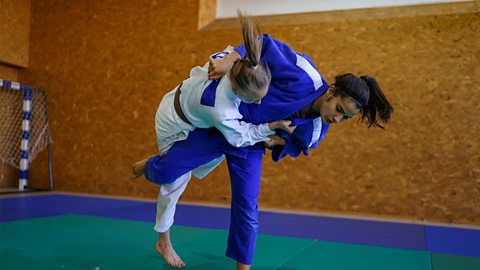
| J’aime regarder le judo. | I like watching judo. |
Vocabulary - How to use time phrases
Useful time phrases to describe when you did, usually do or will do something include:
| Past | Present | Future |
|---|---|---|
| avant - before, previously | maintenant - now | à l'avenir/dans le futur - in the future |
| l’année dernière - last year | cette année - this year | l’année prochaine - next year |
| la semaine dernière - last week | en ce moment - at the moment | la semaine prochaine - next week |
| hier - yesterday | aujourd'hui - today | demain - tomorrow |
All Foundation Tier vocabulary listed in this guide can be found on the vocabulary sheet below.
Grammar - How to form and ask questions
There are several ways of forming questions with question words in French:
Asking 'yes' and 'no' questions
There are three ways of asking 'yes' and 'no' questions.
1. Keep the word order the same as a statement, and add a question mark. You need to change the intonation of your voice to make it sound like a question.
For example:
Tu aimes aller aux concerts ? – Do you like going to concerts?
Vous allez regarder le match ce soir ? – Are you going to watch the match this evening?
2. Add Check your connection, refresh the page and try again. to the start of the question and keep the word order the same as a statement.
For example:
Est-ce que vous avez mangé ? - Have you eaten?
Est-ce qu’on va aller à la piscine ? - Are we going to go to the swimming pool?
3. Switch the verb and the The person or thing in the sentence that is doing the action. at the start of the question.
Remember to add a hyphen between the verb and the Words to replace the subject of a sentence, eg 'He read the book' instead of 'James read the book'. when writing.
If the verb ends with a vowel and the subject pronoun starts with a vowel (il, elle or on), add -t- between them.
For example:
Allez-vous courir ce soir ? - Are you going jogging tonight?
A-t-il un nouveau vélo ? - Does he have a new bike?
Asking questions with question words
Questions words in French include:
| French | English |
|---|---|
| Que/Quel(le) ? | What?/Which? |
| Qui ? | Who? |
| Quand ? | When? |
| Pourquoi ? | Why? |
| Comment ? | How? |
| Combien de ? | How much? How many? |
| Où ? | Where? |
For example:
Pourquoi aimes-tu aller à la piscine ? – Why do you like going to the swimming pool?
Quand est-ce que nous allons au restaurant ? – When are we going to the restaurant?

Asking questions using declarative sentences
You can ask questions by making a declaration and changing the intonation of your voice so that it sounds like a question.
You can also use je peux (I can) plus an infinitive to ask a declarative question.
For example:
Nous allons au match de foot cet après-midi ? – Are we going to the football match this afternoon?
Je peux aller au match ce soir ? – Can I go to the match this evening?
Asking questions by inverting the noun and the subject
If the sentence has a subject in it, you can also ask a question by inverting the order of the subject and the verb, and putting a hyphen between them.
For example:
Vas-tu au parc ? - Are you going to the park?
Allez-vous au restaurant demain ? - Are you (plural informal) going to the restaurant tomorrow?

Did you know?
In written French, question marks always have a space before them. For example:
Aimes-tu les fraises ? - Do you like strawberries?
Asking questions - Mini quiz
Which is the correct question word to use here?
____ vas-tu ce soir ?
Where are you going this evening?
Où vas-tu ce soir ?
Où means ‘where’.
Which is the correct question word to use here?
_____ aimes-tu regarder le sport ?
Why do you like watching sport?
Pourquoi aimes-tu regarder le sport ?
Pourquoi means ‘why’.
Complete the sentence to make a declaration and ask the following question:
Can I go to the cinema this evening?
_____ ______ aller au cinéma ce soir ?
Je peux aller au cinéma ce soir ?
Je peux means ‘I can’ and is used in this sentence as a declarative statement to ask a question.
Complete the sentence to invert the verb and ask the following question:
Are you (singular informal) going to the park tomorrow?
___ - _____ au parc demain ?
Vas-tu au parc demain ?
Tu vas means ‘you’re going’ and to invert it, you put the pronoun and the verb the opposite way round and put a hyphen between them.
Find out more about how to form questions with the Asking questions in French guide.
Reading practice
Enzo has written about what likes to do in his free time on his blog.
Read the text then decide what he says about each of the activities. Did he do them in the past, does he do them in the present (now) or is he going to do them in the future?
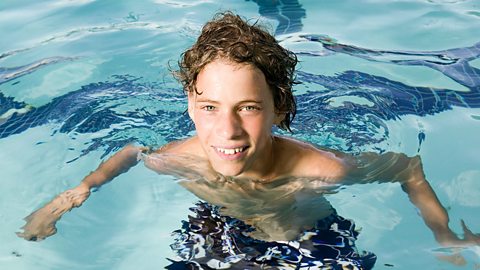
En ce moment, je fais du sport seul. J’ai commencé récemment à faire de la natation et je vais à la piscine trois fois par semaine.
L’année dernière, j’ai joué au basket dans une équipe de basket dans ma ville car il n’y avait pas d’équipe dans mon collège. C’était fantastique.
Quand j’étais plus jeune j’adorais jouer au foot avec mes amis au parc. On s’amusait bien en faisant ça.
À l’avenir je vais essayer une nouvelle activité comme la danse car j’aime la musique et c’est un bon moyen pour rester en forme.
Question 1
What does Enzo say about swimming?
Does he do it in the present, did he do it in the past or does he want to do it in the future?
The answer is present.
The text says - J’ai commencé récemment à faire de la natation et je vais à la piscine trois fois par semaine.
Translation - I recently started swimming and go to the pool three times a week.
Question 2
What does Enzo say about basketball?
Does he do it in the present, did he do it in the past or does he want to do it in the future?
The answer is past.
The text says - L’année dernière, j’ai joué au basket dans une équipe de basket dans ma ville car il n’y avait pas d’équipe dans mon collège.
Translation - Last year, I played basketball for a basketball team in my town because there was no team at my school.
Question 3
What does Enzo say about football?
Does he do it in the present, did he do it in the past or does he want to do it in the future?
The answer is past.
The text says - Quand j’étais plus jeune j’adorais jouer au foot avec mes amis au parc.
Translation - When I was younger, I loved playing football with my friends in the park.
Question 4
What does Enzo say about dance?
Does he do it in the present, did he do it in the past or does he want to do it in the future?
The answer is future
The text says - À l’avenir je vais essayer une nouvelle activité comme la danse car j’aime la musique et c’est un bon moyen pour rester en forme.
Translation - In the future I'm going to try a new activity like dancing because I love music and it's a good way to keep fit.
Click or tap on the Show more button to read the translation of what Enzo has written on his blog.
At the moment I do sport on my own. I have recently started swimming and I go to the swimming pool three times a week.
Last year, I played basketball in a team in my town as there is no team at school. It was brilliant.
When I was younger I loved playing football with my friends in the park. We had a good time doing that.
In the future, I am going to try a new activity like dance as I love music and it's a good way of staying fit.
Vocabulary sheet
Click or tap on the image below for a list of useful vocabulary to use when talking about social activities.

Now you have revised the important vocabulary and key grammar points for describing social activities why not why not have a look at the Describing myself and others in French guide?
Revise for your exams with BBC Bitesize
Get ready for the GCSEs with quizzes, past papers, flashcards, podcasts and more resources!

More on Free time activities
Find out more by working through a topic
- count3 of 4

- count4 of 4