What is friction?
For an object to move, there must be a force upon it - this is usually a push or a pull.
As the object starts to move, another force occurs between the object and the surface it is moving against.
This is called friction.
Friction also produces heat - like when you rub your hands together and they get warmer! Why not try it now?
Video
Discover why friction plays an important role in different sports at the Winter Olympics.
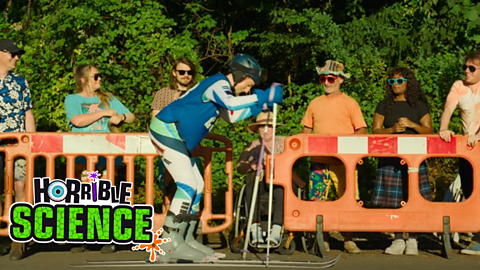
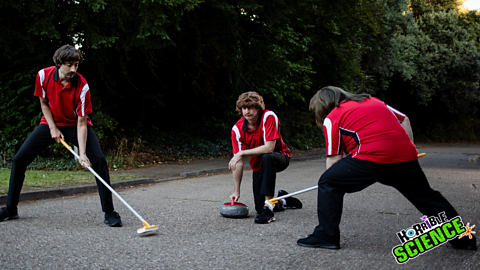
VOICEOVER: This year, we're bringing you winter sports in summer with added friction.Yes, friction, the force that slows your stops movement when two surfaces are touching.Of course, in winter sports, in winter, there's barely any friction, because ice is super slippery and smooth. But where's the fun in that?Ski. By doing these sports in summer will bring you less ice and more friction.Between the skis, the ground, and between the teams, smooth ice and snow.That's snow good. We've replaced them with rough surfaces like tarmac, which createsfriction when it rubs against the skis and creates a race that is entirely in slowmotion.
SKIER: Really struggling.
VOICEOVER: Smooth skiing is for losers.
Curling. You've seen it on ice, but what about on concrete? Get that brush ready for the rush.The friction will seize your imagination.
CURLER: It's not move.
VOICEOVER: And also the curling stone.
CURLER: This is terrible.
VOICEOVER: Bobsleigh. With winter sports in summer, it's not just the competitors that have grit.The course does too. Whoopsie.Ice dancing.Grace, poise, almost complete lack of movement.Feel the force of friction, rubbing between the gravel and those skates, and stopping them from sliding at all.Majestic.Ski jump. And here's the most dangerous, death -defying winter sport of all, in summer, with added friction.
COMMENTATOR: Three centimetres.
SKI JUMPER: Yes, PB!
VOICEOVER: Join us for the thrills of winter sports in summer, with added friction, for action.That is grippy.
How does friction work?
Friction always works in the opposite direction to the object which is moving and slows it down.
Depending on the surface you are sliding across, or trying to, depends on the amount of friction produced.
The rougher the surface, the more friction there is because it is harder to move across. Rough surface include things like gravel.
The smoother the surface the less friction there is. Ice is an example of a smooth surface.
Horrible Science fact
Friction is just one force, another very important one is gravity. That's what stops us all floating around and keeps us on the ground. You can learn more about gravity with this song.
Quiz: Winter Olympics
How to use Horrible Science in the classroom
If you're looking to bring energy, humour and curriculum-aligned content into your science lessons, Horrible Science might just be your new secret weapon.

More on Horrible Science
Find out more by working through a topic
- count21 of 22
- count22 of 22

- count1 of 22
- count2 of 22