What is accurate and precise?
Accuracy and precision are key terms for scientists but they do not mean the same thing.
When performing an experiment, you will produce a set of results. Results are the data you can get when you carry out an experiment. These could include measurements of temperature, length or mass.
Accuracy - Accurate measurements are close to what they should be. Taking repeat measurements will increase accuracy.
Precision - Precise measurements are those that have been repeated and are similar.
Video
Find out the importance of working accurately and precisely in Piggerton.
MR PIGGERTON: Miss Cleverly! Come back!
MISS CLEVERLY: How can I trust you, Piggerton? After the words I heard you speak to Miss Sisterly-Friend?
MR PIGGERTONI can explain-
MISS CLEVERLY: You asked her about her… legs.
MR PIGGERTON: The legs of a table that she’s making for me! A table I plan to give you as a gift, on the morning we become husband and wife. Miss Cleverly I will love you more, and more every day of our lives.
MISS CLEVERLY: Sir your words are precise, but are they accurate?
MR PIGGERTON: Oh, Miss Cleverly I - Uh, sorry. Don’t - right sorry. Don’t precise and accurate mean the same thing?
MISS CLEVERLY: No Mr Piggerton they are different.
MR PIGGERTON: Ah, well Miss Cleverly, ah no I’m sorry how are they different?
MISS CLEVERLY: Allow me to demonstrate.
MR PIGGERTON: Ah, how is a bow and arrow going to help? And why are they hiding in my ornamental hedge?
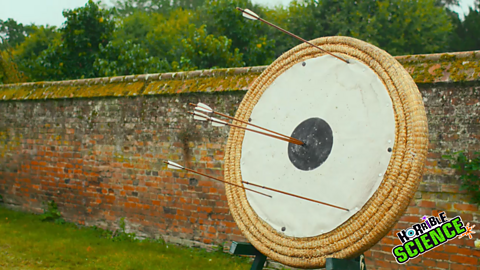
MISS CLEVERLY: Well. It’s important to be prepared, now observe that target over there.
MR PIGGERTON: Ah yes, I see it. Ooooh! Goodness, well you certainly struck the target. Much like a cupids arrow struck my - sorry carry on.
MISS CLEVERLY: Now, my shooting was accurate because all the arrows hit the target, but it was not precise because the arrows aren’t grouped together.
MR PIGGERTON: Right.
MISS CLEVERLY: Your turn.
MR PIGGERTON: Ah, okay. You’ll have to bear with me, it’s been a while since I’ve been on the old bow and arrow.
MISS CLEVERLY: Get on with it.
MR PIGGERTON: Okay. I am told it is just like riding a bike. Goodness, well second time lucky. Um, it’s a bit rusty- I have high hopes for number three. Oh goodness me!
DIGBY: OW
MISS CLEVERLY: Now that was precise because all of the arrows are grouped together.
DIGBY: They really are.
MR PIGGERTON: I’m terribly sorry Digby.
MISS CLEVERLY: But it was not accurate, because you missed the target and you hit Digby.
MR PIGGERTON: Digbys bum yeah.
DIGBY: Ow, I hate my job.
MISS CLEVERLY: For the best results, especially in science it is important to be both accurate and precise. May I?
MR PIGGERTON: Yeah, bet you. It’ll be a bit safer for everyone.
MISS CLEVERLY: Accurate, and precise.
MR PIGGERTON: Okay, that’s embarrassing.
MISS CLEVERLY: Now, you were telling me how much you loved me.
DIGBY: Sir, your table from Miss Sisterly-Friend has arrived.
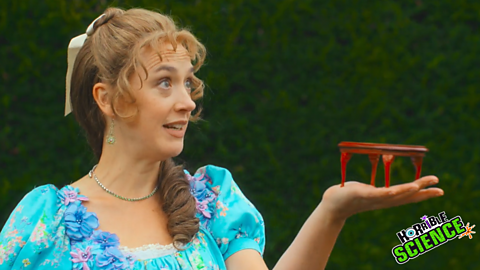
MR PIGGERTON: What is this? I said it was to be 100 centimetres by 50 centimetres.
MISS CLEVERLY: Ah, she appears to have done it perfectly, in millimetres.
MR PIGGERTON: So she has been precise but not accurate.
MISS CLEVERLY: Exactly. And now Mr Piggerton, tell me precisely and accurately how you feel.
MR PIGGERTON: Well I feel that Digby needs serious medical attention.
MISS CLEVERLY: Yeah.
MR PIGGERTON: Yeah. Hang in there Digby, stay still. Not that still.
Why do we have units of measurement?
Units of measurement are very important. It helps scientists understand how much of something they need to make or use in their experiments. This helps them make their experiments safer, better to understand and more accurate.
Units of measurement can include centimetres (cm) or millimetres (mm) for length. There is a big difference between these two. You need to 10mm to create 1cm or 100mm to create 10cm.
For example, a 100mm by 50mm table will be much smaller than a 100cm by 50cm table! So the maker may have been precise because they used the correct numbers but not accurate because they used the wrong unit of measurement.
Horrible Science fact
If you want to see what happens when you don't work accurately and precisely in science, why not pay a visit to the lab of Professor D Tail.
Quiz: It's all in the details!
How to use Horrible Science in the classroom
If you're looking to bring energy, humour and curriculum-aligned content into your science lessons, Horrible Science might just be your new secret weapon.

More on Horrible Science
Find out more by working through a topic
- count22 of 22
- count1 of 22
- count2 of 22
- count3 of 22